
Quick answer
Do Toyota ADAS fault codes all mean radar misalignment?
No. Codes such as C1AC1 and C1AA800 concern aiming on applicable Toyota systems, while U023387, U111087 and U023587 identify missing communication messages. The exact model, reporting module and Toyota repair information determine the diagnosis. A code alone does not prove which part needs replacing or that calibration will fix the fault.
Read the complete code together with its reporting module
A Diagnostic Trouble Code (DTC) describes a condition detected by an electronic control system. It may identify an aiming concern, an incomplete adjustment or a missing message from another module. It does not always identify the failed part.
Toyota code formats and component names vary between models, production years and system generations. Keep the complete code, any suffix, its description and the name of the module that recorded it. A scan screenshot is more useful than a shortened code remembered from the dashboard or an online search.
Use the table as an owner’s reference. Confirm its meaning against the exact vehicle’s Toyota repair information before selecting tests, a replacement part or calibration. Labels such as master, slave, A and B should not be converted into a universal left-hand or right-hand position.
Toyota radar, BSM, camera and parking-assist code reference
These descriptions apply to Toyota systems that use the listed codes. Similar wording across two vehicles does not establish identical causes, component positions or repair procedures.
| Fault code | Meaning on applicable systems | What needs investigating |
|---|---|---|
| U023387 | Lost communication with side obstacle detection control module B | BSM communication path, module power, wiring and connectors |
| U111087 | Lost communication with the clearance sonar / intuitive parking assist module | Parking-assist control module and network communication |
| C1AC1 | Master BSM module horizontal-axis misalignment | Relevant rear radar, bracket and vehicle-specific diagnostic procedure |
| C1AC2 | Slave BSM module horizontal-axis misalignment | Other rear radar and its specified mounting or aiming checks |
| C1AC100 | Rear side radar module B beam-axis misalignment | Module B assignment, installation and applicable beam-axis procedure |
| C1AC200 | Rear side radar module A beam-axis misalignment | Module A assignment, installation and applicable beam-axis procedure |
| C1A11 | Front radar incorrect axial gap / alignment indication on certain systems | Installation, diagnostic conditions and applicable software bulletins |
| C1A14 | Front radar beam axis not adjusted on certain systems | Whether the specified aiming or adjustment procedure is complete |
| C1A1100 | Front radar optical-axis misalignment on certain newer systems | Radar installation, vehicle condition and required aiming procedure |
| C1AA800 | Front recognition camera optical-axis misalignment | Windscreen camera installation and camera aiming requirements |
| U023587 | Lost communication with the cruise-control front distance-range radar | Relevant radar communication path, including camera-to-radar links where fitted |
U023387, U111087 and U023587: communication needs diagnosis first
A lost-communication code means the reporting module did not receive an expected message. Possible causes include disconnected or damaged wiring, a connector problem, missing power or ground, a network fault or a malfunctioning module. The scan needs to establish which unit recorded the code and which communication path is affected.
U023387 concerns a side obstacle detection module B on applicable systems, commonly within the BSM system. It does not directly establish an incorrect horizontal angle. A replacement radar may subsequently need registration, configuration or aiming, but those requirements follow the confirmed repair.
U111087 concerns clearance sonar or intuitive parking assist communication. These parking systems commonly use ultrasonic sensors; this code is not a direct instruction to calibrate the front radar or rear BSM sensors. The relevant parking control unit and its network connections need examination.
U023587 concerns communication with the front distance-range radar used by the cruise-control system. On applicable Toyota arrangements, the front recognition camera can report a missing radar message. Investigate the specified circuit and reporting module rather than assuming either sensor must be replaced.
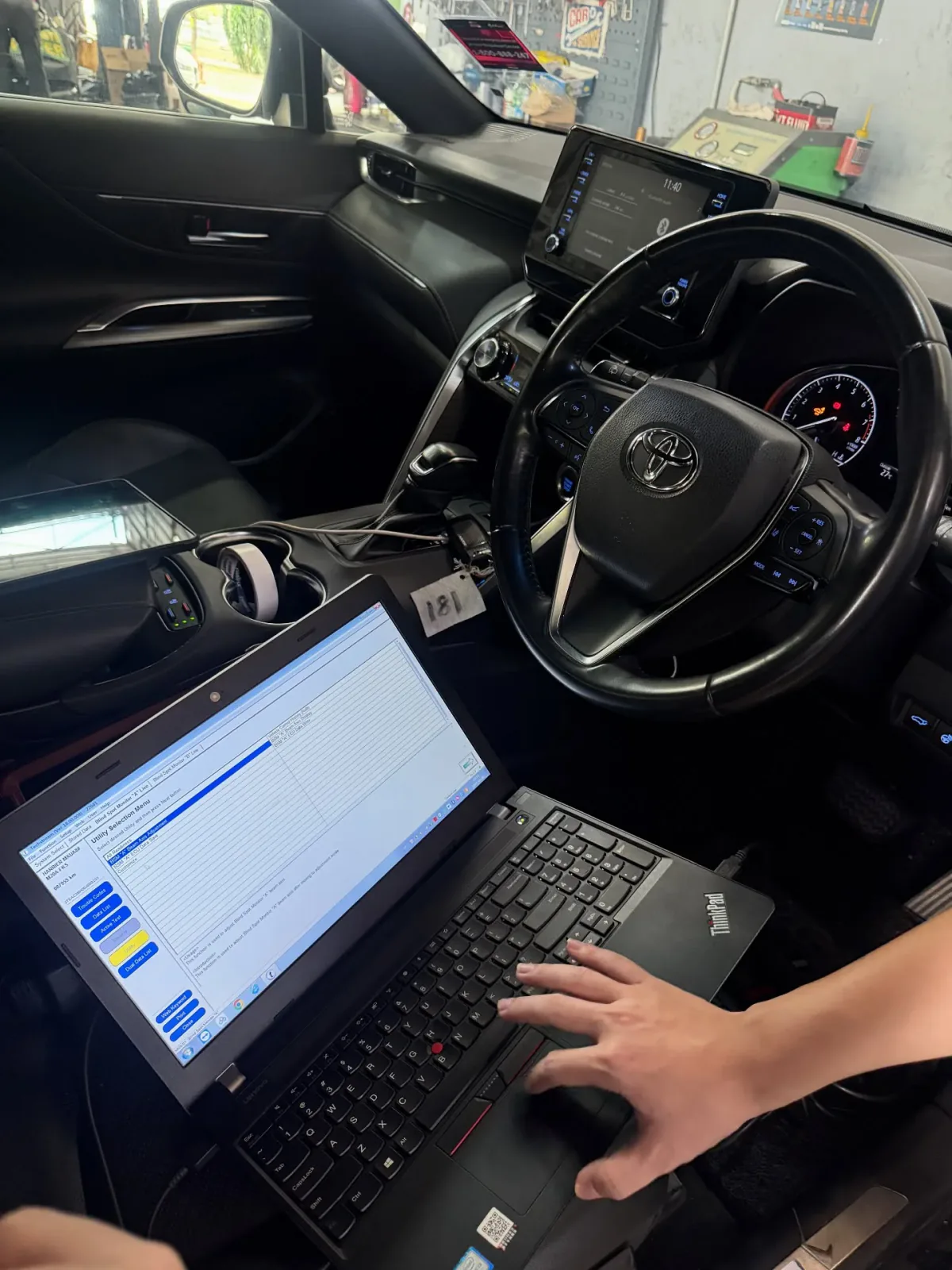
The accompanying workshop photographs illustrate diagnostic work and warning displays. They are not evidence that every code in this reference table was recorded on those vehicles.
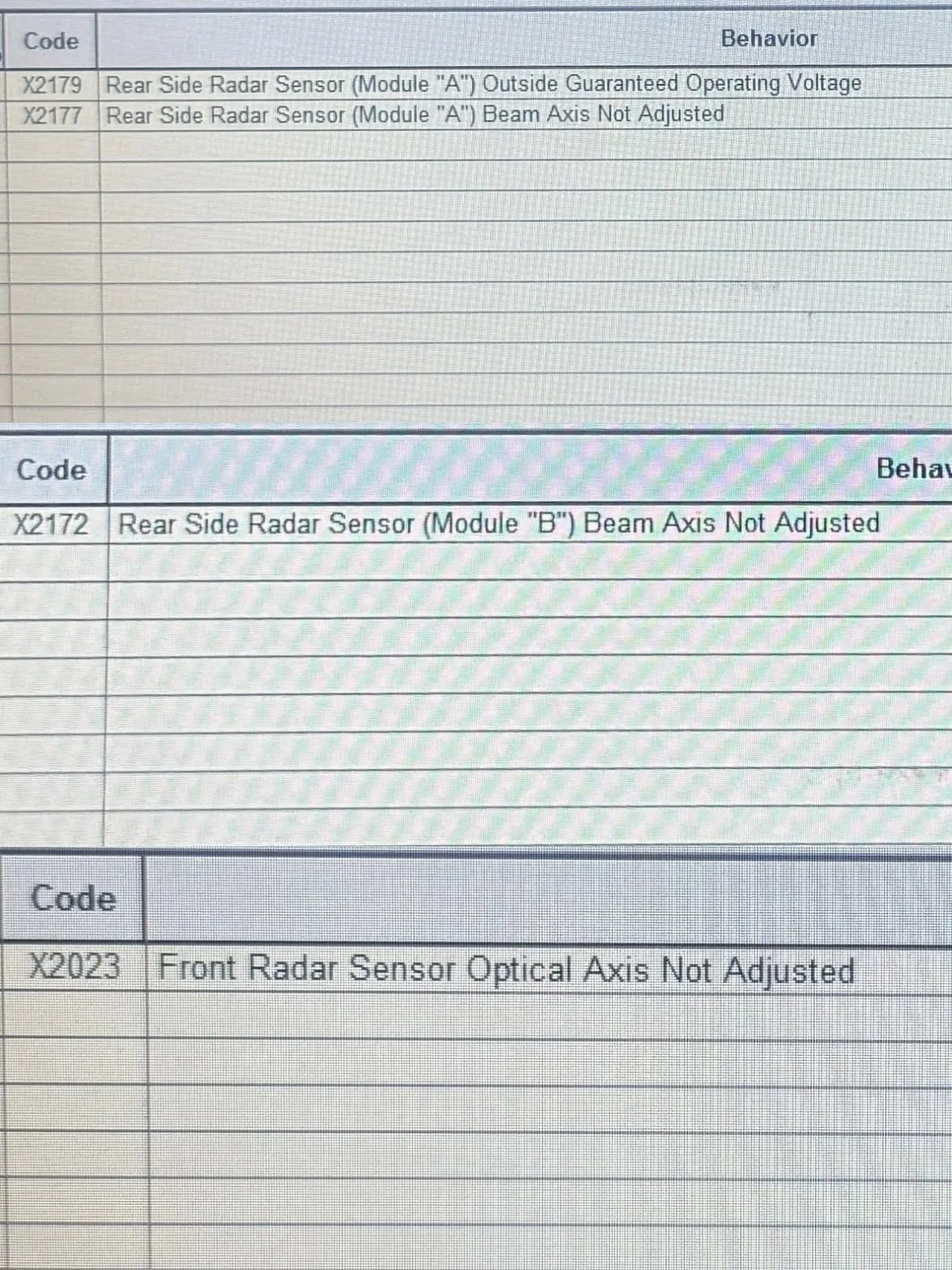
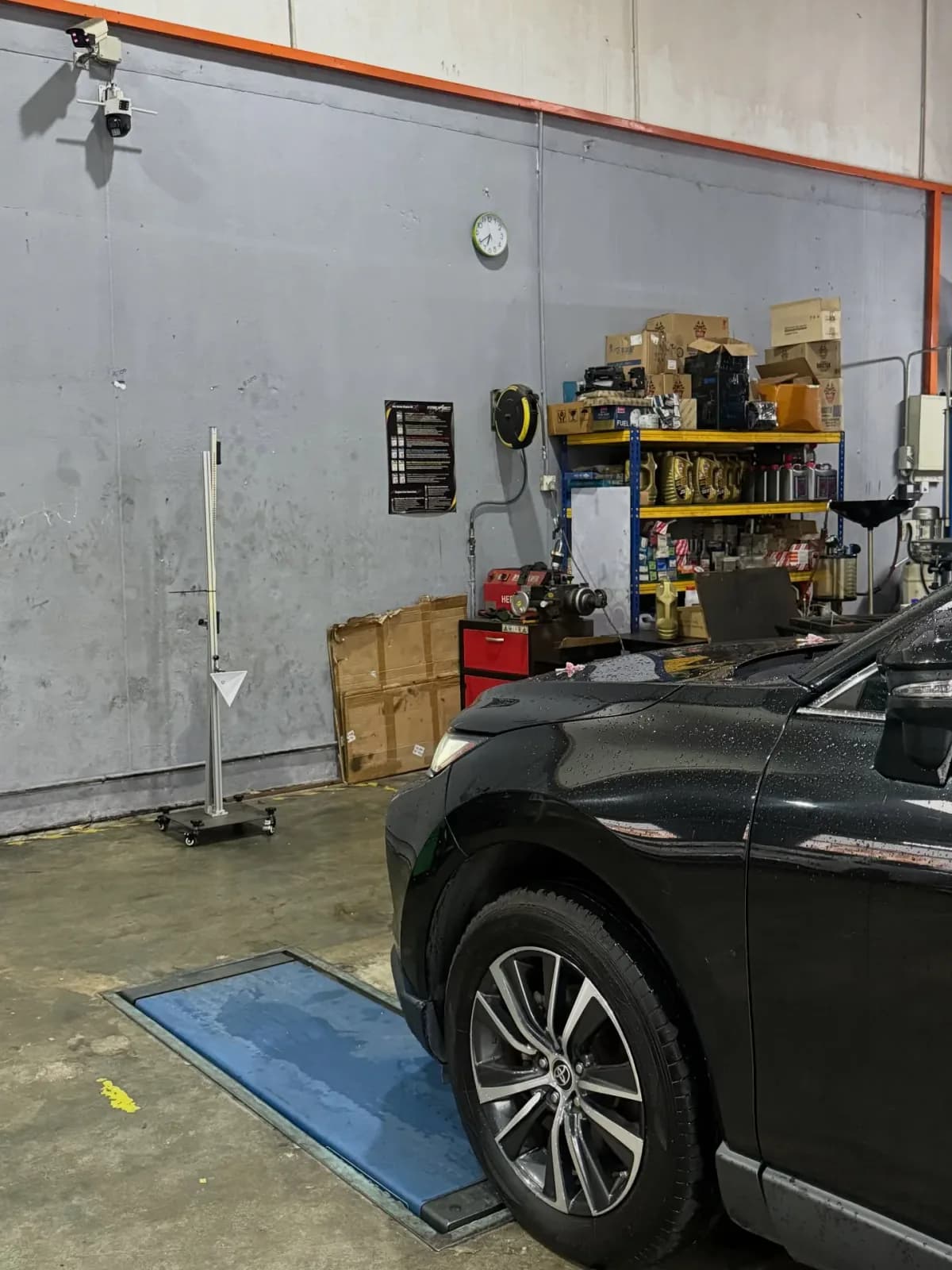
The Harrier diagnostic photograph records rear radar operating-voltage and beam-axis messages alongside front radar optical axis not adjusted. Fault descriptions must be interpreted for the vehicle and diagnostic system.
View original case record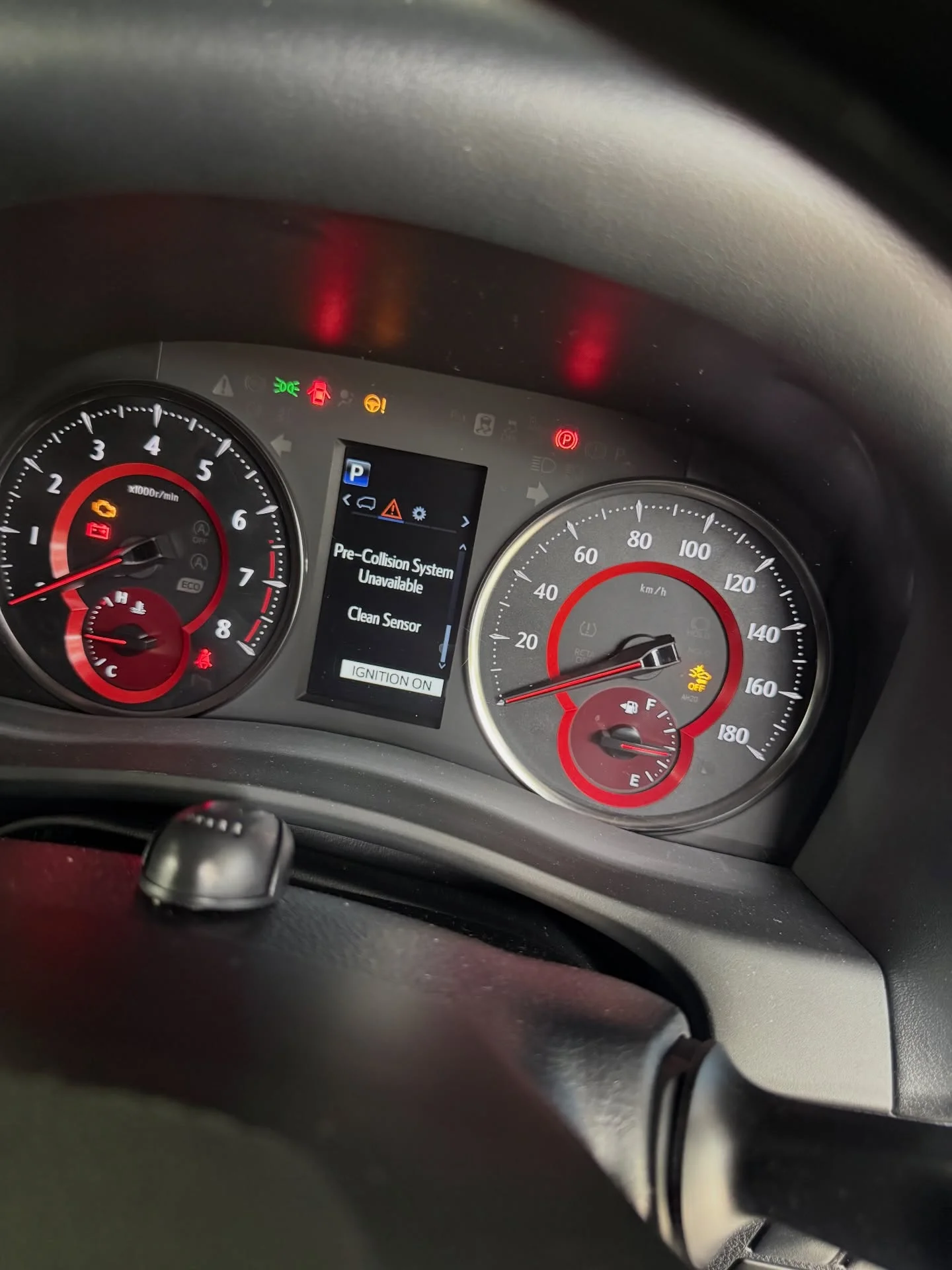
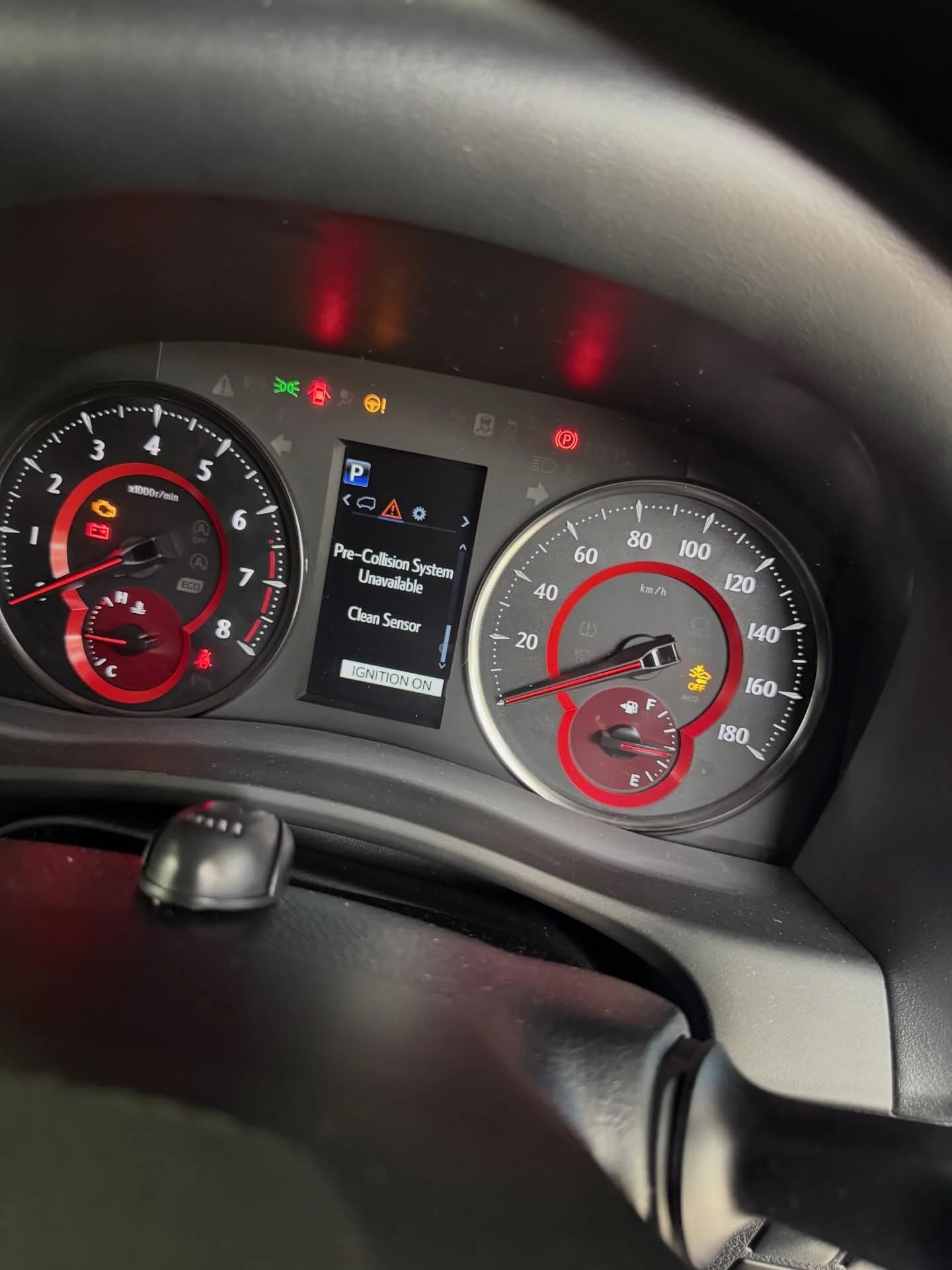
The Alphard AGH30 dashboard warning photographed in this case. The workshop record identifies front radar optical axis misalignment; the dashboard message alone does not establish the cause.
View original case recordC1AC1, C1AC2, C1AC100 and C1AC200: rear BSM aiming
C1AC1 and C1AC2 refer to horizontal-axis misalignment of the master and slave BSM sensors on certain Toyota systems. Newer systems can use C1AC100 for rear side radar module B and C1AC200 for module A. The exact assignment and procedure must come from the applicable repair manual.
Inspection can involve the sensor, mounting bracket, rear bumper area and evidence of collision work. A displaced bracket or unsuitable installation may require correction before adjustment. Toyota also publishes model-specific technical bulletins, so the technician should check whether one applies instead of treating the code description as the complete diagnosis.
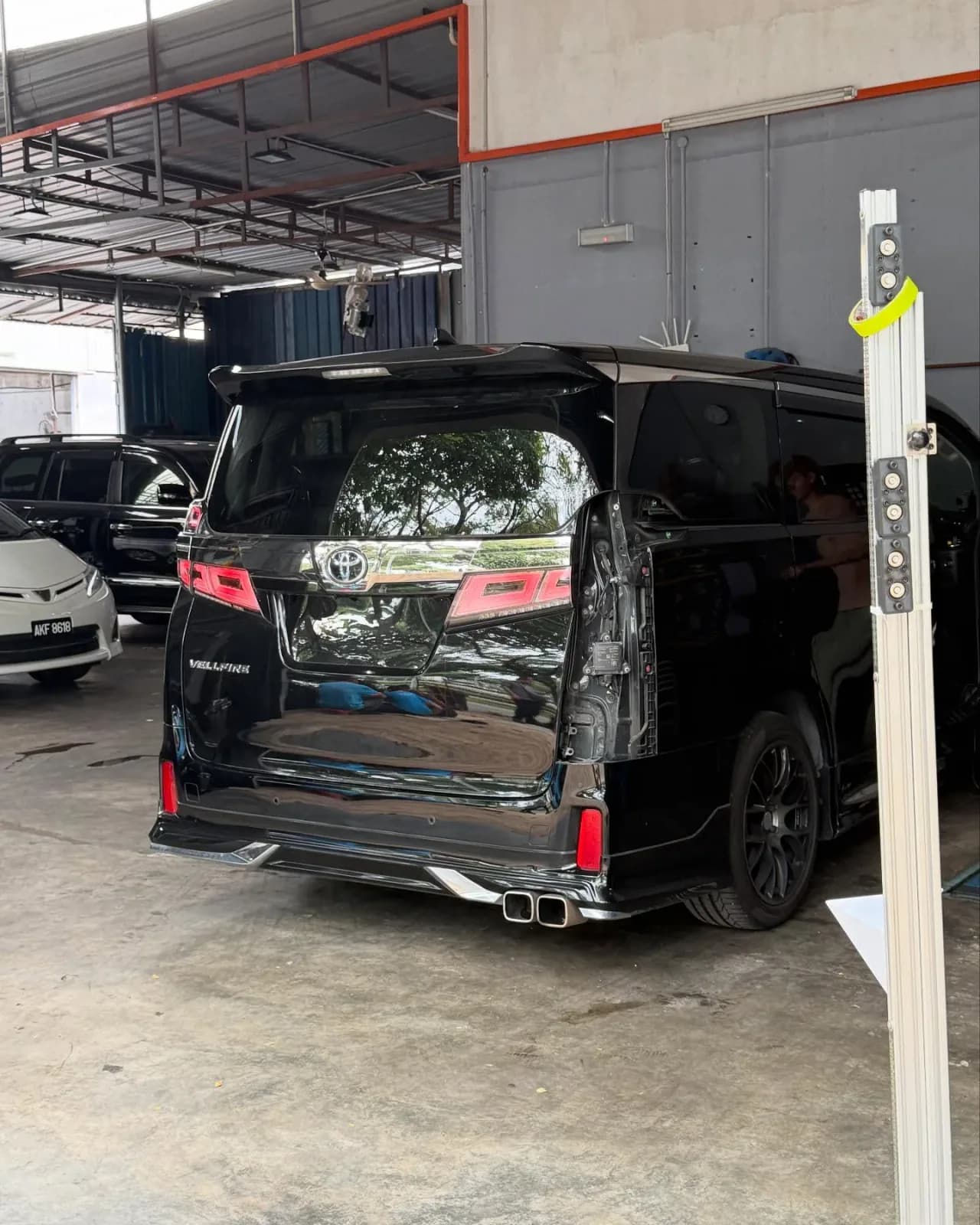
Sri Kuching’s published Vellfire record explicitly identifies C1AC1. That vehicle needed a faulty BSM module replacement, system calibration and horizontal beam-axis adjustment, followed by verification. It is an example of the completed repair for one vehicle, not a rule that every C1AC1 requires a new module.
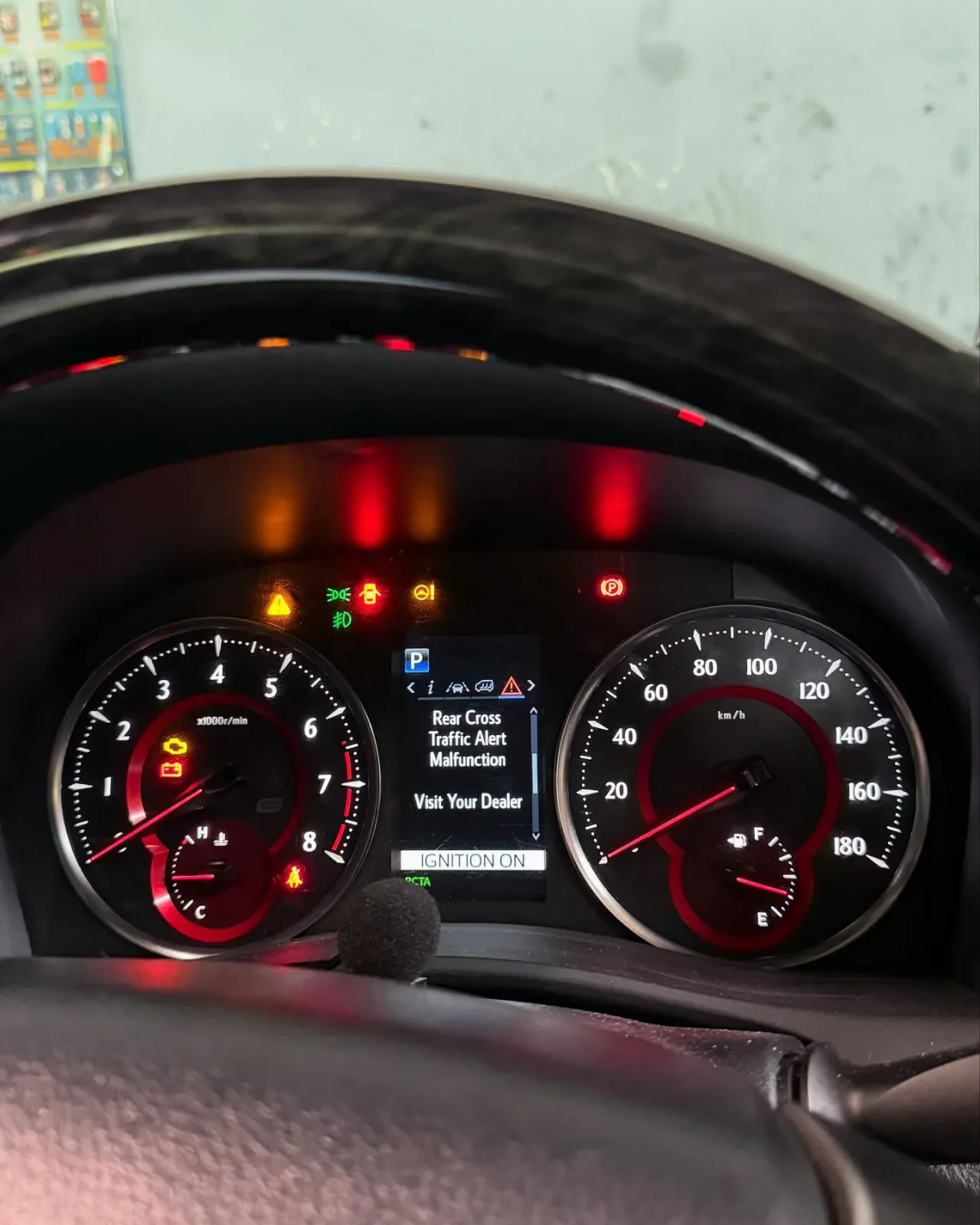
The Vellfire photograph shows a Rear Cross Traffic Alert warning. Its workshop record documents diagnosis of C1AC1 and work on the rear Blind Spot Monitor system.
View original case record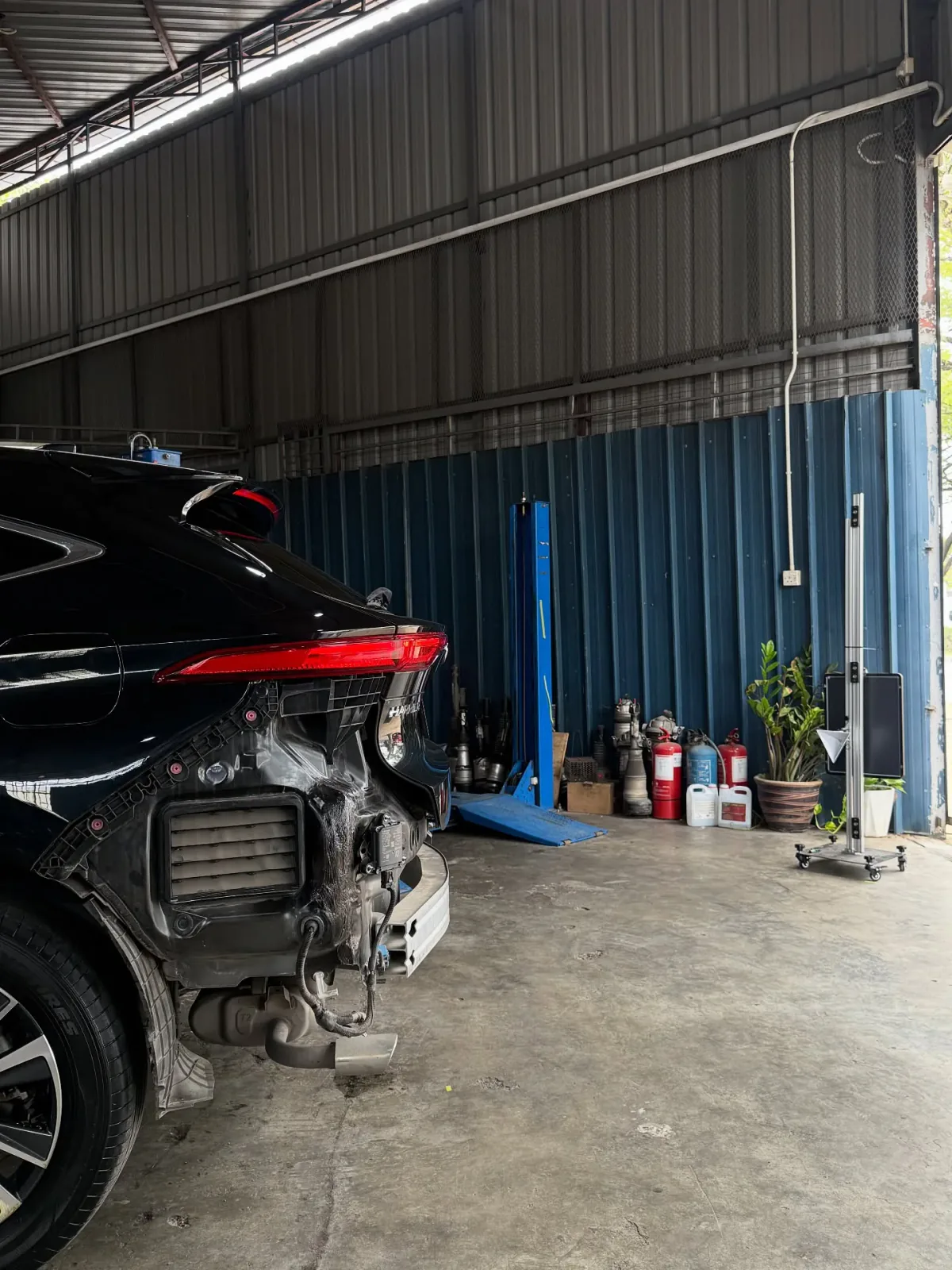
The Harrier with its rear bumper removed, showing a rear side radar sensor and nearby calibration equipment. The case records rear BSM beam-axis adjustment.
View original case recordC1A11, C1A14 and C1A1100: front radar aiming and adjustment
C1A11 is associated with an incorrect front radar axial reference on certain systems; C1A14 can indicate that beam-axis adjustment has not been completed. C1A1100 is an optical-axis misalignment code used on some newer systems. Their detection conditions and repair paths are vehicle-specific.
An alignment-related label does not prove that a bracket has physically moved. Toyota has issued a software countermeasure for C1A11 on specified vehicles. That campaign cannot be assumed to apply to an Alphard or another model, but it demonstrates why the relevant technical information must be checked alongside installation and vehicle condition.
Where aiming is required, the technician checks the necessary vehicle preparation and follows the specified radar procedure. A successful fault-code deletion does not establish that adjustment has completed or that the underlying cause has been addressed.
C1AA800: the front recognition camera, rather than BSM
C1AA800 concerns the optical axis of the forward recognition camera on applicable Toyota models. This camera is generally near the top of the windscreen and supplies visual information used by functions such as lane monitoring and collision assistance, depending on equipment.
The inspection may include the windscreen, camera bracket, installation and relevant vehicle conditions before the required aiming procedure. Camera targets, preparation and diagnostic functions can differ from radar equipment. A windscreen-camera fault should not be confused with reversing-camera or 360-degree parking-camera calibration.
What to send with an ADAS diagnostic enquiry
Provide the make, model, year, full diagnostic report and exact warning wording. Include the timing of the concern and any recent bumper, windscreen, sensor or electrical work. Several warnings can stem from one communication problem, while another vehicle may have separate front and rear faults.
Sri Kuching in Taman Mastiara, Kuala Lumpur can use those details to discuss an inspection. The diagnostic findings determine whether the next step is installation correction, electrical work, programming, component replacement or a supported calibration procedure.
Frequently asked questions
What does U023387 mean on a Toyota?
On applicable Toyota systems, U023387 means lost communication with side obstacle detection control module B. The technician checks the relevant BSM communication path, electrical supply, connectors and module; the code alone does not confirm radar misalignment.
Does U111087 mean the front radar needs calibration?
No. U111087 concerns lost communication with the clearance sonar or intuitive parking assist module on applicable Toyota systems. The parking-assist communication fault needs diagnosis before deciding whether any initialization or calibration follows the repair.
What do C1AC1 and C1AC2 mean?
They refer to master and slave BSM sensor horizontal-axis misalignment on certain Toyota systems. Sensor position and the repair procedure vary with the vehicle. Sri Kuching’s Vellfire C1AC1 record included module replacement and beam-axis adjustment, but that scope is not universal.
Does Toyota C1A11 always prove the radar bracket is misaligned?
No. C1A11 is alignment-related on certain Toyota systems, but its cause must be diagnosed. Toyota has also published a software countermeasure for specified vehicles, so the applicable repair information and technical bulletins need checking.
What does C1AA800 mean?
C1AA800 concerns front recognition camera optical-axis misalignment on applicable Toyota vehicles. It requires camera and vehicle-specific diagnosis and any specified aiming procedure; it is not a rear BSM or parking-camera alignment code.
What does U023587 mean on a Toyota?
On applicable systems, U023587 indicates lost communication with the cruise-control front distance-range radar. Diagnosis identifies the reporting module and relevant communication circuit, which can include the recognition camera-to-radar connection.
Read the original workshop cases
See the vehicle photos, recorded work and outcomes from Sri Kuching. These cases document individual repairs; your vehicle needs its own assessment.
Continue reading
Compare Alphard AGH30 and AGH40 radar calibration, Vellfire C1AC1 BSM repair and Harrier front and rear radar work, with Sri Kuching workshop photos.
Learn when bumper, windscreen and sensor work needs ADAS calibration, how static and dynamic procedures differ, and what affects cost and timing in KL.
Compare radar, windscreen cameras and BSM systems across Toyota, Honda, Audi, BMW and Porsche, including model-specific calibration enquiry details in KL.
Further technical reading
Technical information from vehicle manufacturers and specialist suppliers.
- Toyota repair-manual example via Mitchell: rear radar module A/B code assignments
- Toyota repair-manual example via Mitchell: radar, BSM and parking-assist communication codes
- Toyota technical bulletin: C1AC1 and C1AC2 BSM horizontal-axis misalignment
- Toyota campaign instructions: C1A11 radar software countermeasure on specified vehicles