
Quick answer
Does a Toyota radar or BSM warning always mean a sensor needs replacing?
No. Sri Kuching’s Alphard AGH30 and AGH40 records describe front radar calibration for confirmed optical-axis misalignment without listing radar replacement. Its Vellfire C1AC1 case required a faulty BSM module replacement and calibration, while the Harrier needed front radar and rear BSM adjustment. The diagnostic findings determine the work.
Start by identifying the affected assistance system
Toyota driver-assistance warnings can involve the front millimetre-wave radar, windscreen-mounted recognition camera, rear Blind Spot Monitor sensors or communication between control modules. Depending on the vehicle, affected functions may include the Pre-Collision System (PCS), Dynamic Radar Cruise Control, Lane Departure Alert, Lane Tracing Assist, BSM or Rear Cross Traffic Alert (RCTA).
A dashboard message identifies a concern, but it does not give the complete repair scope. A sensor can be misaligned, its bracket can be damaged, a module can stop communicating or an internal component can fail. These possibilities need different checks before calibration is selected.
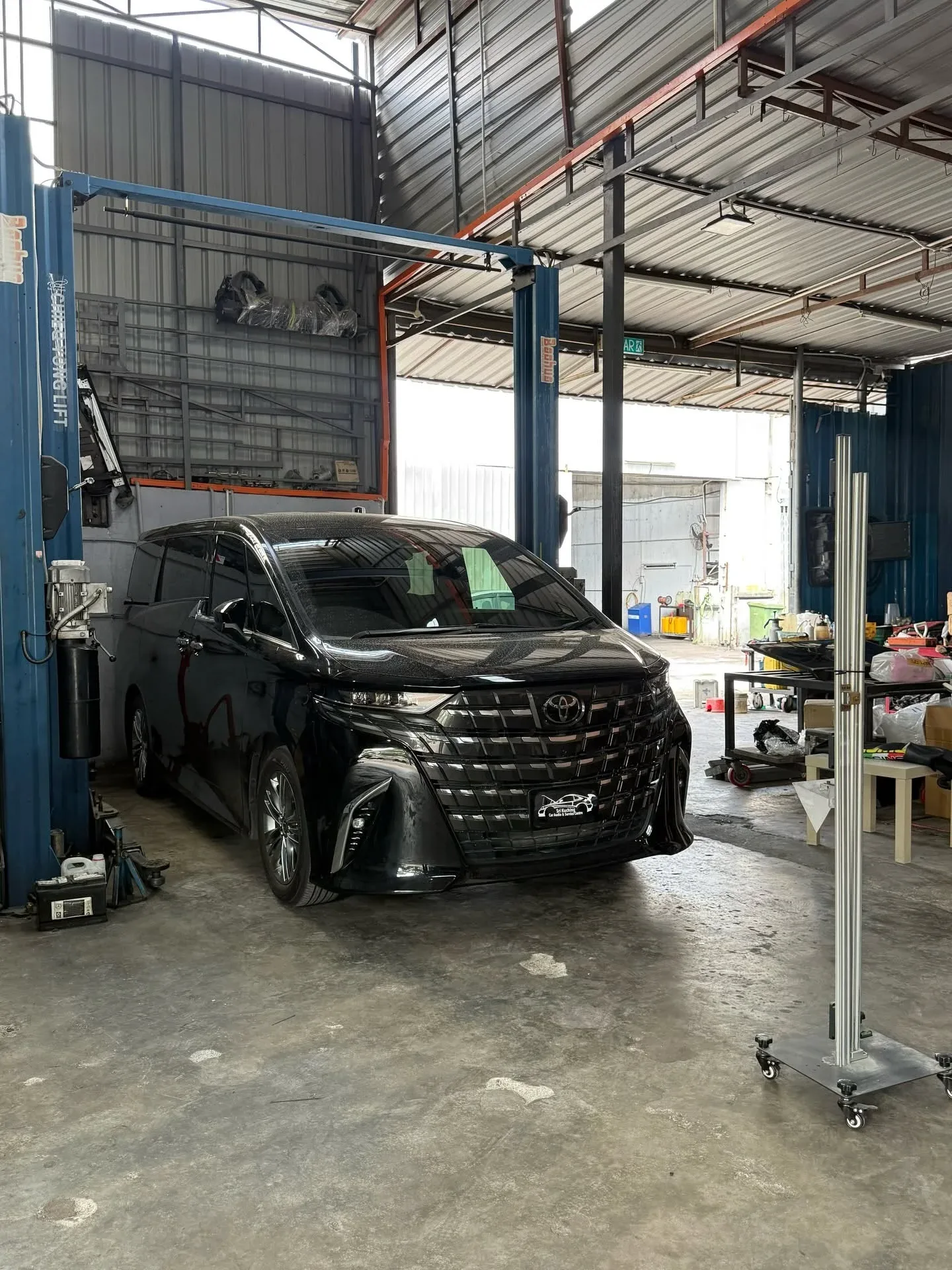
The four records below document work at Sri Kuching Car Audio & Air Cond Service Centre in Taman Mastiara, Kuala Lumpur. Their photographs belong to the linked jobs. The examples explain why similar warnings can lead to different repairs; they do not prescribe the same work for every Toyota.
Alphard AGH30: front radar optical-axis calibration
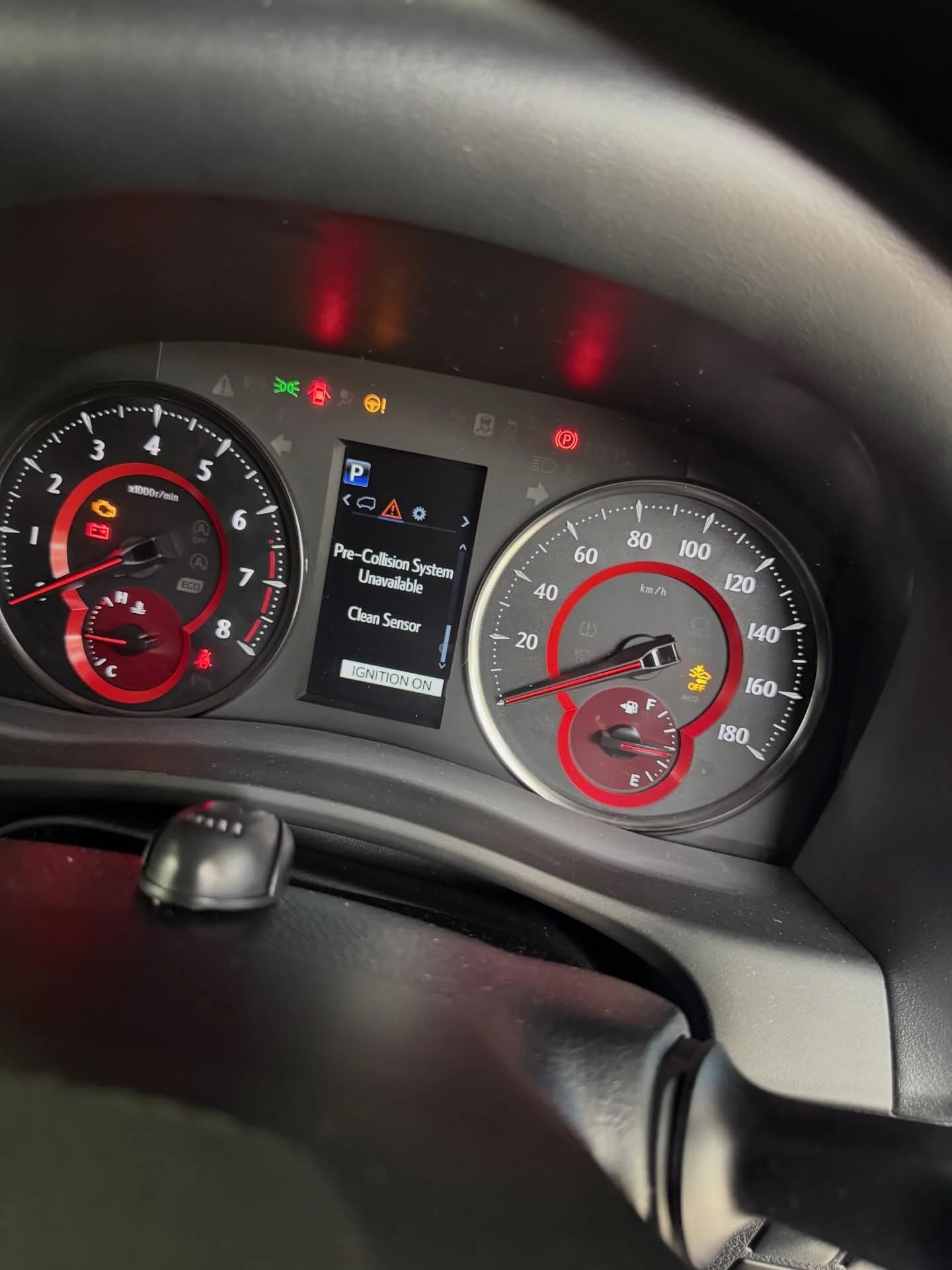
The Alphard AGH30 arrived with driver-assistance warnings linked to the front radar. Diagnostic scanning confirmed optical-axis misalignment, affecting adaptive functions that depend on the sensor’s aiming reference.
The recorded work included ADAS fault-code retrieval and analysis, front radar optical-axis calibration, system recalibration and post-repair verification. The outcome states that the radar was recalibrated to specification, the related codes and warnings cleared, and system operation was confirmed through diagnostics.
No radar replacement is listed in this particular case. That distinction matters: a confirmed aiming problem can call for calibration without establishing that the radar’s electronics have failed.
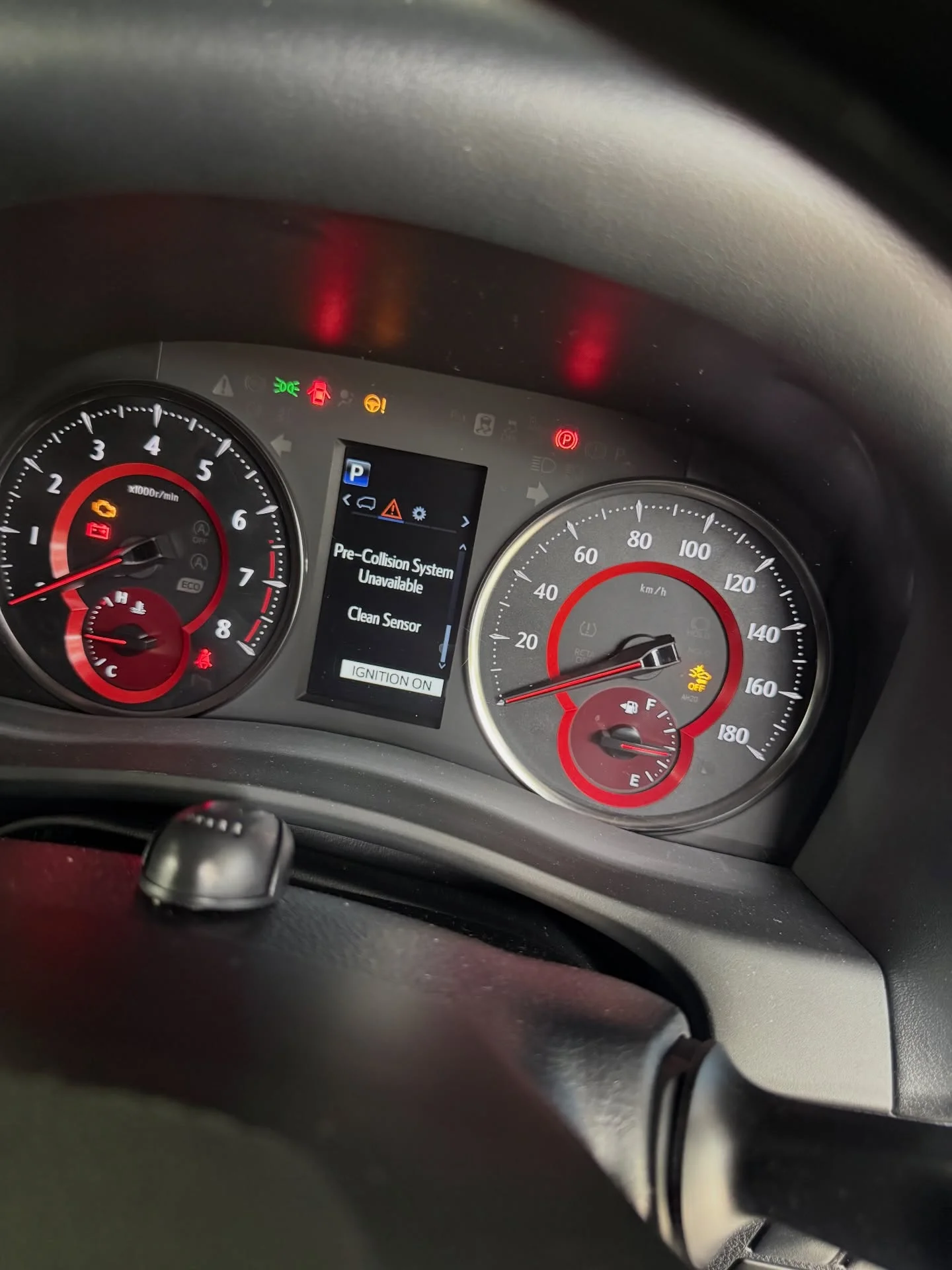
The Alphard AGH30 dashboard warning photographed in this case. The workshop record identifies front radar optical axis misalignment; the dashboard message alone does not establish the cause.
View original case record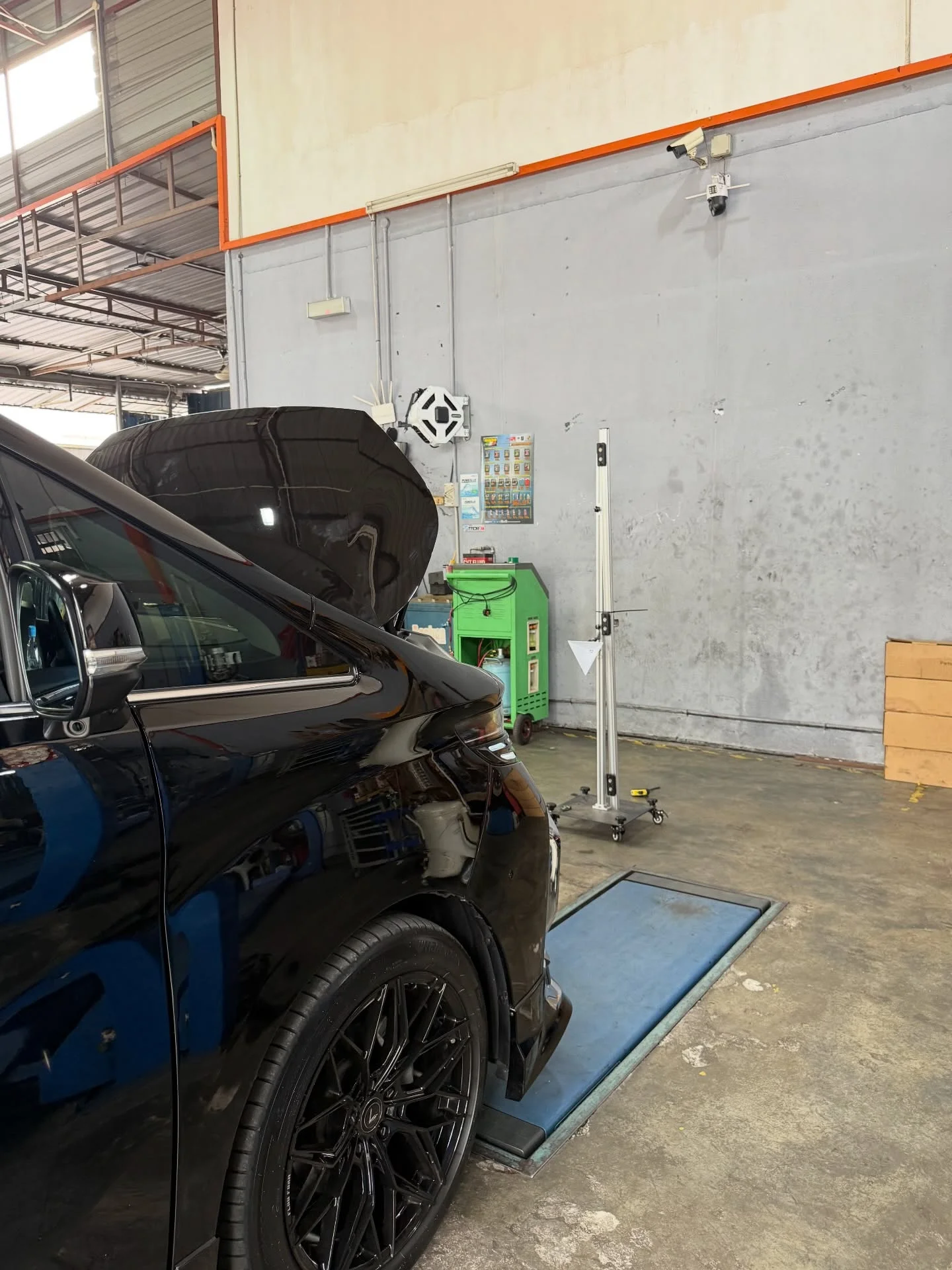
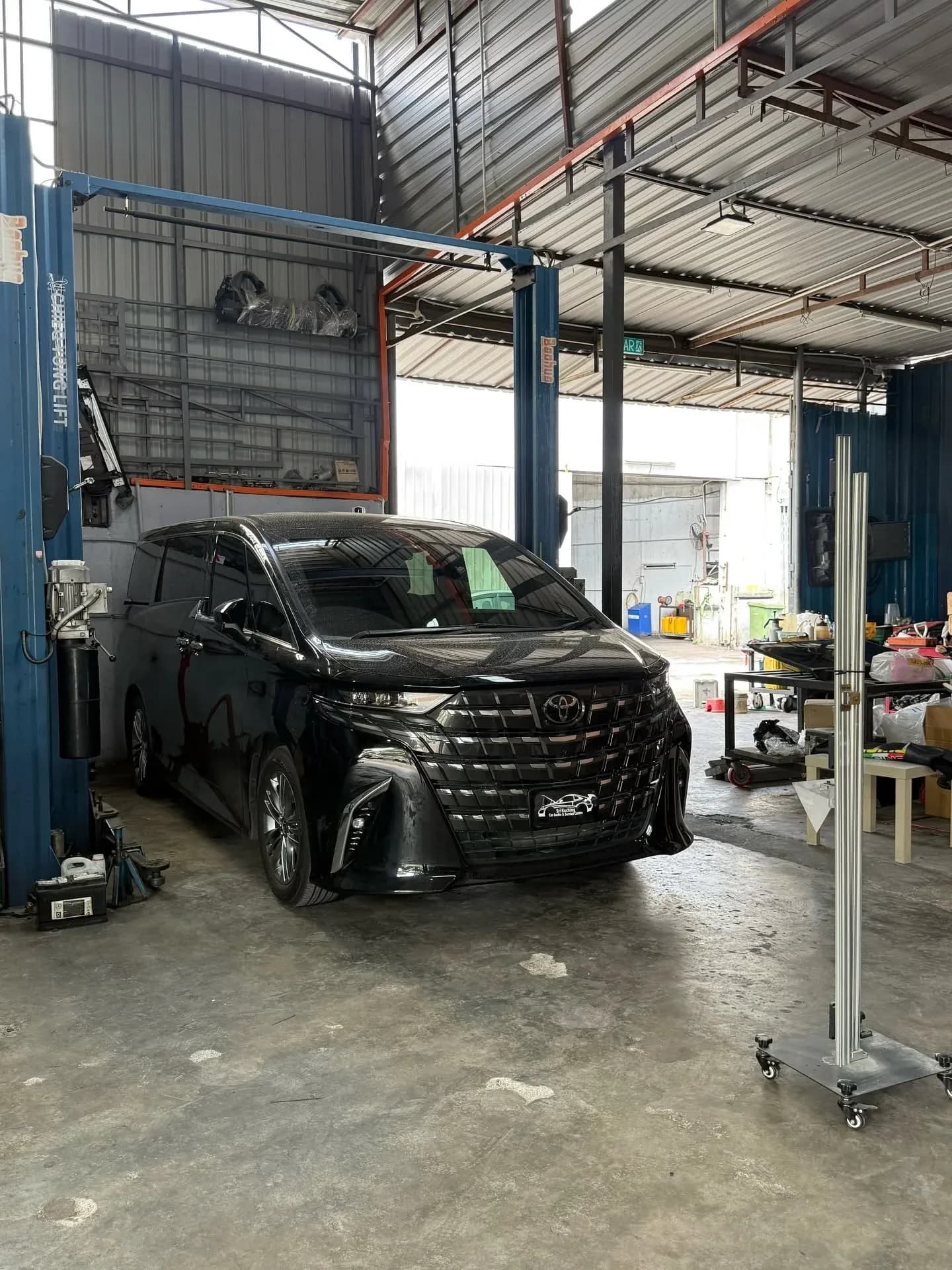
Workshop equipment positioned near the Alphard AGH30 during its documented front radar calibration.
View original case recordAlphard AGH40: radar warnings after front-end work
The Alphard AGH40 record describes multiple driver-assistance warnings following front-end work affecting the millimetre-wave radar. Diagnostic findings confirmed front radar optical-axis misalignment.
Sri Kuching performed front radar calibration to restore the aiming reference, followed by system checks and diagnostic verification. The recorded result states that the associated fault codes were cleared, the warnings extinguished and system operation confirmed. This record also does not list radar replacement.
AGH30 and AGH40 should not automatically be treated as interchangeable. Their electronics, fitted assistance functions and diagnostic procedures depend on generation, market and specification. The workshop needs to identify the actual vehicle and installed sensor before selecting its procedure.
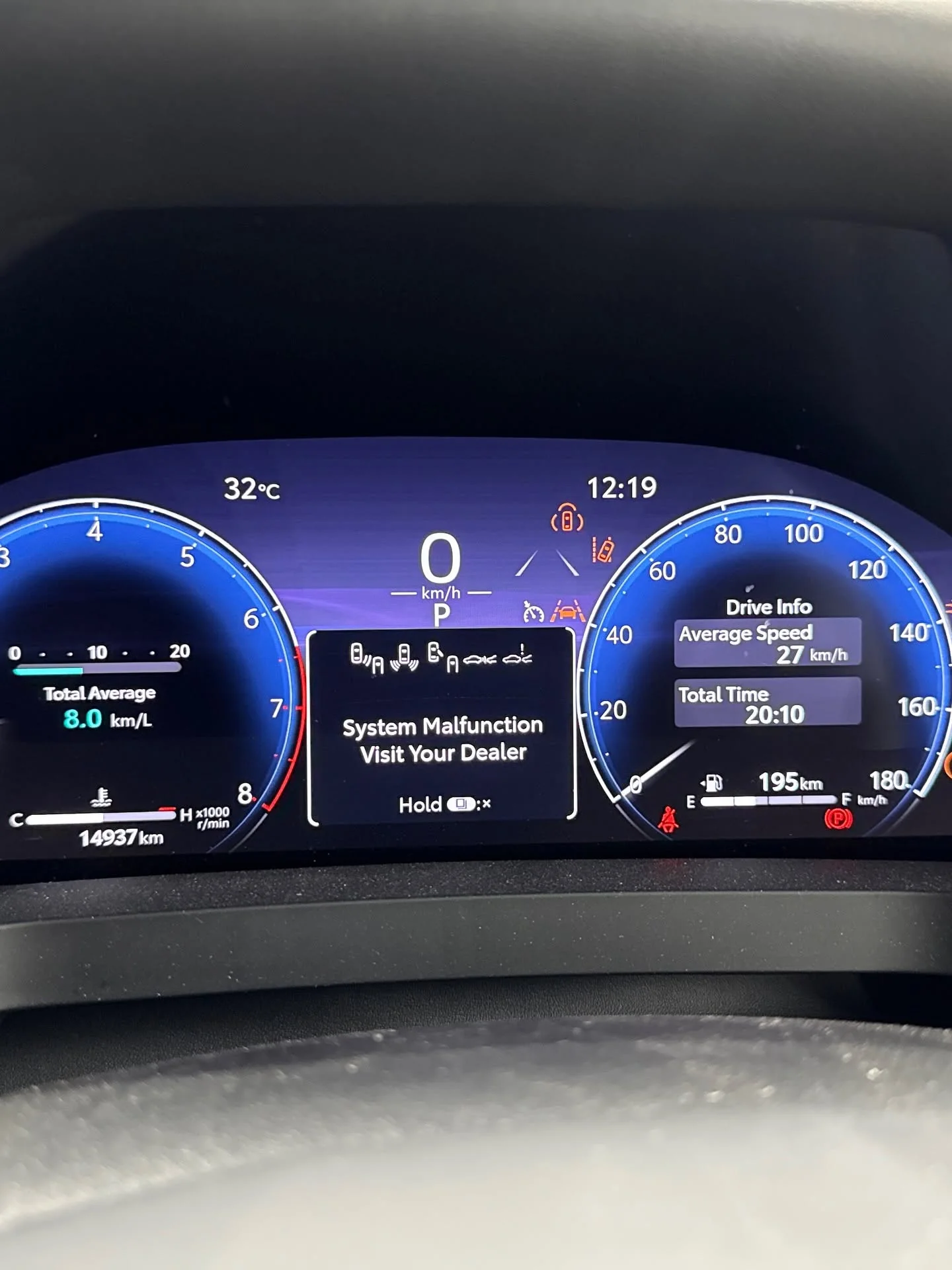
A system malfunction message photographed in the Alphard AGH40 case. Diagnostic scanning identified front radar sensor optical axis misalignment.
View original case record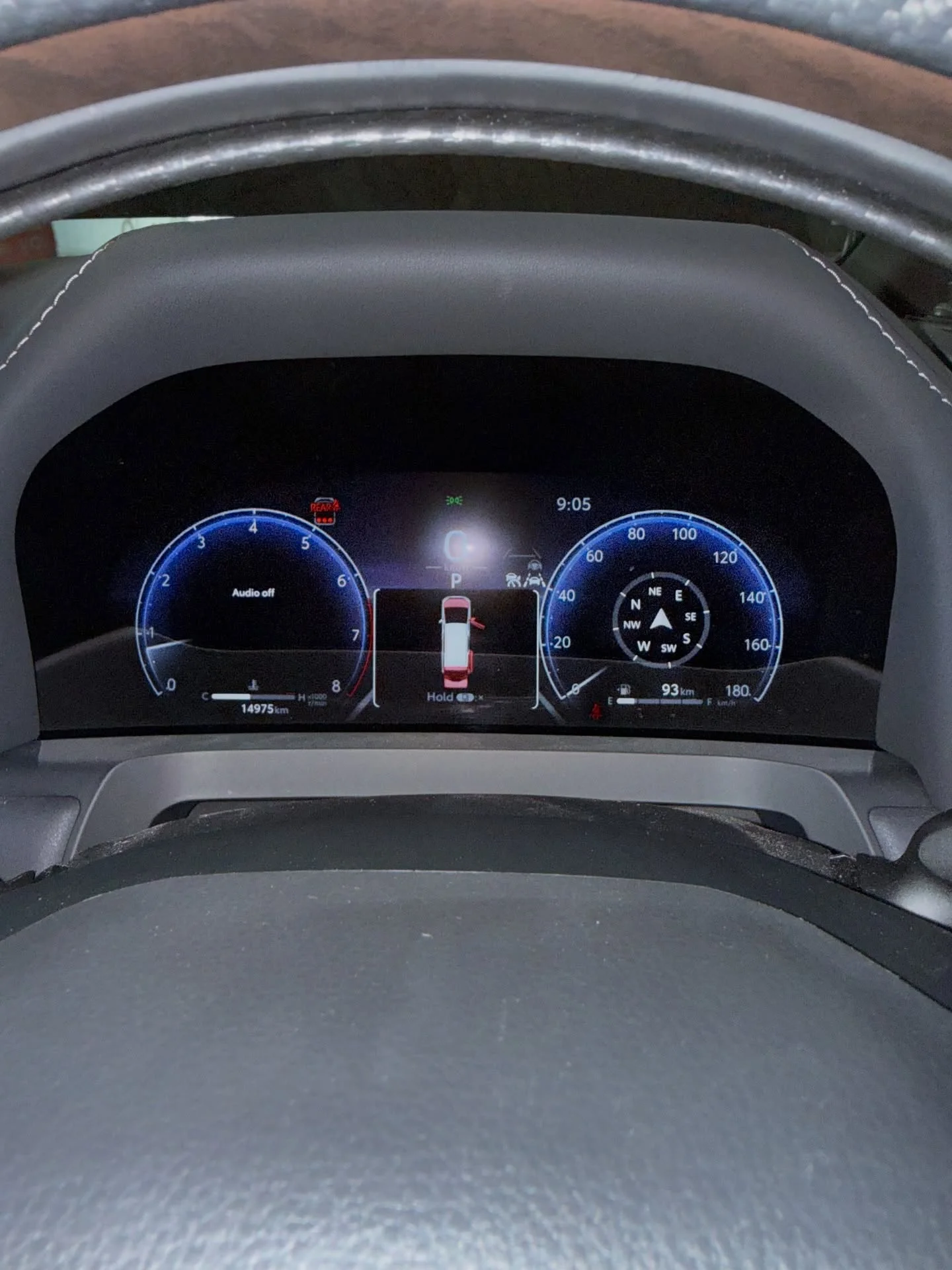
Instrument display from the Alphard AGH40 gallery. The written case record separately documents fault clearance and diagnostic verification after calibration.
View original case recordAlphard bumper conversions: appearance and sensor compatibility
A grille or bumper conversion can affect the radar bracket, aiming position or the material through which the radar operates. Those areas need inspection when a conversion changes the original sensor installation. An unsuitable mount cannot necessarily be corrected by running a calibration routine.
Changing the vehicle’s exterior appearance does not upgrade its underlying radar electronics to a newer generation. Confirm the original platform, fitted radar and compatible parts, then check the relevant manufacturer requirements. The two Alphard records above demonstrate calibration work; they do not document or endorse a particular bumper conversion kit.
Vellfire C1AC1: BSM module replacement and beam-axis adjustment
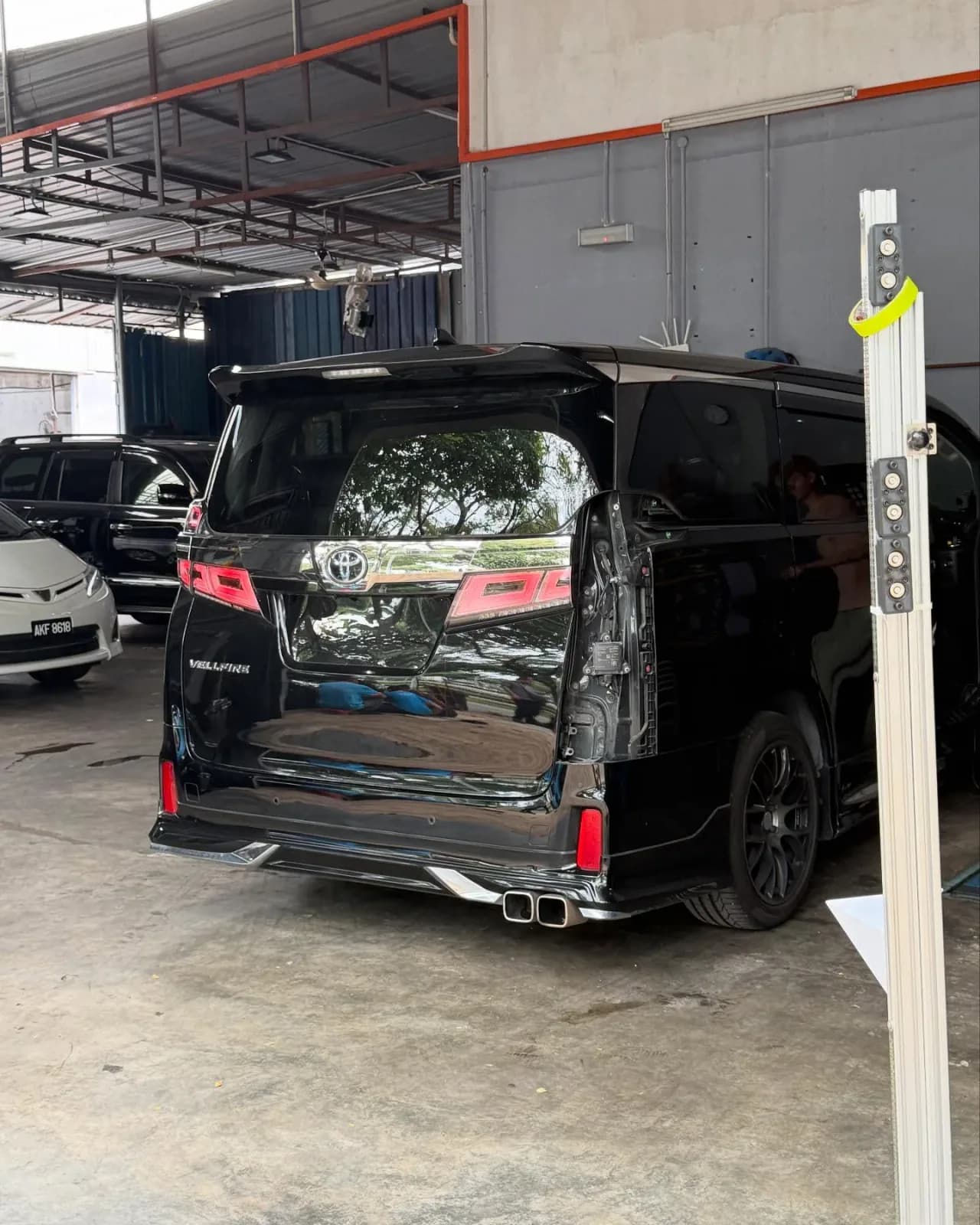
This Vellfire arrived with Blind Spot Monitor warnings. Its diagnostic record explicitly names C1AC1, described as master BSM module horizontal-axis misalignment. The workshop identified a faulty BSM module and replaced it as part of the repair.
The completed work included rear BSM calibration, horizontal beam-axis adjustment, post-calibration verification and a road test. The outcome records normal BSM operation with no remaining related fault codes and cleared driver-assistance warnings.
Unlike the Alphard examples, this repair included a component replacement. C1AC1 alone is not a universal instruction to replace a radar: the affected sensor, mounting condition and applicable Toyota diagnostic procedure still need checking.
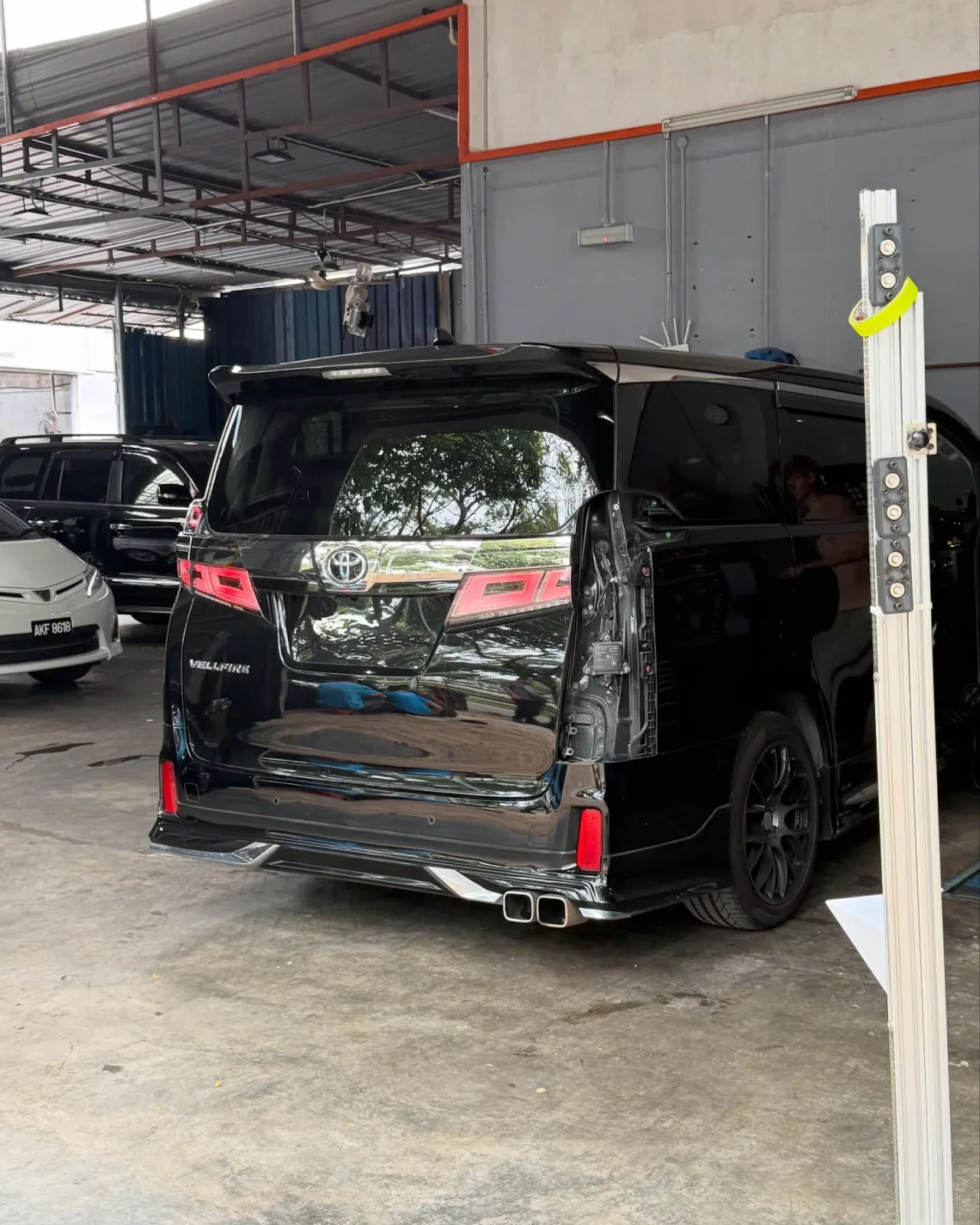
The Vellfire during its documented rear Blind Spot Monitor work, which included module replacement, calibration and horizontal beam-axis adjustment.
View original case record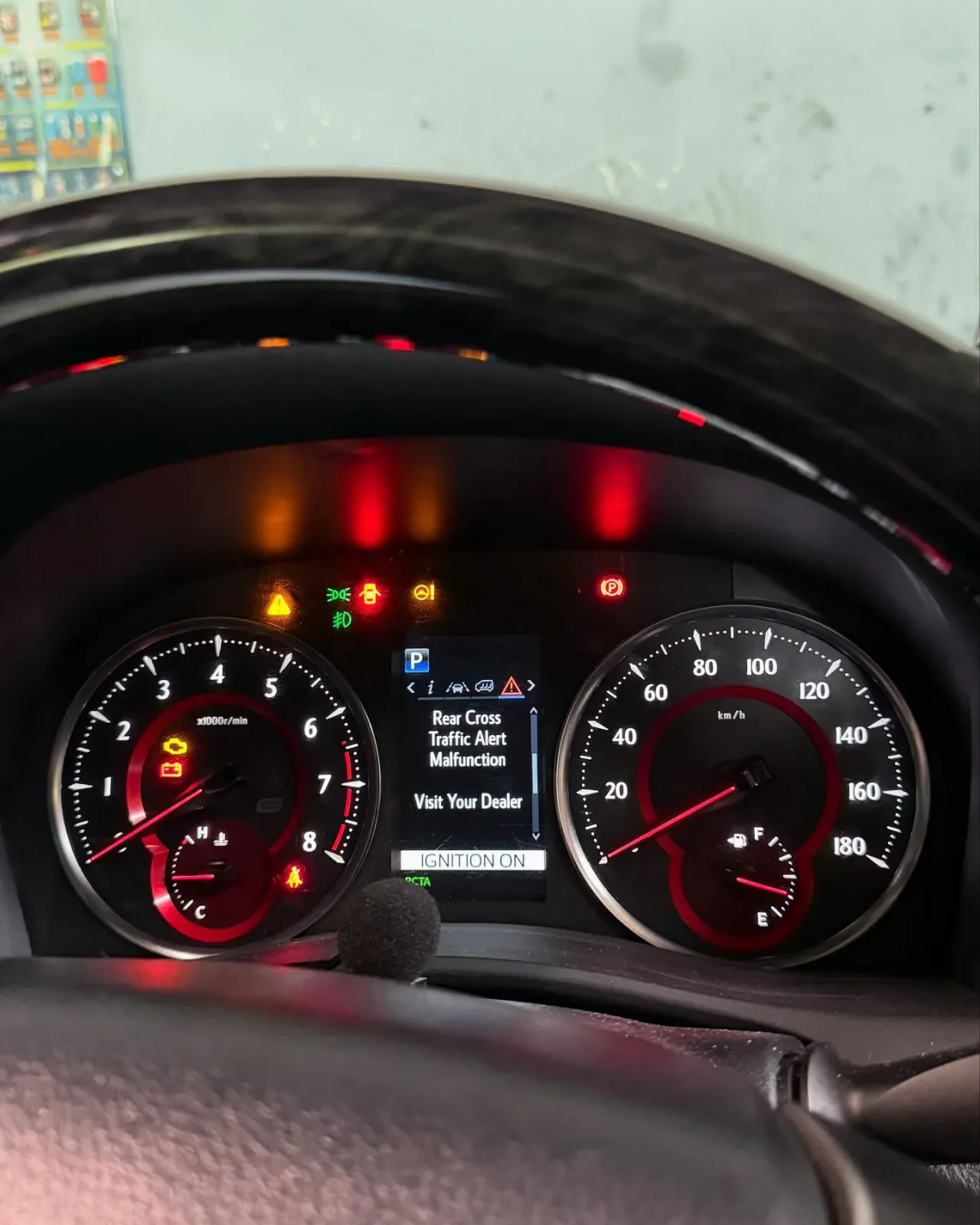
The Vellfire photograph shows a Rear Cross Traffic Alert warning. Its workshop record documents diagnosis of C1AC1 and work on the rear Blind Spot Monitor system.
View original case recordHarrier: both front radar and rear BSM needed adjustment
The Toyota Harrier arrived with multiple assistance warnings. Its diagnostic findings identified front radar optical-axis misalignment and a rear side radar beam-axis adjustment fault. Both areas therefore formed part of the recorded work.
Sri Kuching carried out front radar calibration, rear BSM beam-axis adjustment, system recalibration and post-repair verification. The outcome confirms that the related codes and warnings were cleared and the sensor systems verified after adjustment.
This example shows why inspection should cover the systems implicated by the scan. Completing one front radar adjustment does not automatically address a separate rear BSM concern.
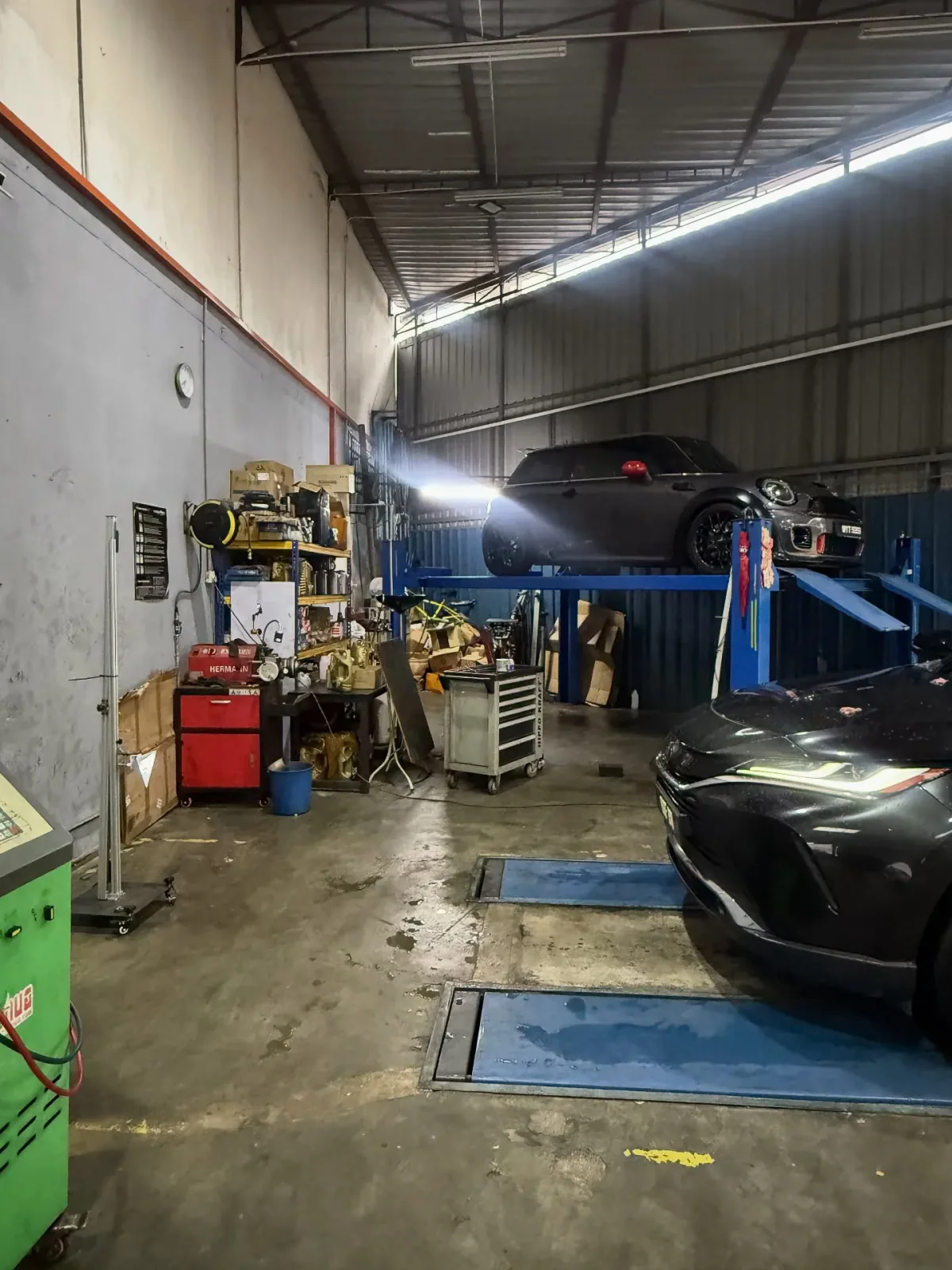
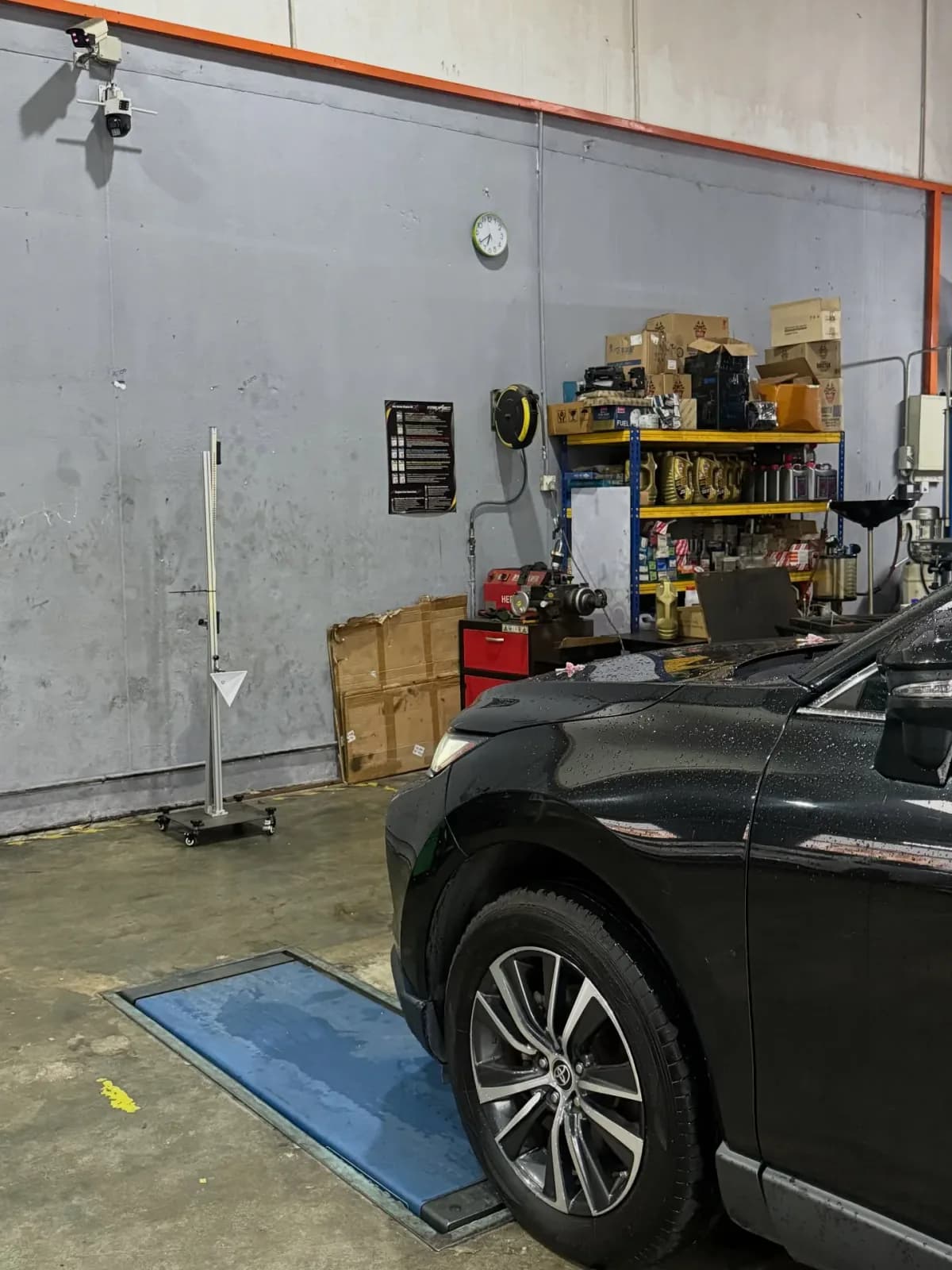
Another view of the Harrier front radar calibration setup. This workshop photograph is an example from the case, not a measurement template.
View original case record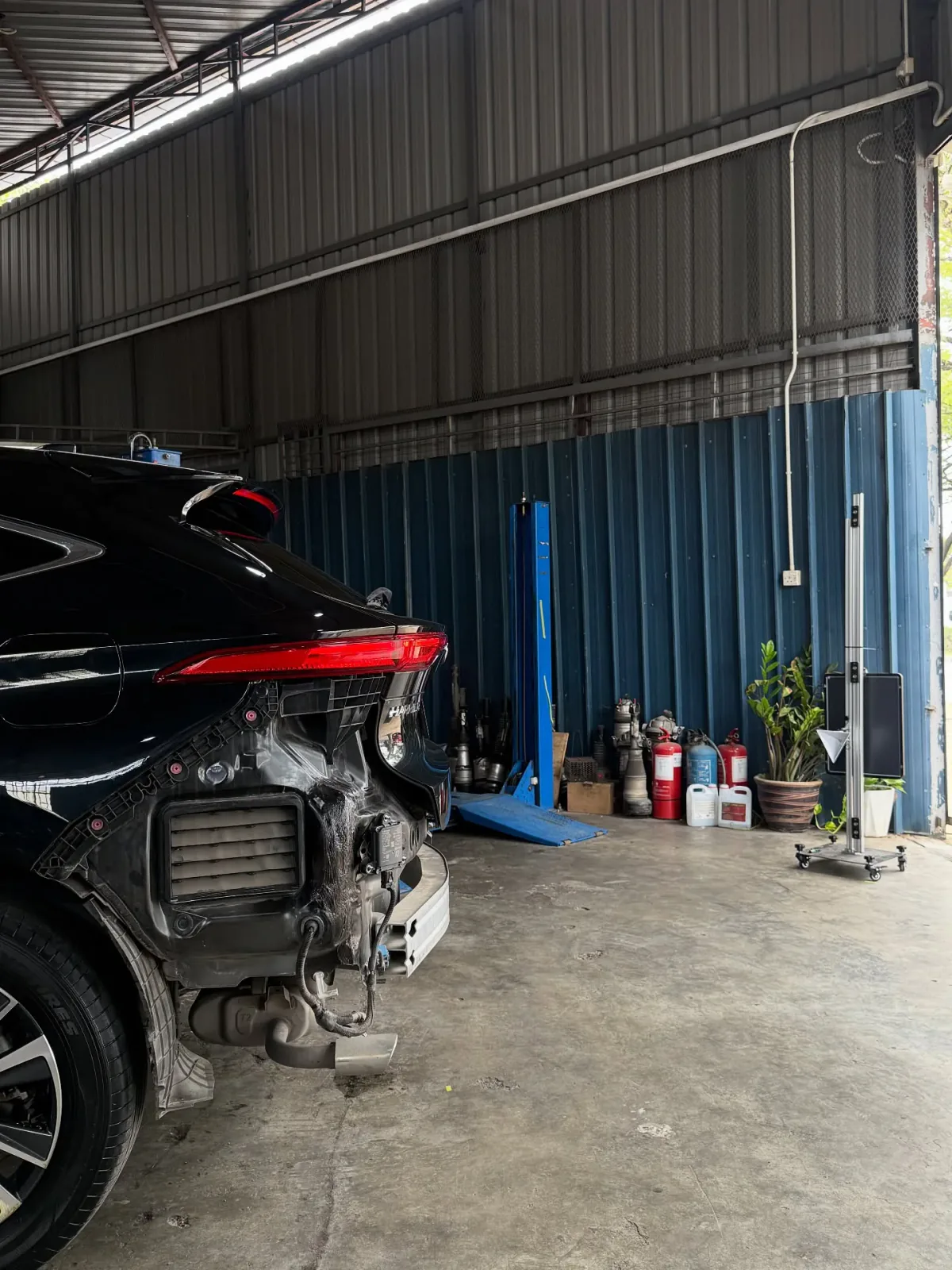
The Harrier with its rear bumper removed, showing a rear side radar sensor and nearby calibration equipment. The case records rear BSM beam-axis adjustment.
View original case recordArrange a Toyota ADAS inspection in Taman Mastiara, KL
Share the Toyota model, production year, exact warning message and any existing fault-code report. Mention whether the concern began after bumper work, a collision, windscreen replacement, a sensor replacement or an exterior conversion. These details help the team assess the inspection request and required model-specific procedure.
A calibration-only job and a module replacement with calibration involve different work. The quotation and timing depend on the findings, installed equipment and any repair needed before aiming can be completed.
Frequently asked questions
Why does my Alphard show a Pre-Collision System warning?
The warning can involve radar or camera alignment, sensor obstruction, communication or another system fault. Sri Kuching’s documented AGH30 and AGH40 cases had confirmed front radar optical-axis misalignment, but a warning alone does not establish that diagnosis for another Alphard.
Does an Alphard AGH30 or AGH40 need calibration after bumper replacement?
The requirement depends on the exact vehicle, work performed and Toyota’s repair procedure. Work affecting the radar, bracket or transmission area calls for an installation and calibration assessment; do not assume the AGH30 and AGH40 procedures are identical.
Can a rear bumper repair affect the Blind Spot Monitor?
Yes. Damage or repairs can affect a rear radar bracket, mounting angle or surrounding bumper material. Inspection determines whether alignment, a component repair or another procedure is required.
Where can I enquire about Toyota radar calibration in Kuala Lumpur?
Sri Kuching Car Audio & Air Cond Service Centre in Taman Mastiara, Kuala Lumpur, publishes Alphard AGH30 and AGH40, Vellfire and Harrier ADAS repair records. Contact the workshop with your model, year, warning messages and previous repair details to discuss an inspection.
Read the original workshop cases
See the vehicle photos, recorded work and outcomes from Sri Kuching. These cases document individual repairs; your vehicle needs its own assessment.
Toyota Alphard AGH30 — Front Radar Sensor Calibration
View case and photo gallery →
Toyota Alphard AGH40 — Front Radar Sensor Calibration
View case and photo gallery →
Toyota Vellfire — Blind Spot Monitor Calibration & Module Replacement
View case and photo gallery →
Toyota Harrier — Front Radar & Blind Spot System Calibration
View case and photo gallery →
Continue reading
Understand 11 Toyota ADAS fault codes, including C1AC1, U023387, U111087 and C1AA800, and how alignment faults differ from communication problems.
Learn when bumper, windscreen and sensor work needs ADAS calibration, how static and dynamic procedures differ, and what affects cost and timing in KL.
Compare radar, windscreen cameras and BSM systems across Toyota, Honda, Audi, BMW and Porsche, including model-specific calibration enquiry details in KL.
Further technical reading
Technical information from vehicle manufacturers and specialist suppliers.