
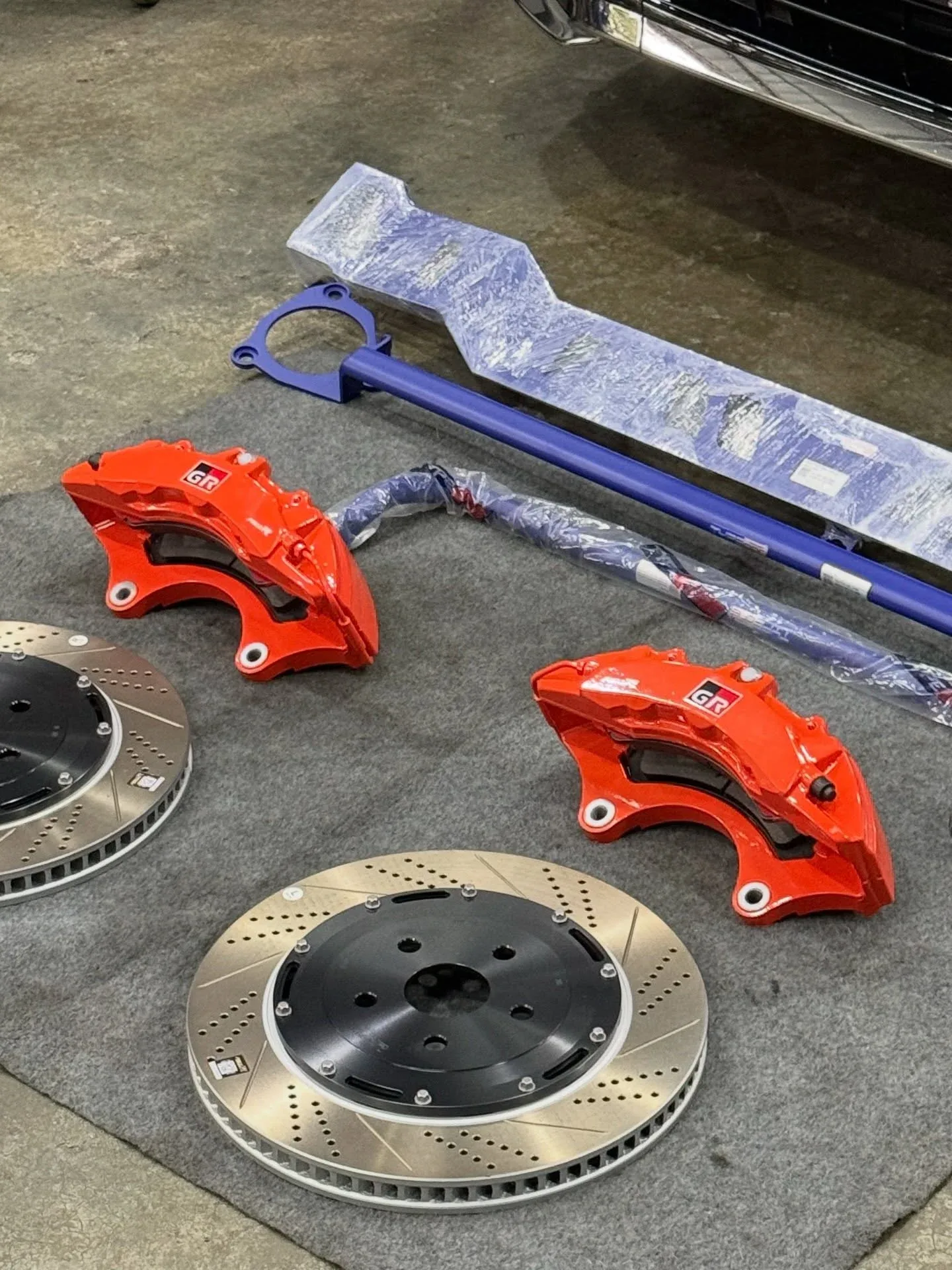
Quick answer
Is a brake kit with more pistons automatically better?
No. Piston diameter, hydraulic area, caliper construction, rotor dimensions and pad compound must suit the vehicle and intended use. A matched 4-piston package can be more appropriate than a larger 6- or 8-piston kit. Wheel clearance, brake balance, tyres and interaction with ABS and stability control also matter.
Five different goals need different brake kit discussions
A family MPV, modified off-road vehicle and track-focused hatchback do not have identical braking demands. Sri Kuching in Taman Mastiara, Kuala Lumpur, starts with how the car is used and what the owner wants to improve. Existing faults should be investigated before selecting performance parts.
1. Daily driving: predictable response and road comfort
City traffic, wet weather and cold starts call for a road-suitable pad with predictable response. Noise, dust and disc life matter alongside pedal feel. Correct pads, sound rotors and fresh specified fluid may meet the need without a complete big brake kit; a compatible larger package can be considered when the requirements justify it.
2. Highway and fully loaded driving: manage repeated heat
Passengers and luggage increase vehicle mass and the energy the brakes must dissipate. A loaded Alphard or Vellfire may need particular attention to rotor dimensions, cooling and pad suitability. A matched package can support repeated braking, but increased size alone does not guarantee a shorter emergency stop.
3. Spirited driving: balance heat resistance with daily usability
More demanding road use may call for greater consistency during repeated braking and a suitable performance street pad. Cold and wet operation still matter for a daily car. Discuss acceptable noise, dust and rotor wear rather than selecting a racing compound solely for stronger initial bite.
4. Track days: select for sustained thermal demands
Repeated braking on a circuit places substantial heat into pads, rotors, calipers and fluid. Component temperature capability, cooling, tyre grip and inspection requirements need assessment together. Some competition pads are not specified for public roads. A car serving both roles may need a suitable dual-purpose compound or separate pad and maintenance arrangements.
5. Appearance: choose comfortable street-use components
Larger visible calipers and a chosen colour can be a reasonable personalisation goal. Wheel clearance, brake balance and installation quality still come first. An appearance-focused car does not automatically benefit from an aggressive racing pad, extra noise or the largest rotor that can be fitted.
Compare 2-, 4-, 6- and 8-piston calipers as complete designs
The piston count describes the hydraulic pistons applying the pads. It is not a braking performance score. Piston diameter, hydraulic area and the way a fixed or sliding caliper operates affect compatibility and pedal behaviour. Pad size alone also does not establish stopping torque.
Evaluate the manufacturer’s complete caliper and rotor application instead of adding piston counts or comparing appearance. Mounting position, pad shape, rotor thickness and the vehicle’s hydraulic system must work together.
| Caliper design | Potential application | What to check |
|---|---|---|
| 2-piston | Original-equipment and aftermarket systems where the design meets the demand | Construction, hydraulic characteristics and complete vehicle application |
| 4-piston | Compatible street, off-road or motorsport packages; used in the documented Jimny case | Pad and rotor pairing, balance and wheel clearance |
| 6-piston | Some larger packages; the Vellfire record uses FECCR 6-piston calipers | Exact model, piston sizing, rotor dimensions and vehicle requirements |
| 8-piston | Selected specialist or aftermarket systems | Whether the larger design offers a useful, compatible solution for this car |
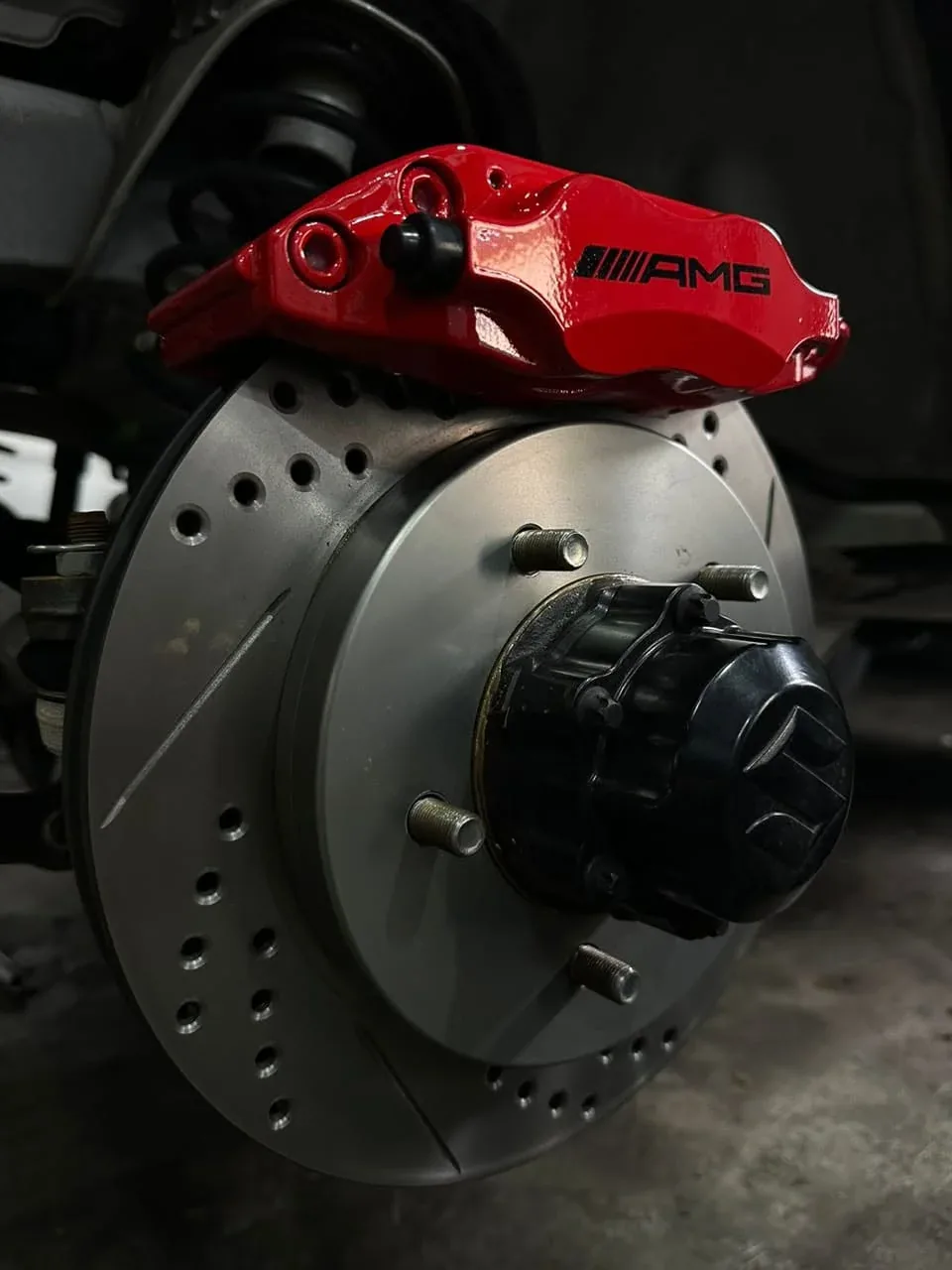
The Jimny’s installed front brake assembly. Its case records a 4-piston caliper kit with performance rotors, followed by bedding-in and post-installation validation.
View original case record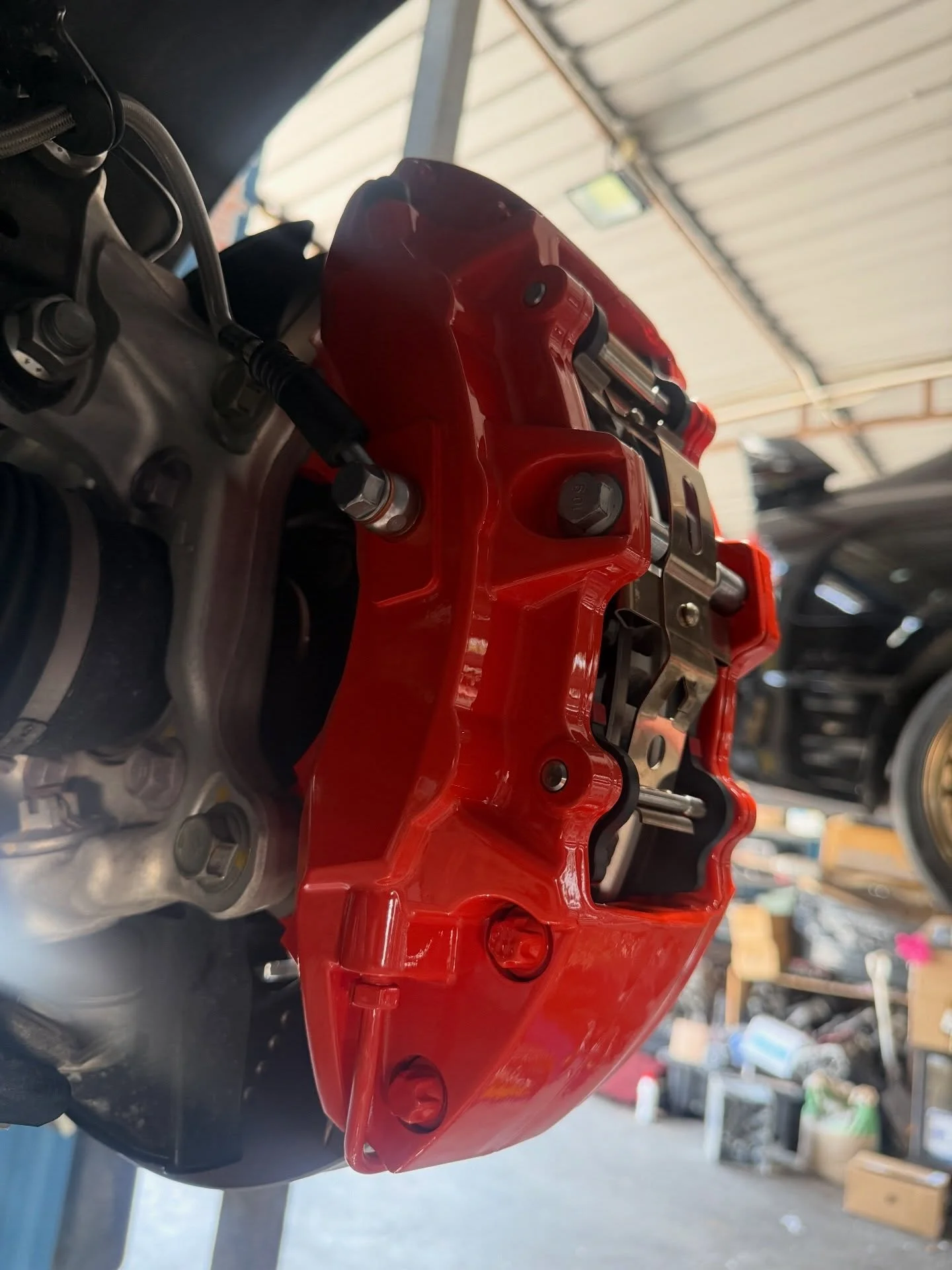
A closer view of the installed Vellfire caliper. Its outer shape and position are relevant to wheel spoke clearance, which requires a kit template or a physical fitment check.
View original case recordMonoblock, forged and multi-piston describe different features
Monoblock or monobloc describes a caliper body made as one piece. Forging and casting describe manufacturing processes; a monoblock caliper can be cast. Stiffness and weight depend on the finished design and material, not the label alone. A multi-piston layout is another characteristic and does not establish how the body was manufactured.
Sri Kuching’s Swift Sport ZC33S record identifies its selected FECCR FR5 calipers as forged monoblock. That describes the product in this installation. For a proposed FECCR package, confirm the exact caliper model, compatible rotor and pad specifications, mounting hardware and wheel requirements before deciding.
The manufacturer references below explain general construction and braking principles. Confirm the exact specifications with the supplier of the selected FECCR kit.
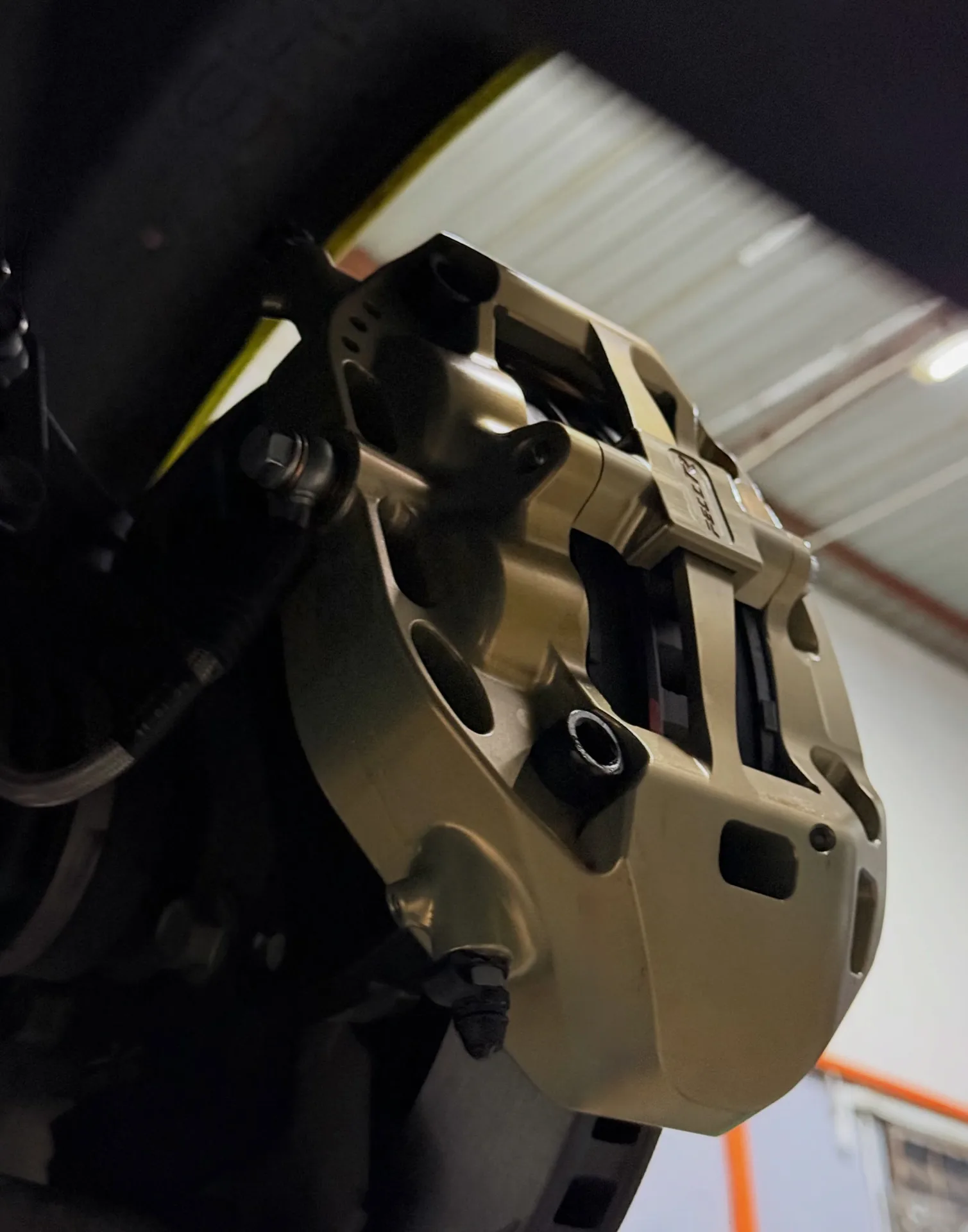
A close view of the FR5 caliper fitted to the Swift Sport. Caliper construction is one selection factor alongside piston sizing, pad availability, disc specification and wheel clearance.
View original case recordHydraulic compatibility and front-to-rear brake balance matter
Braking shifts load towards the front axle, but the appropriate balance depends on the vehicle’s design, load, tyres and suspension. Caliper hydraulic characteristics, pad friction and effective rotor radius all affect the system. An unsuitable combination can alter pedal travel and brake balance even when the parts bolt into position.
The proposed front and rear components need assessment against the master cylinder, ABS, electronic stability control and other relevant functions. Where fitted, the electronic parking brake must retain its required operation. Physical fit and a short road test do not independently establish compatibility with every control-system operating condition.
A rear disc upgrade is therefore an application-specific decision, not an automatic follow-up to larger front calipers. The Swift rear case documents work intended to complement a front package; it does not provide a universal front-to-rear ratio for other vehicles.
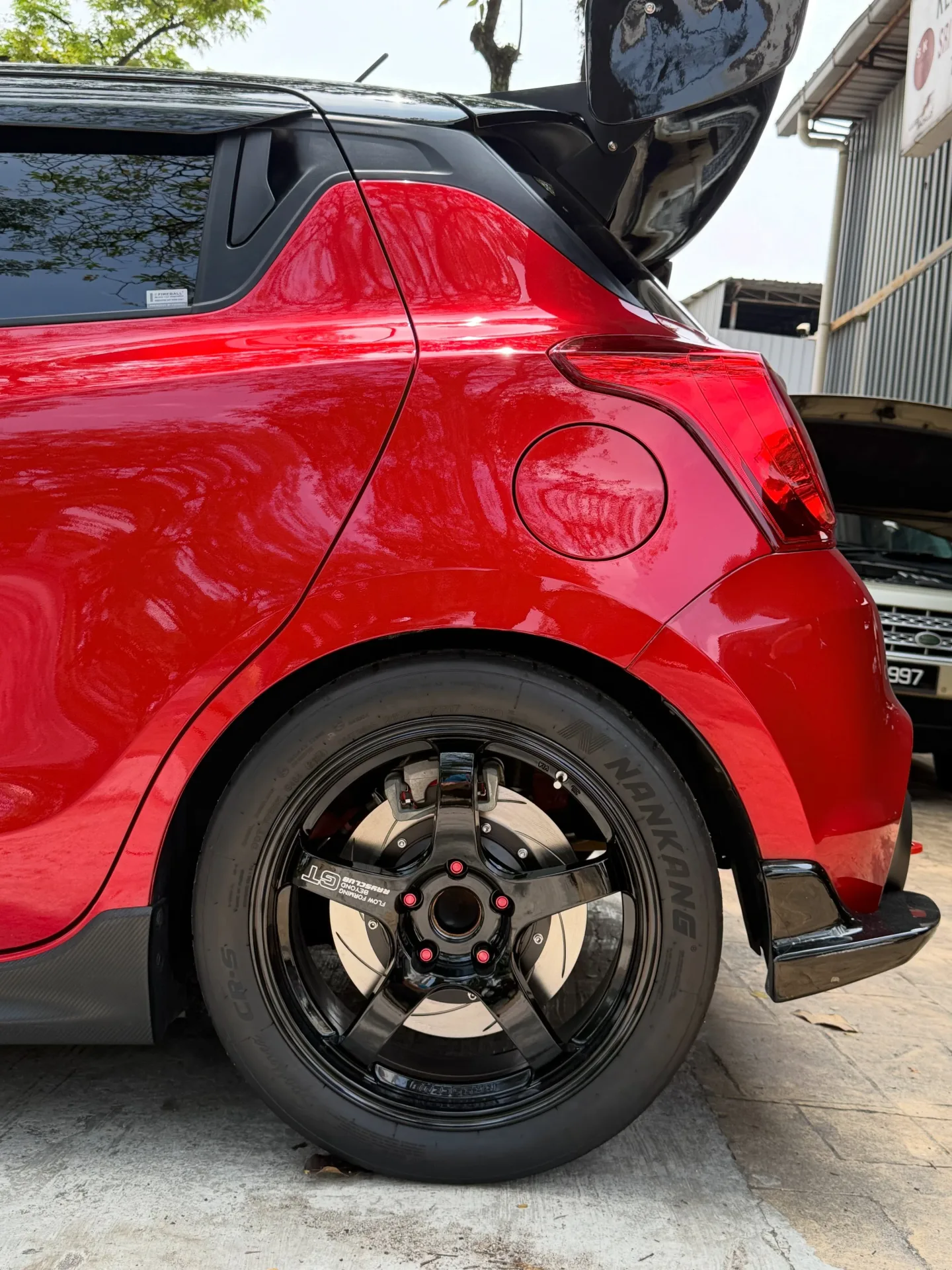
The rear wheel arrangement on the Swift Sport in the oversize disc record. Its written case documents the rear disc installation and a post-installation road test.
View original case recordWhy a bigger brake kit does not automatically shorten stopping distance
The tyres and road determine how much braking force can be transmitted before grip is exceeded. If the existing brakes can already reach that limit and activate ABS, larger calipers alone may not meaningfully shorten one emergency stop. Tyre condition, surface, vehicle load, suspension and driver inputs remain relevant.
A suitable upgrade may instead improve thermal capacity or consistency over repeated demanding braking. Discuss the actual problem—such as heat-related fade, inadequate maintenance or an appearance preference—so the proposed solution addresses it. No piston count guarantees a particular stopping-distance improvement.
How the discussion changes between vehicle types
Alphard and Vellfire owners commonly need to balance passenger load, comfort and appearance. Confirm the generation and wheels before choosing a package. Honda Civic and other sporty sedan owners may find that suitable street pads and fluid address their needs, or may consider a larger matched system for demanding use.
Swift Sport owners should distinguish commuting from regular circuit use. Jimny and other off-road owners should explain wheel, tyre and suspension modifications and exposure to water or debris. BMW, Mercedes-Benz, Audi and other premium vehicles may already have capable factory brakes, so maintenance and correctly specified replacement parts can be the more appropriate scope.
These are starting points for an assessment, not a list of guaranteed kit applications. Contact Sri Kuching with the exact vehicle and wheel details to establish which packages can be assessed and what supporting work is needed.
Frequently asked questions
Is a 6-piston caliper better than a 4-piston caliper?
Not automatically. The complete design, piston sizing, hydraulic compatibility, pad compound and rotor dimensions determine suitability. A correctly matched 4-piston package may better meet a vehicle’s needs than a larger 6-piston kit.
Do I need an 8-piston brake kit?
Only if the particular package suits the vehicle and its requirements. Eight pistons do not by themselves demonstrate more useful braking performance. Assess hydraulic compatibility, rotor and pad pairing, wheel clearance and intended use.
What is the best brake kit for daily driving?
A daily setup should offer predictable cold braking, suitable wet-weather operation, acceptable noise and dust, and vehicle compatibility. A full big brake kit is not always necessary; correct maintenance, pads, rotors and fluid may address the owner’s requirements.
Will bigger calipers make my car stop faster?
They do not guarantee a shorter emergency stop. Available tyre grip, road conditions, vehicle dynamics and ABS matter. A correctly selected larger system may offer benefits in thermal capacity and consistency during repeated demanding braking.
Can a brake kit upgrade affect ABS or stability control?
An unsuitable package can alter the braking characteristics the vehicle’s systems work with. The exact application needs assessment for hydraulic compatibility, front-to-rear balance and required electronic functions; bolt-on fitment alone does not prove compatibility.
Read the original workshop cases
See the vehicle photos, recorded work and outcomes from Sri Kuching. These cases document individual repairs; your vehicle needs its own assessment.
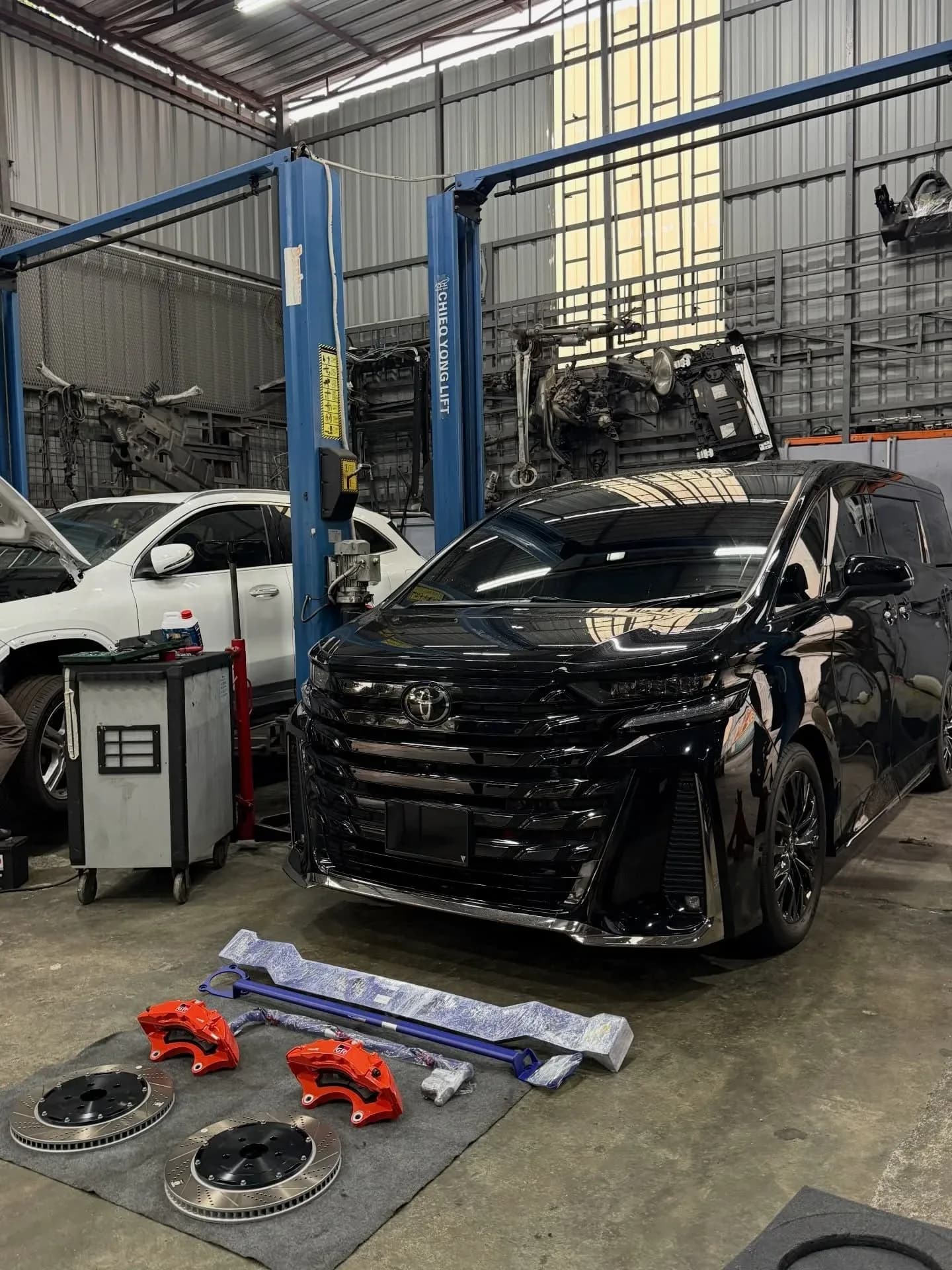
Toyota Vellfire AGH40 — FECCR 6-Piston Caliper Installation
View case and photo gallery →
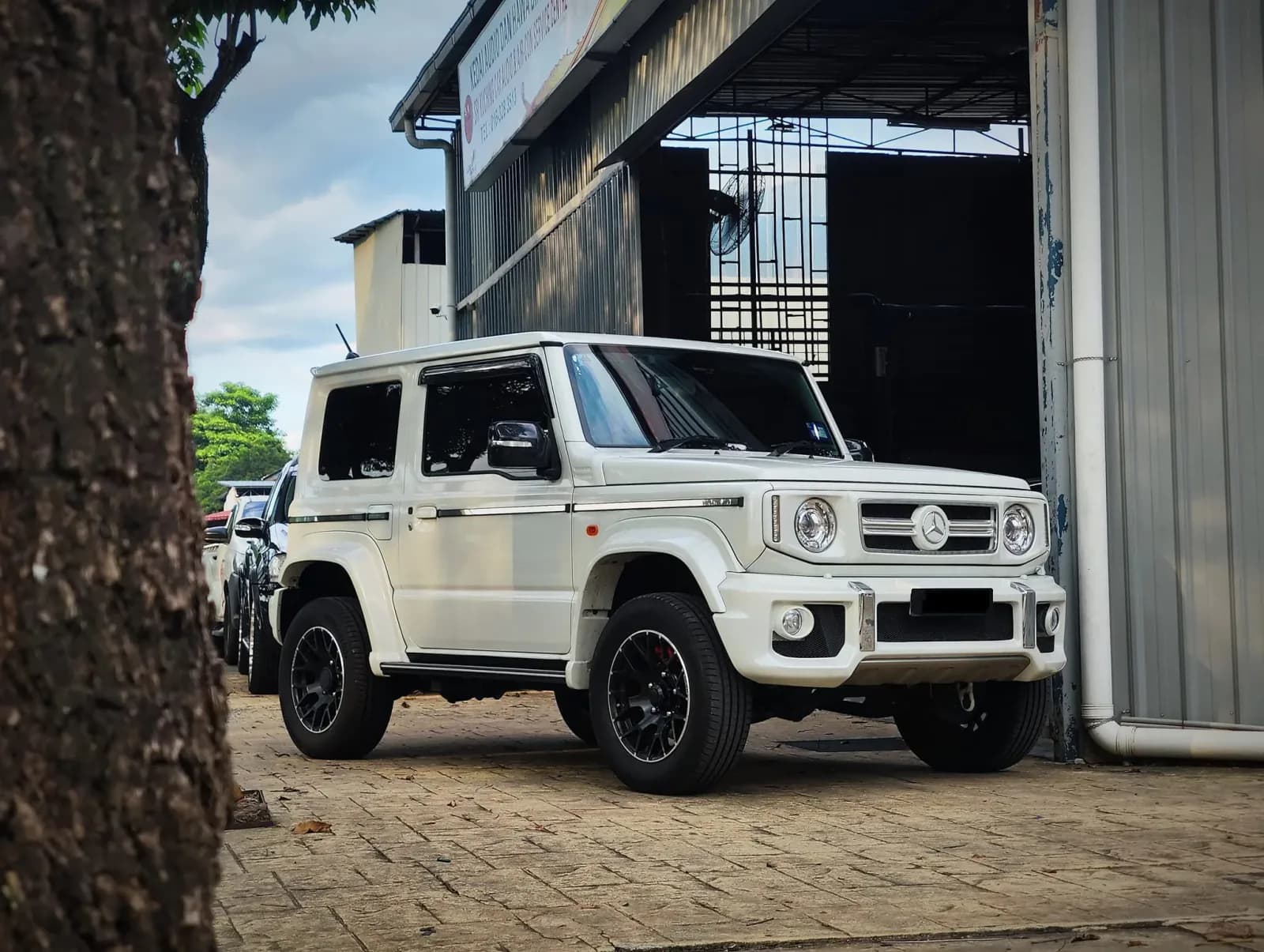
Suzuki Jimny — 4-Piston Caliper Brake Kit Upgrade
View case and photo gallery →
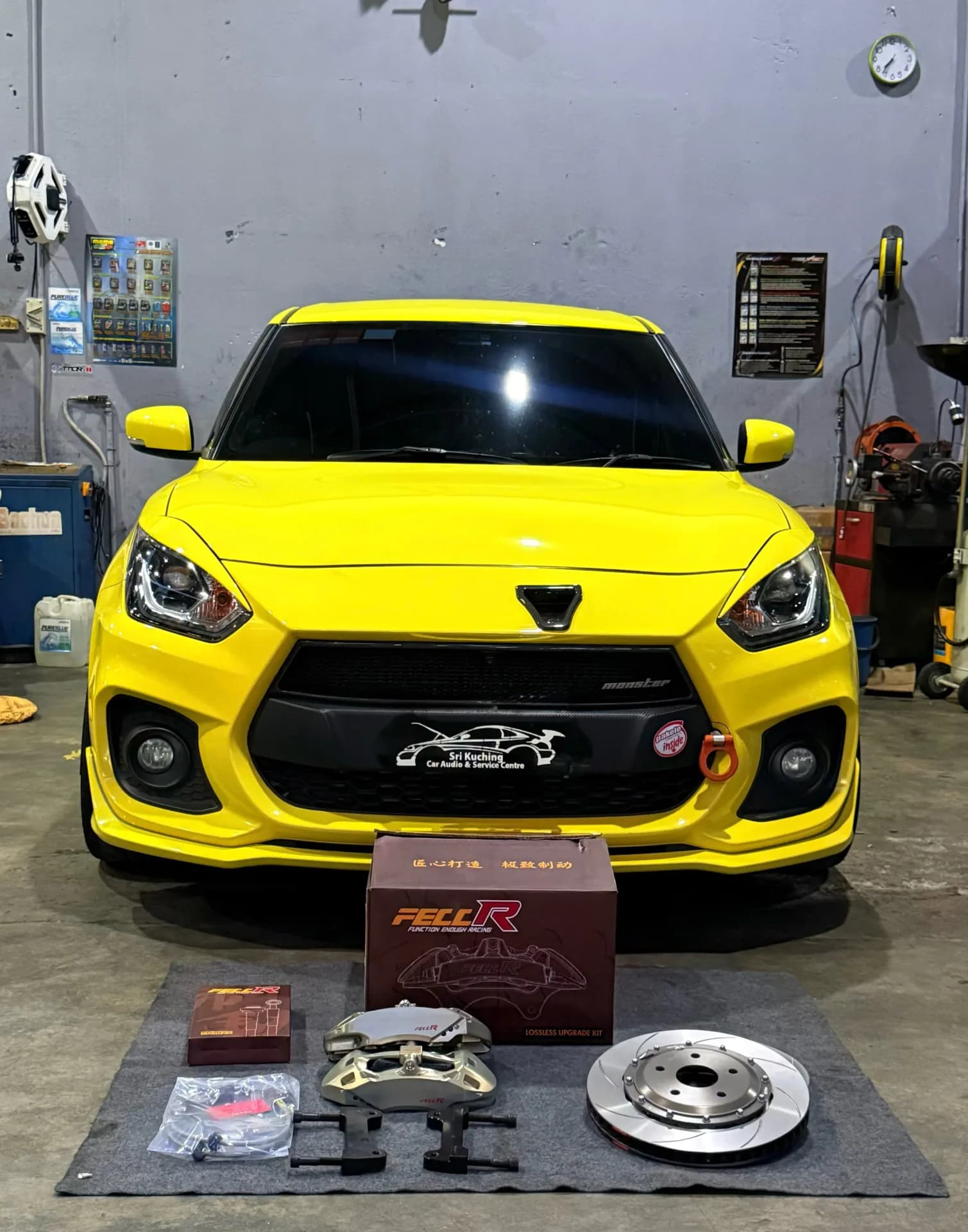
Suzuki Swift Sport ZC33S — FECCR FR5 Monoblock Racing Caliper
View case and photo gallery →
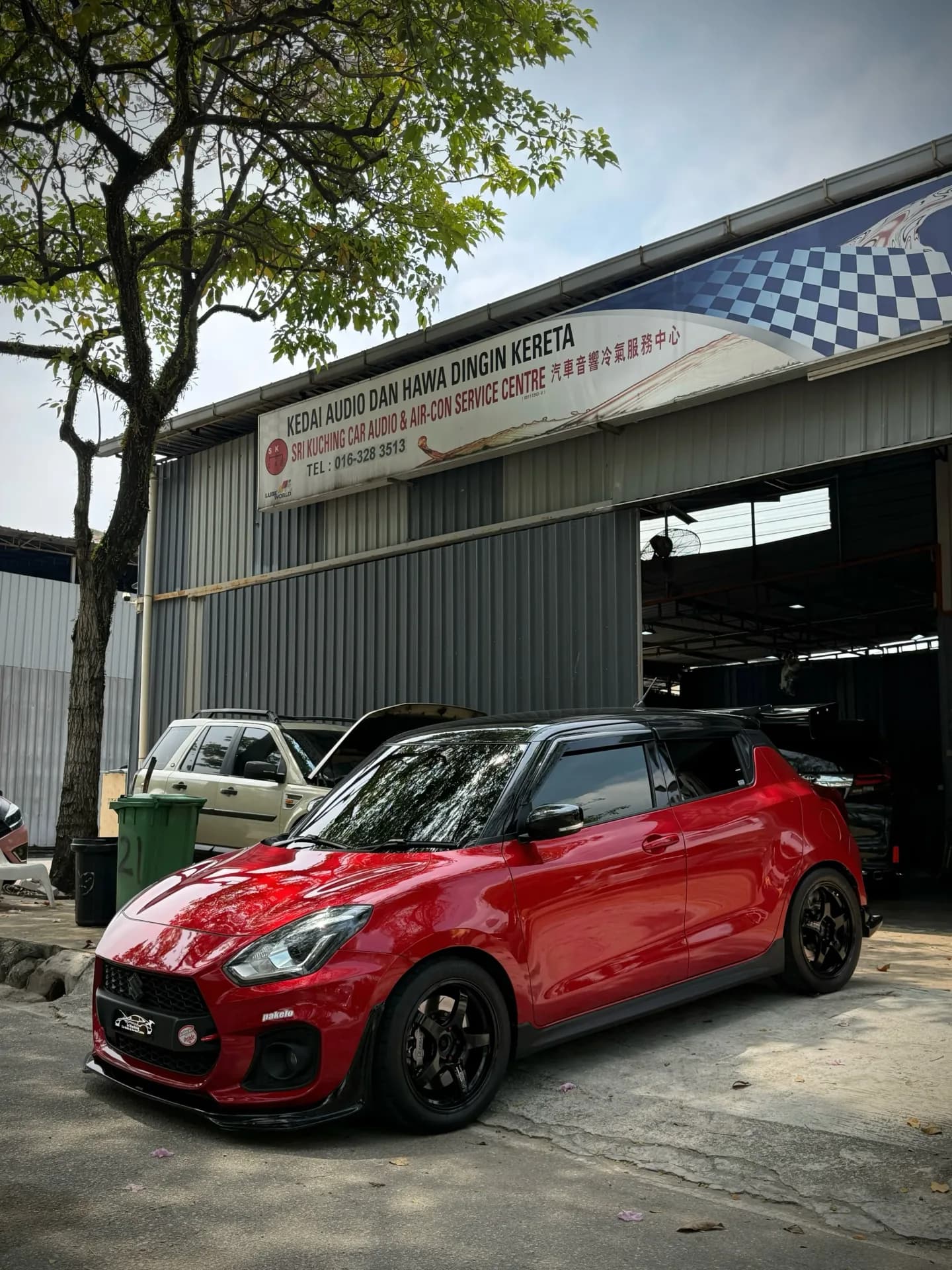
Suzuki Swift Sport ZC33S — Rear High-Temp Oversize Disc Upgrade
View case and photo gallery →
Continue reading
Compare FECCR Vellfire and Swift Sport upgrades, Jimny 4-piston brakes and Swift rear discs through Sri Kuching’s documented Kuala Lumpur workshop cases.
Check wheel barrel, spoke clearance, offset and brake kit templates before installation. See workshop photos and eight professional fitment checks in KL.
Compare street and racing pads, six brake rotor design choices, fluid requirements and bedding-in, with Swift Sport and Vellfire workshop photographs.
Further technical reading
Technical information from vehicle manufacturers and specialist suppliers.