
Quick answer
Can upgraded calipers work properly with any brake pads, discs and fluid?
No. Pads must match the caliper, rotor and intended operating conditions, while the discs and fluid must meet the vehicle and kit specifications. Supporting work includes suitable hoses, correct bleeding, the manufacturer’s bedding procedure and ongoing inspection. The complete package determines everyday usability and performance during repeated braking.
Match brake pad compound to temperatures and daily expectations
Brake pads create friction against the discs. Their compound influences cold response, initial bite, temperature performance, noise, dust and wear. Even an expensive caliper cannot compensate for pads that are unsuitable for the way the car is used.
For daily driving, prioritise predictable cold braking and acceptable road manners. A suitable street compound can meet normal commuting needs without the noise or maintenance demands of some competition products. A performance street pad may offer a different friction response or greater heat resistance, but its stated use and compatibility still need checking.
Track pads address repeated braking at elevated temperatures. Some are specifically excluded from public-road use, while other products are intended for mixed use. Do not assume all racing compounds behave identically when cold. Check the actual manufacturer’s operating guidance and explain whether the car also needs to handle everyday traffic.
Noise, dust and disc wear are practical ownership considerations. An aggressive compound can be inconvenient for an appearance-focused car whose owner wants clean wheels and quiet operation. Select the compromise deliberately rather than assuming the most expensive or most aggressive pad is the best choice.
| Use | Main considerations | Discuss before purchase |
|---|---|---|
| Daily road use | Cold response, wet-weather operation and comfort | Noise, dust, disc life and exact vehicle application |
| Performance street use | Repeated braking with acceptable road behaviour | Temperature range and any increased wear or noise |
| Track use | Consistency at sustained operating temperatures | Road-use restrictions, inspection and changeover needs |
Six brake disc design choices: surface, cooling, size and construction
A rotor provides the friction surface and absorbs and dissipates braking heat. Diameter, thickness, material, internal cooling and pad compatibility all matter. The following descriptions overlap: a rotor can be ventilated, slotted, oversized and two-piece at the same time. Its surface pattern alone does not establish heat capacity or quality.
1. Plain discs
A plain rotor has a smooth friction surface without holes or grooves. A suitable plain ventilated disc can provide the required road performance and durability. Its dimensions, material and ventilation remain more informative than whether the surface looks like a performance part.
2. Slotted or grooved discs
Grooves influence the pad-contact surface and removal of surface debris. Some designs suit demanding or track applications, but a groove pattern does not make every disc suitable for racing. Check the actual rotor’s construction, intended use and pad pairing.
3. Cross-drilled discs
Drilled discs have holes through the friction surface and are often chosen partly for their appearance. Hole design and operating conditions matter. Severe thermal cycling can increase cracking concerns in some applications; for frequent circuit use, follow the rotor manufacturer’s recommendations rather than choosing a pattern on looks alone.
4. Ventilated discs
Internal channels allow airflow through the rotor to support heat dissipation. Their geometry, disc dimensions and operating conditions affect cooling. Ventilation describes the internal construction and can be combined with a plain, slotted or drilled friction surface.
5. Oversized discs
A larger diameter can provide a greater effective braking radius and, depending on the complete design, increased thermal capacity. It must match the caliper position, brackets, pad contact area and wheel clearance. Added size can also affect unsprung weight and does not automatically make the package better.
6. One-piece and two-piece discs
A one-piece rotor combines the friction disc and mounting hat in one component. A two-piece design uses a separate friction ring and bell with an engineered fixing arrangement, which may be fixed or floating. Depending on design, benefits can include weight, thermal management or replaceable rings, alongside different costs and inspection requirements.
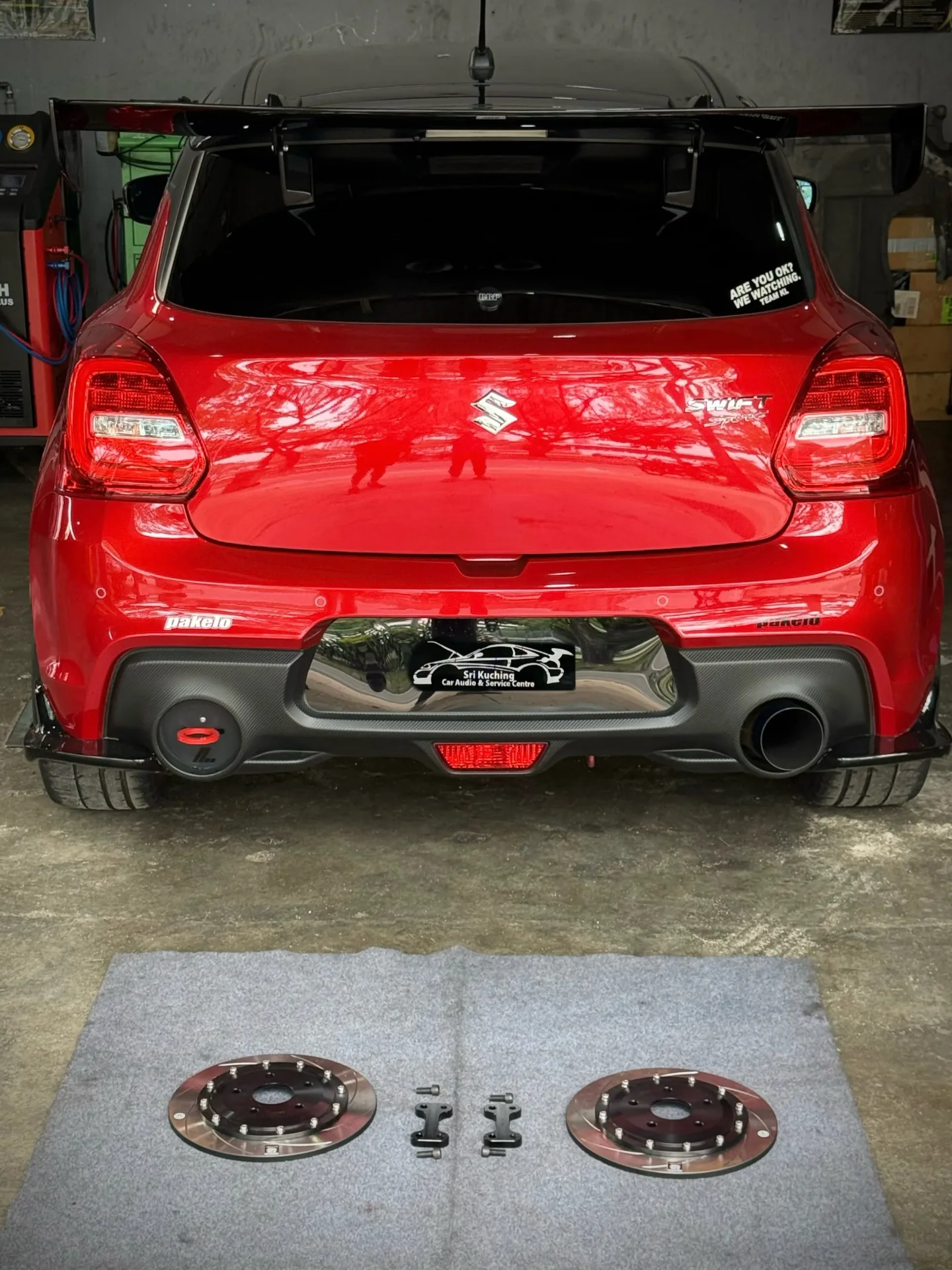
Rear upgrade components photographed with the red Swift Sport. The recorded work includes oversize rear discs, pad and fluid checks, and post-installation braking validation.
View original case record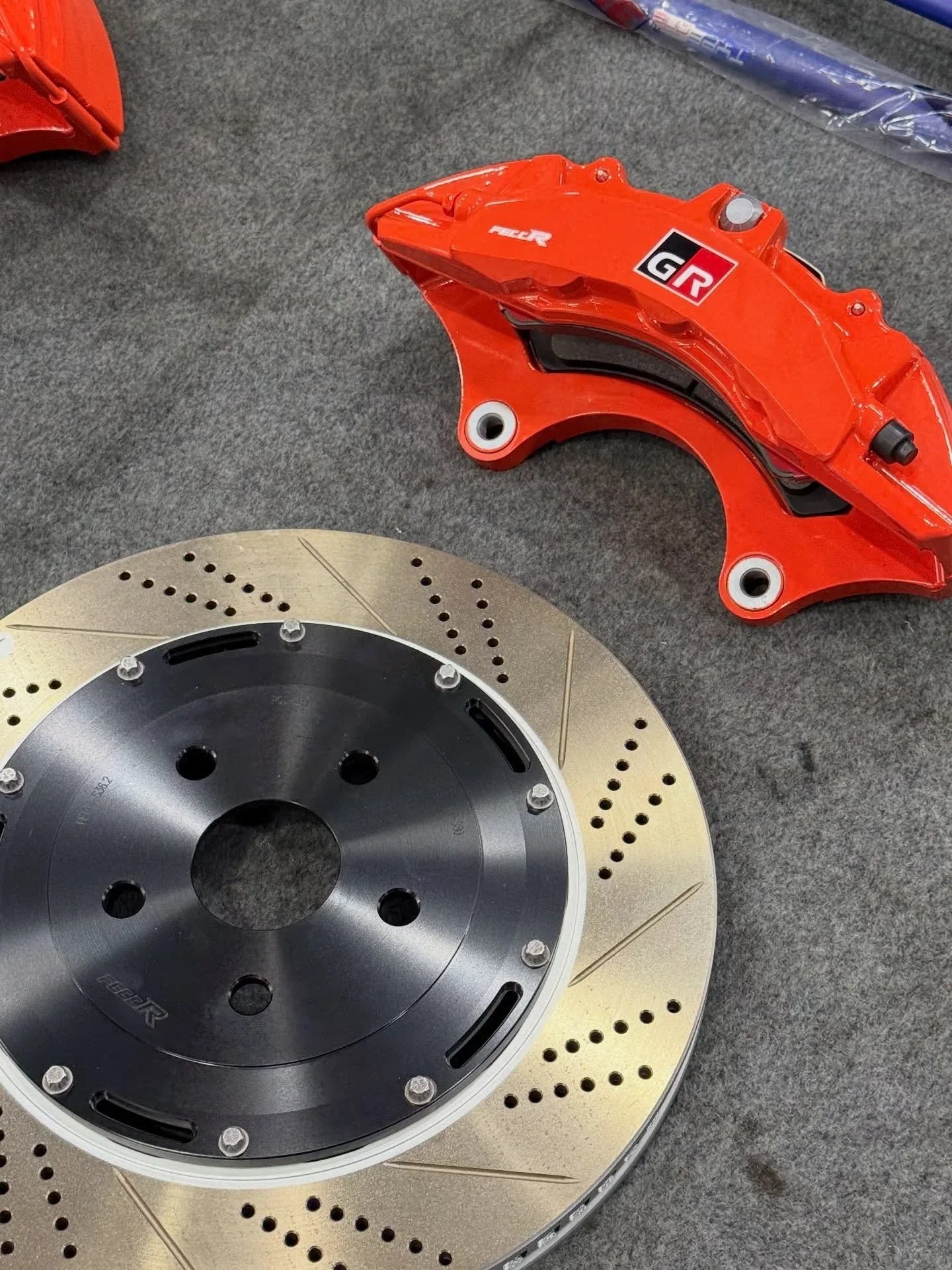
The disc face, mounting centre and caliper from the Vellfire upgrade. Disc dimensions and the required mounting arrangement must be checked against the actual kit specification.
View original case recordBrake fluid, compatible hoses and correct bleeding are part of the job
Brake fluid transmits hydraulic pressure. When excessive heat causes vapour to form, pedal response can deteriorate. The fluid must meet the vehicle and kit requirements, including the required specification and viscosity; a higher advertised boiling point alone is not enough to establish suitability.
Brake fluid types are not universally interchangeable. Silicone DOT 5 is different from glycol-based DOT 3, DOT 4 and DOT 5.1, and must not be mixed with them. The DOT 5.1 name does not mean it is silicone DOT 5. Use the specified fluid and service procedure instead of substituting by number or brand reputation.
Replacement hoses must have suitable connections, length and routing for the installed calipers and vehicle. They need secure mounting and clearance throughout the relevant steering and suspension movement. A hose upgrade should address the actual installation requirements, not merely its appearance.
Opening or replacing hydraulic components requires the correct bleeding procedure. Some systems use diagnostic functions as part of bleeding. The completed work needs checks for leakage, pedal response and required hydraulic operation before normal use.
Follow the actual pad and disc bedding-in instructions
New pads and discs may require controlled preparation to establish the intended contact and friction characteristics. Procedures differ between manufacturers and compounds. Follow the exact instructions for the installed parts in suitable controlled conditions; do not copy a generic sequence of high-speed stops onto public roads.
The Vellfire, Jimny and Swift FR5 records list bedding-in and braking validation. The Swift rear disc record lists post-installation validation and a road test. These are useful examples of work beyond fitting visible components; the correct process for another car comes from its selected parts and vehicle requirements.
At handover, confirm any bedding restrictions, follow-up checks and inspection schedule. Unexpected pedal changes, fluid leakage, persistent vibration or abnormal braking require assessment. A freshly installed kit should not be assumed ready for demanding use simply because it looks complete.
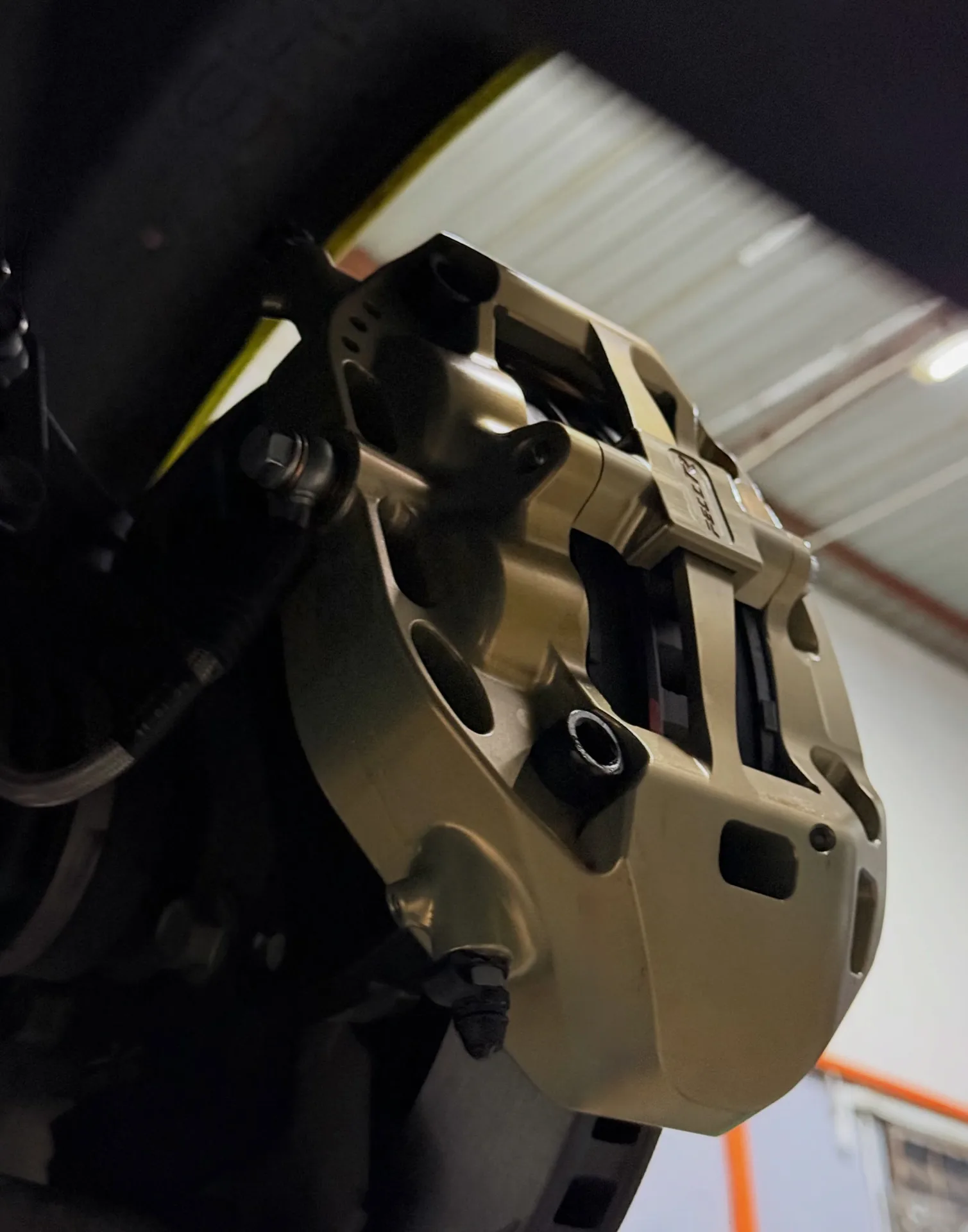
A close view of the FR5 caliper fitted to the Swift Sport. Caliper construction is one selection factor alongside piston sizing, pad availability, disc specification and wheel clearance.
View original case record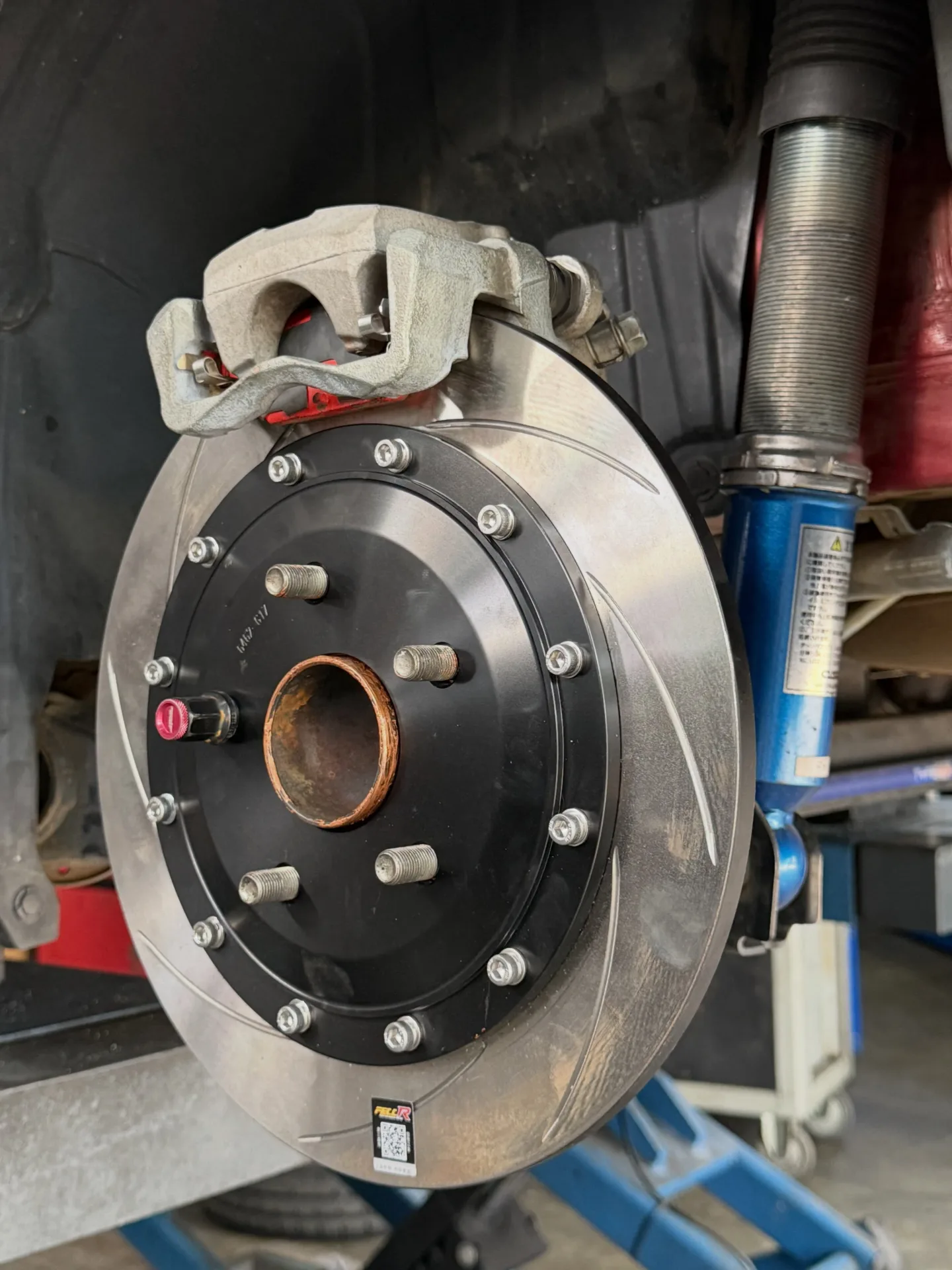
The installed rear brake assembly from the Swift Sport oversize disc case. Rear upgrades need their own checks for caliper position, pad contact and parking-brake compatibility.
View original case recordCompare maintenance needs and the complete quotation
Pads, rotors, fluid and hoses need ongoing inspection and service appropriate to their condition, specified intervals and use. Track operation, heavy loads and off-road contamination can change those needs. Two-piece rotor hardware, replacement rings and specialist pads may also have different availability and service requirements from standard parts.
Brake upgrade costs in Kuala Lumpur depend on the vehicle, caliper model, rotor design, pads, hardware, hoses, fluid and installation work. A separate pad or disc change has a different scope from a complete multi-piston kit. Wheel compatibility and any existing brake faults can add necessary work.
Ask Sri Kuching in Taman Mastiara to identify the included components, supporting service, bedding or verification work and expected maintenance needs for the proposed package. Confirm fitment and intended use before comparing prices, including the specification and future availability of replacement pads and discs.
Frequently asked questions
Which brake pads are suitable for daily driving?
Choose a street-suitable compound with predictable cold response and acceptable noise, dust and wear. It must match the caliper, rotor and vehicle requirements. A more aggressive pad is not automatically more suitable for commuting.
Can I use racing brake pads on the road?
Check the exact product. Some compounds are designed for mixed use, while others are expressly unsuitable for public roads. Their temperature behaviour, noise and wear differ, so explain both road and track use before selecting pads.
Are slotted brake discs always better than drilled discs?
No. The right choice depends on rotor construction, pad pairing and intended use. Severe circuit conditions can favour designs with better resistance to thermal cracking, but surface pattern alone does not determine quality or suitability.
Do I need brake fluid service when fitting a big brake kit?
Fluid service and correct bleeding are commonly part of a caliper installation because hydraulic connections are opened. The required fluid and procedure depend on the vehicle and kit; not every fluid type is interchangeable.
Do all new brake kits use the same bedding-in procedure?
No. Follow the installed pad, disc and kit manufacturer’s instructions in suitable controlled conditions. Different compounds require different preparation, and the workshop should explain any initial-use restrictions and follow-up checks.
Read the original workshop cases
See the vehicle photos, recorded work and outcomes from Sri Kuching. These cases document individual repairs; your vehicle needs its own assessment.
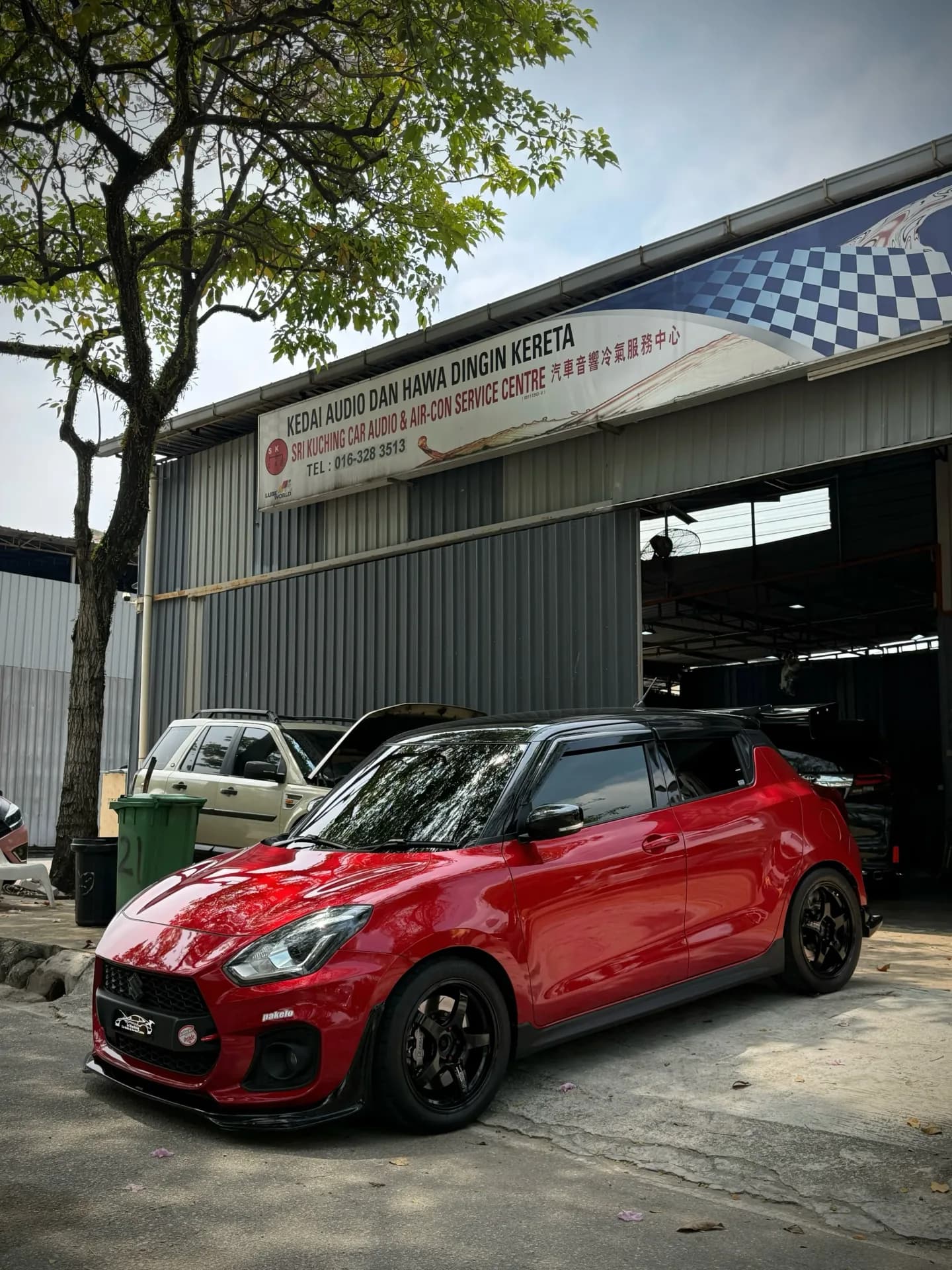
Suzuki Swift Sport ZC33S — Rear High-Temp Oversize Disc Upgrade
View case and photo gallery →
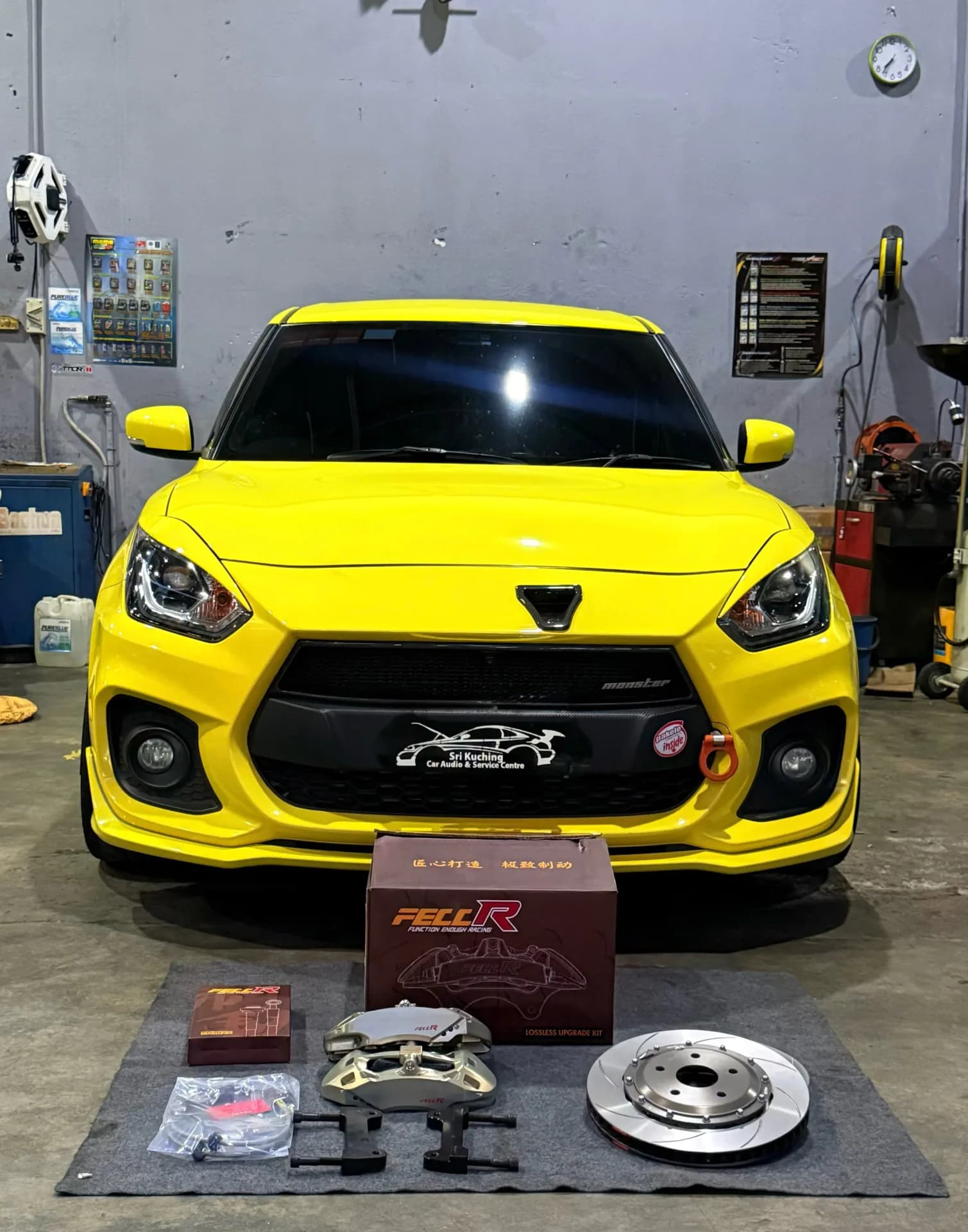
Suzuki Swift Sport ZC33S — FECCR FR5 Monoblock Racing Caliper
View case and photo gallery →
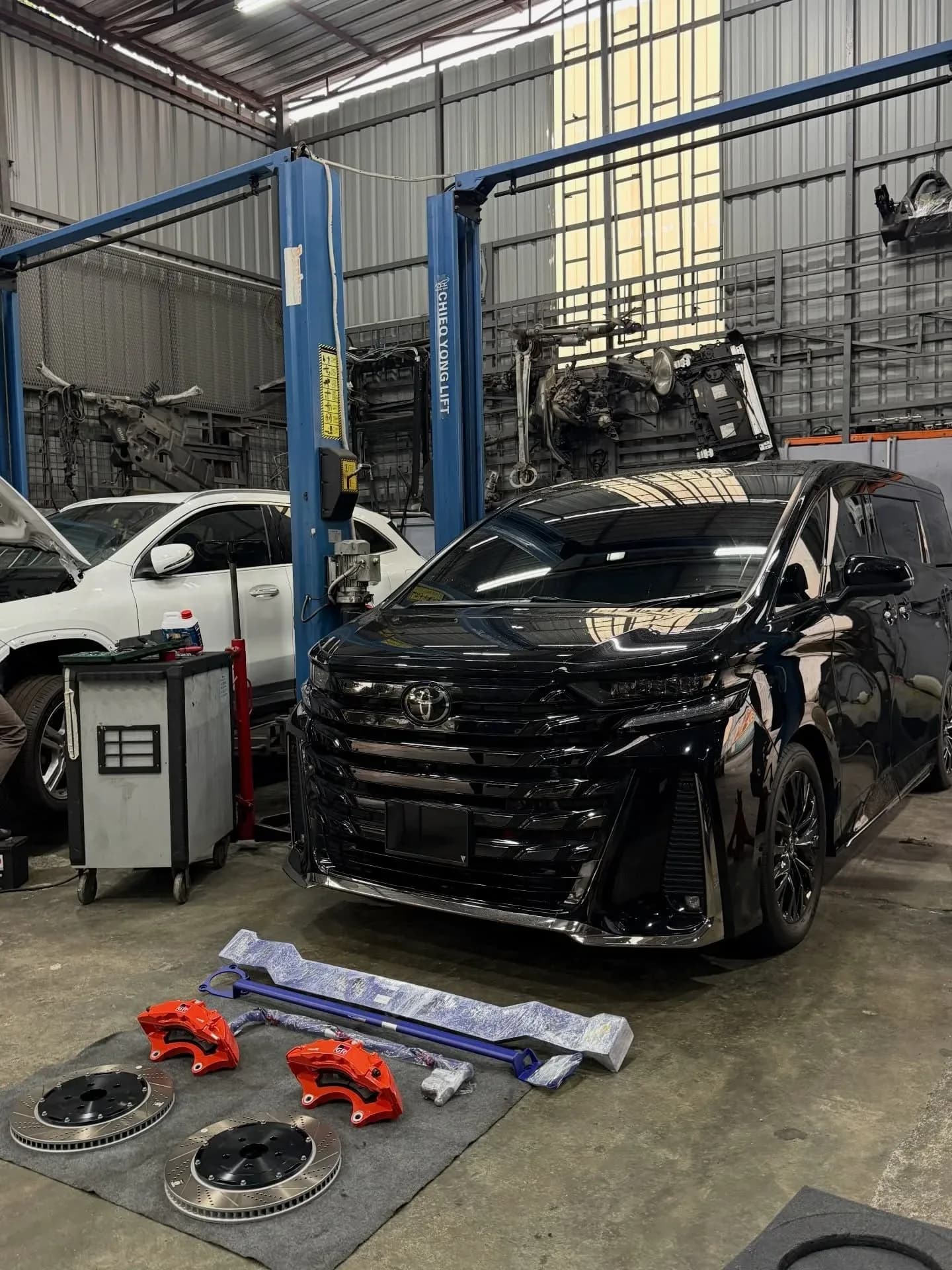
Toyota Vellfire AGH40 — FECCR 6-Piston Caliper Installation
View case and photo gallery →

Suzuki Jimny — 4-Piston Caliper Brake Kit Upgrade
View case and photo gallery →
Continue reading
Compare FECCR Vellfire and Swift Sport upgrades, Jimny 4-piston brakes and Swift rear discs through Sri Kuching’s documented Kuala Lumpur workshop cases.
Choose a brake kit for daily, loaded or track driving. Compare 2-, 4-, 6- and 8-piston calipers, hydraulic compatibility and Sri Kuching’s FECCR cases.
Check wheel barrel, spoke clearance, offset and brake kit templates before installation. See workshop photos and eight professional fitment checks in KL.
Further technical reading
Technical information from vehicle manufacturers and specialist suppliers.