
Quick answer
How is an air suspension fault diagnosed?
Air suspension diagnosis combines the reported symptoms, a compatible computer scan, physical inspection and relevant pressure or leak tests. These findings help distinguish a leaking spring or strut from compressor, valve, sensor or electrical faults. A low corner or a fault code alone does not identify every part that needs replacement.
Start with the fault, then decide on the repair
A car that sits too low does not automatically need a new compressor or absorber. Air suspension depends on pressure retention, air delivery and electronic control; a problem in any of these areas can produce similar symptoms.
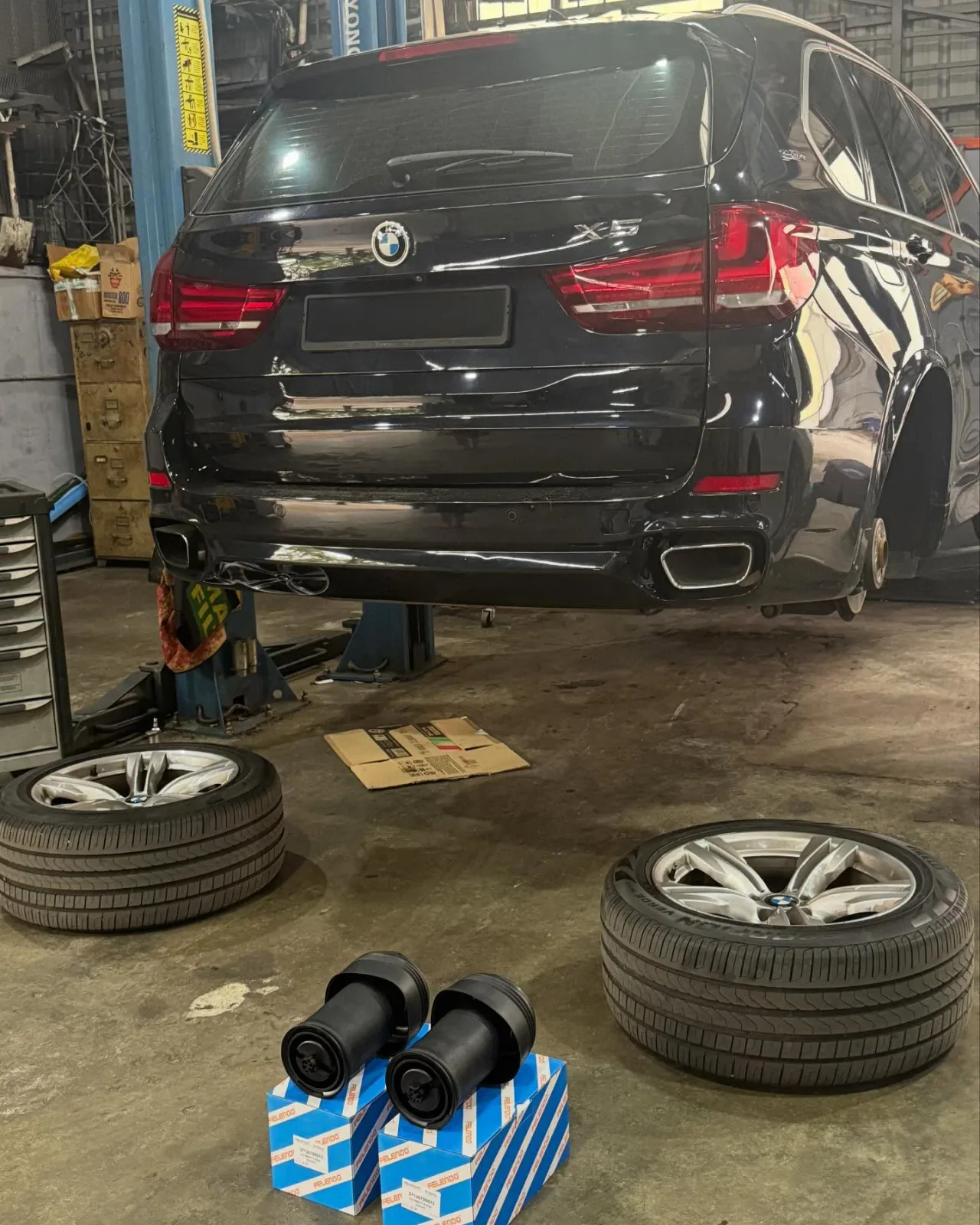
Sri Kuching’s documented work in Taman Mastiara, Kuala Lumpur includes a BMW X5 F15 with failed rear air springs and a worn compressor, an Audi A8 with failed front air struts, and a Bentley with a failed corner absorber. Each repair followed the findings for that vehicle.
The seven stages below explain a diagnostic approach. The exact tests depend on the vehicle and fault; the case records later in this guide identify the work documented for those particular jobs.
1. Record the symptoms and vehicle details
Begin with the make, model, production year and the suspension concern. Whether the front, rear or one corner sits lower helps direct the inspection. The timing also matters: does the vehicle drop after parking, fail to rise when started, or change height while driving?
Record the exact dashboard message and any previous suspension repairs. A photograph of the abnormal ride height can help explain an intermittent concern, but it cannot confirm the failed component on its own.
2. Read the suspension system with compatible diagnostics
A compatible diagnostic computer can retrieve current and stored fault codes and relevant suspension control information. Depending on the vehicle, available data may include height-sensor readings and air pressure measurements. Some systems also support component activation, adaptation and calibration functions.
A scan helps identify where to investigate. It does not locate every mechanical air leak or prove that the part named in a fault code must be replaced. The technician needs to compare the electronic findings with the vehicle’s actual condition.

Diagnostic equipment used in the Audi A8 workshop case. Its work record includes diagnosis, recalibration and verification.
View original case record
Diagnostic equipment in the Bentley case, which records computer diagnosis and ride-height recalibration.
View original case record3. Inspect the relevant suspension components
Physical inspection may cover the air struts, separate air springs, compressor, valve block, air lines, electrical connections and height-sensor linkages. Worn rubber, damaged pipework, leaking connections or a detached linkage can provide evidence that a scan alone cannot supply.
The vehicle must be supported correctly and the manufacturer’s suspension service procedures followed before removing components or opening pressurised connections. Never get underneath a vehicle supported only by its air suspension.
4. Test for pressure loss and air leaks
When pressure loss is suspected, suitable leak-detection and pressure-retention checks help establish whether air is escaping from a spring, strut, pipe, fitting, valve assembly or another part of the system.
Where the system supports it and the procedure is appropriate, individual circuits can be assessed to distinguish a leaking suspension component from a valve control problem. Intermittent leaks may need further observation because they can depend on suspension position or time parked.
5. Assess compressor and valve operation
The compressor’s electrical supply, running condition and ability to build pressure may need checking. If it runs unusually often, the inspection should also establish whether another component is leaking and repeatedly causing the system to replenish air.
Model-specific checks can assess valve block operation and suspension control responses. A compressor-related warning may reflect insufficient pressure caused by a leak, a supply fault or a valve problem, so replacing the pump alone may leave the cause unresolved.
6. Confirm the parts and repair scope
The diagnostic and inspection findings determine whether attention is needed to an air spring, complete strut, compressor, valve block, air line, sensor or electrical component. Not every vehicle needs all of these parts.
The workshop’s recommendation should explain the confirmed fault, any related damage and the vehicle-specific requirements before the customer agrees to the repair scope.
7. Verify pressure, ride height and system operation
Following the repair, checks may include installation verification, pressure testing and ride-height calibration where required. The technician can recheck the control module and assess whether the suspension achieves and maintains its intended height.
A road test may be appropriate when the vehicle is safe to operate. The final checks depend on the suspension design and completed repair; calibration and clearing fault codes do not repair an unresolved leak.
BMW X5 F15: rear air springs and compressor
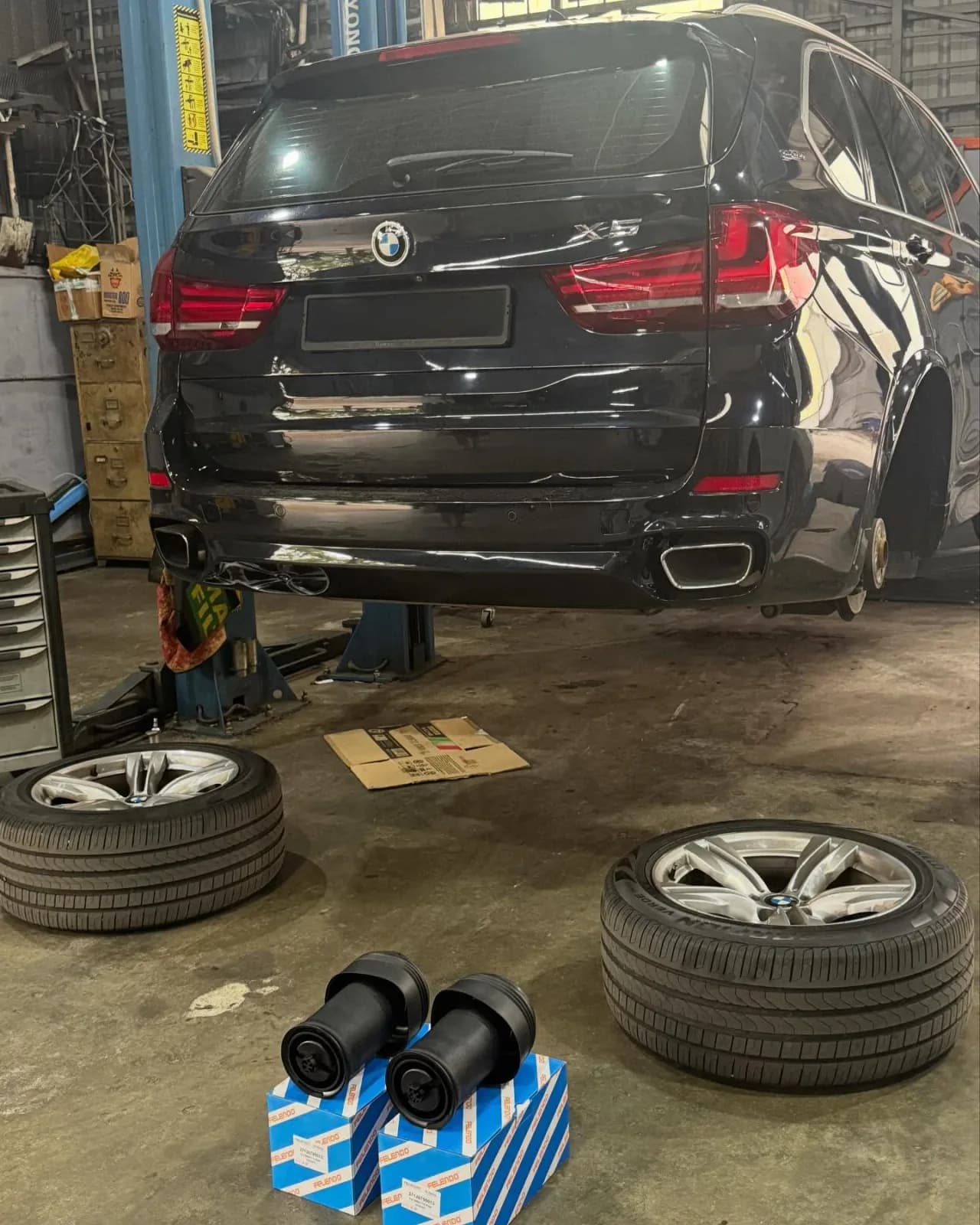
This BMW arrived with suspension faults and visible ride-height issues associated with air leaks. Diagnostic inspection identified failed rear air springs together with a worn compressor pump, and the recorded repair replaced both.
The case includes system pressure testing, height calibration and post-repair verification. Its outcome records stable pressure, even ride height and no further suspension warnings after diagnostic checks and a road test. It demonstrates why compressor condition can matter alongside an air leak, without establishing that every leaking spring needs a new pump.
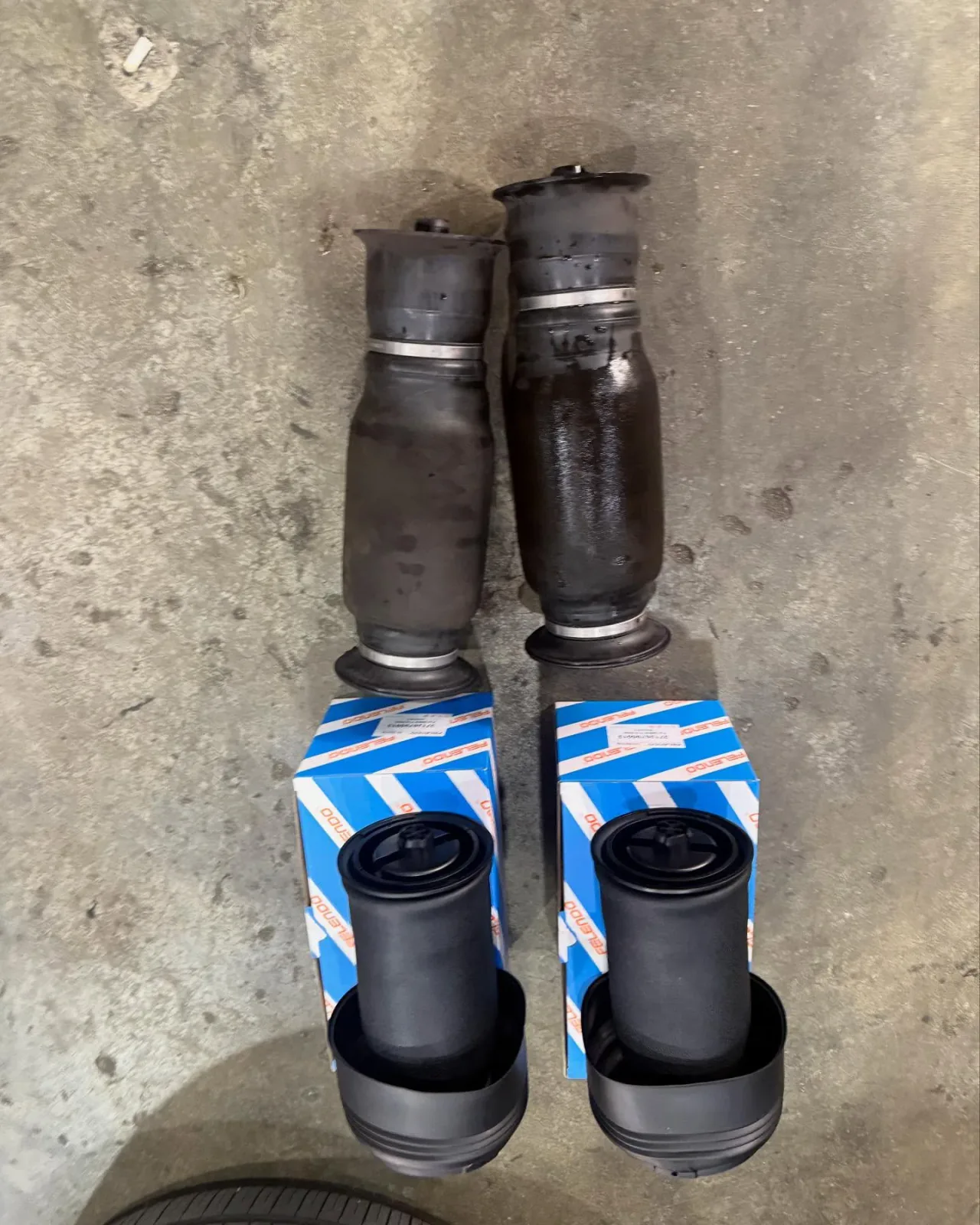
Rear air springs photographed in the BMW X5 F15 case. Inspection identified failed rear springs on this vehicle.
View original case record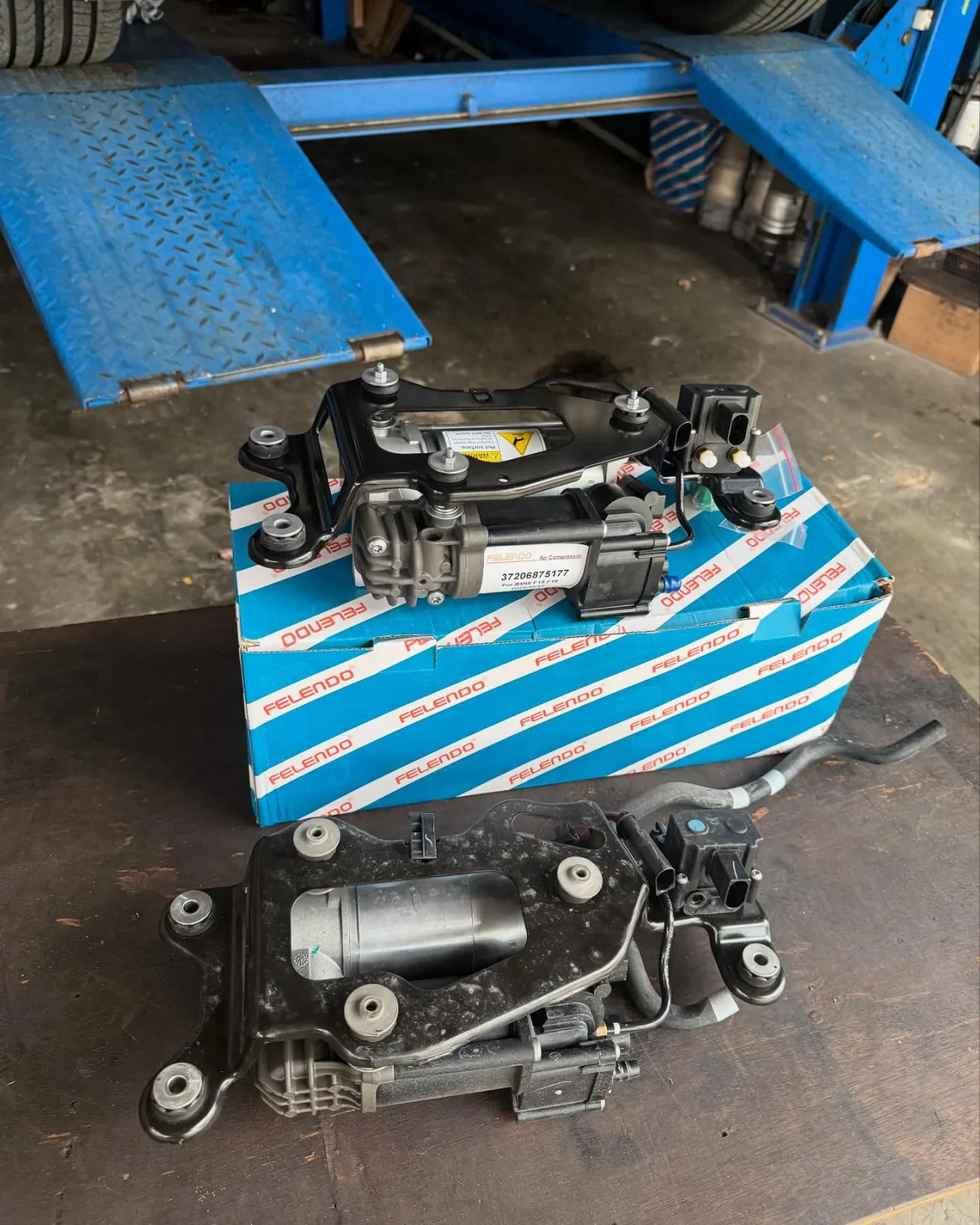
Compressor assemblies from the BMW case, which recorded both rear air spring and worn compressor replacement.
View original case recordAudi A8: failed front air struts
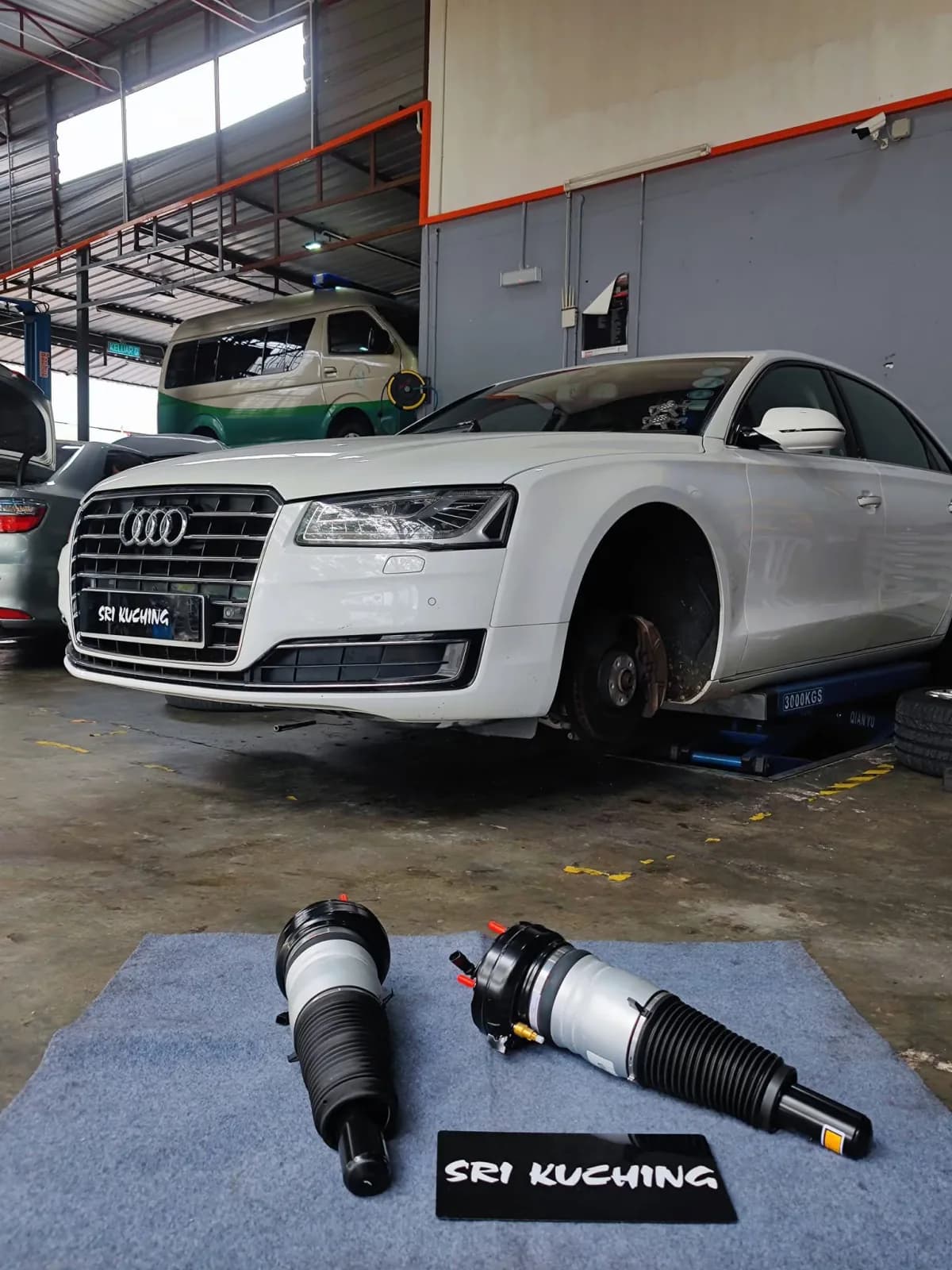
The Audi A8 arrived with suspension warnings and abnormal ride behaviour. The workshop record describes diagnostic confirmation of front absorber failure, replacement of the front air struts, a system inspection and ride-height recalibration.
The recorded outcome includes restored even ride height, cleared suspension warnings and confirmation through a diagnostic scan and road test. The original case calls these parts “Airmatic absorbers”; Audi’s manufacturer terminology is adaptive air suspension. The original case title and photographs remain available below.
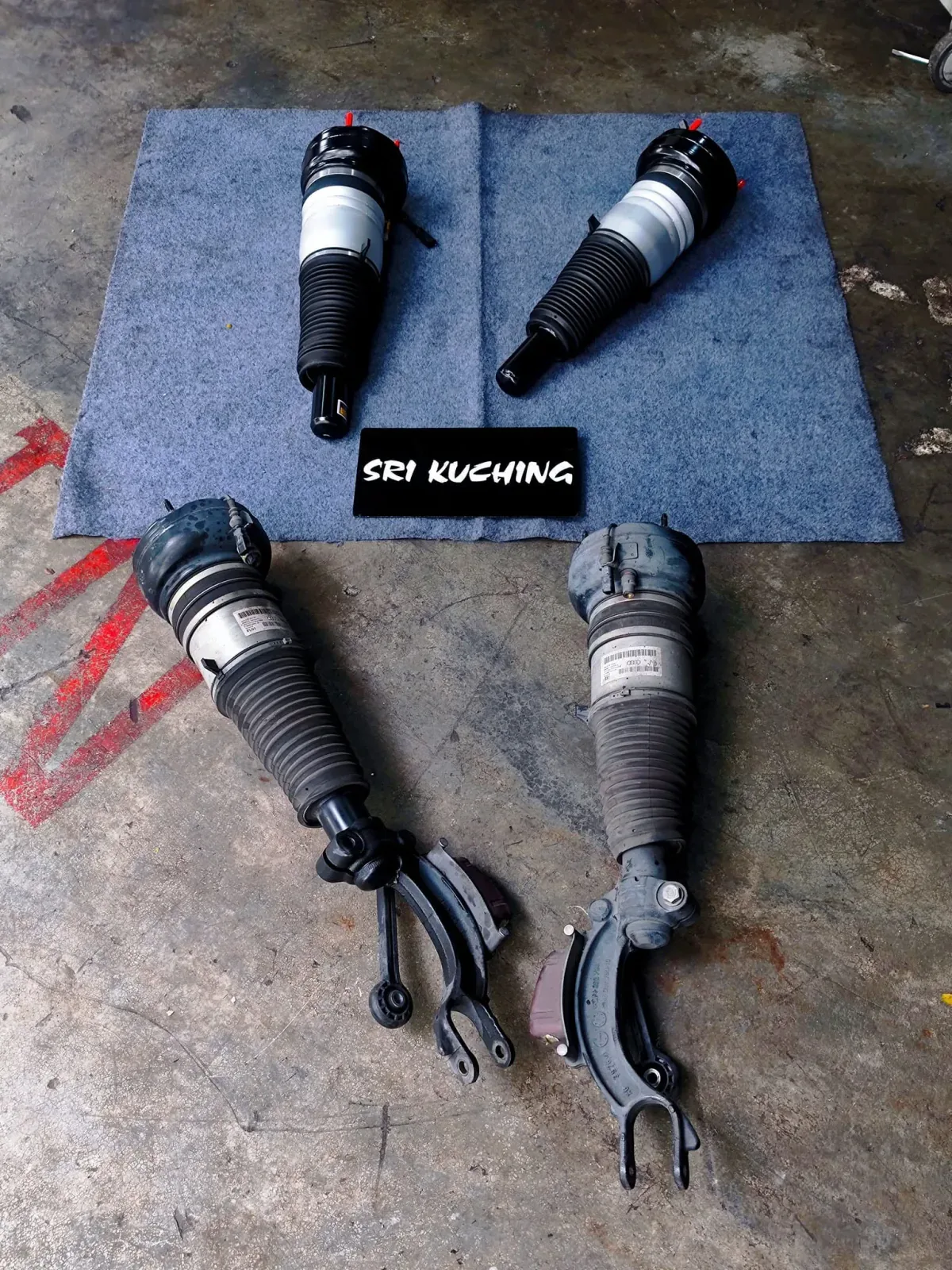
Front air strut assemblies from the Audi A8 case. The original record describes these as front Airmatic absorbers.
View original case record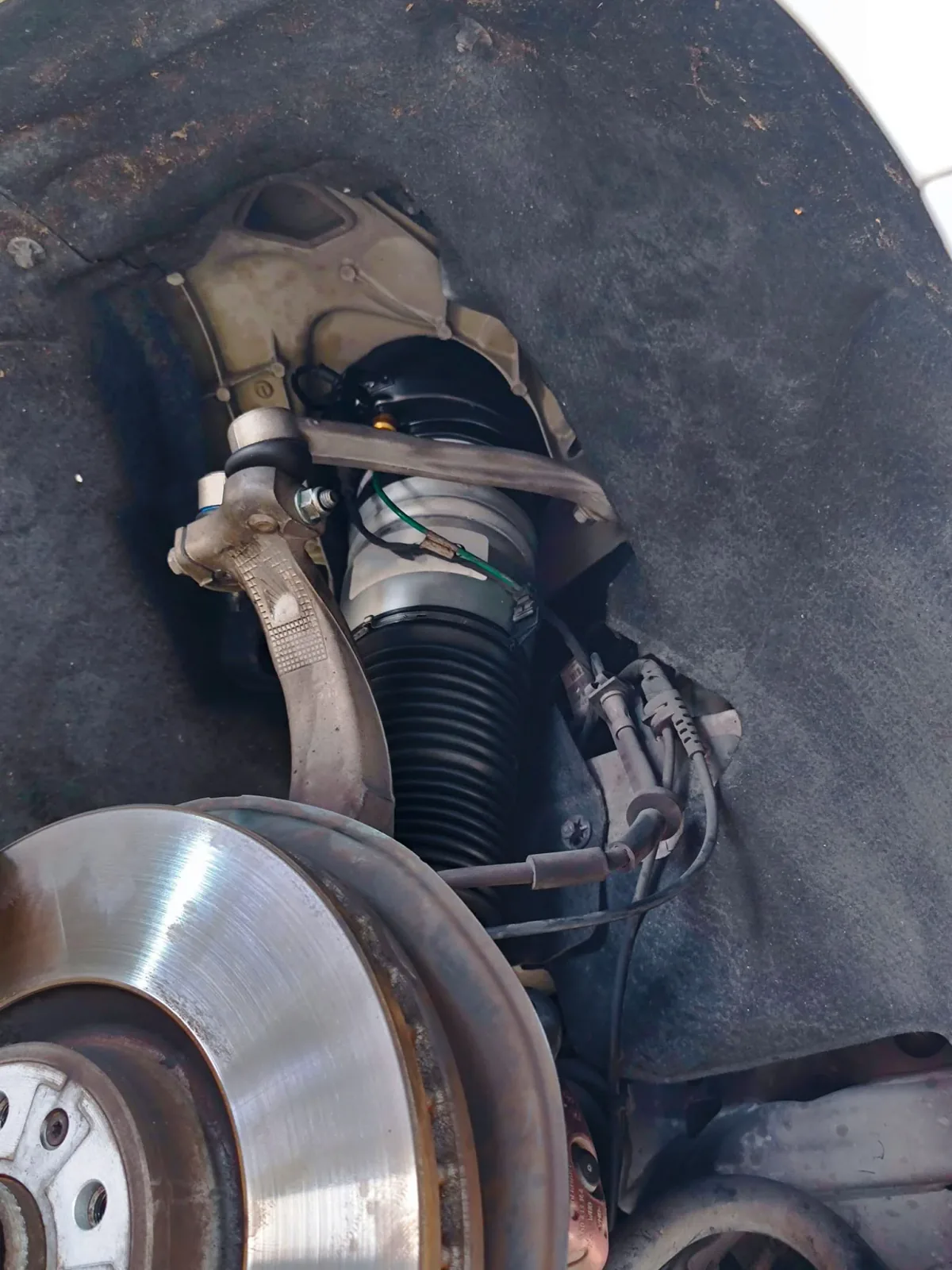
The Audi A8 front air strut in the wheel arch, photographed during the recorded replacement work.
View original case recordBentley Continental Flying Spur: one affected corner
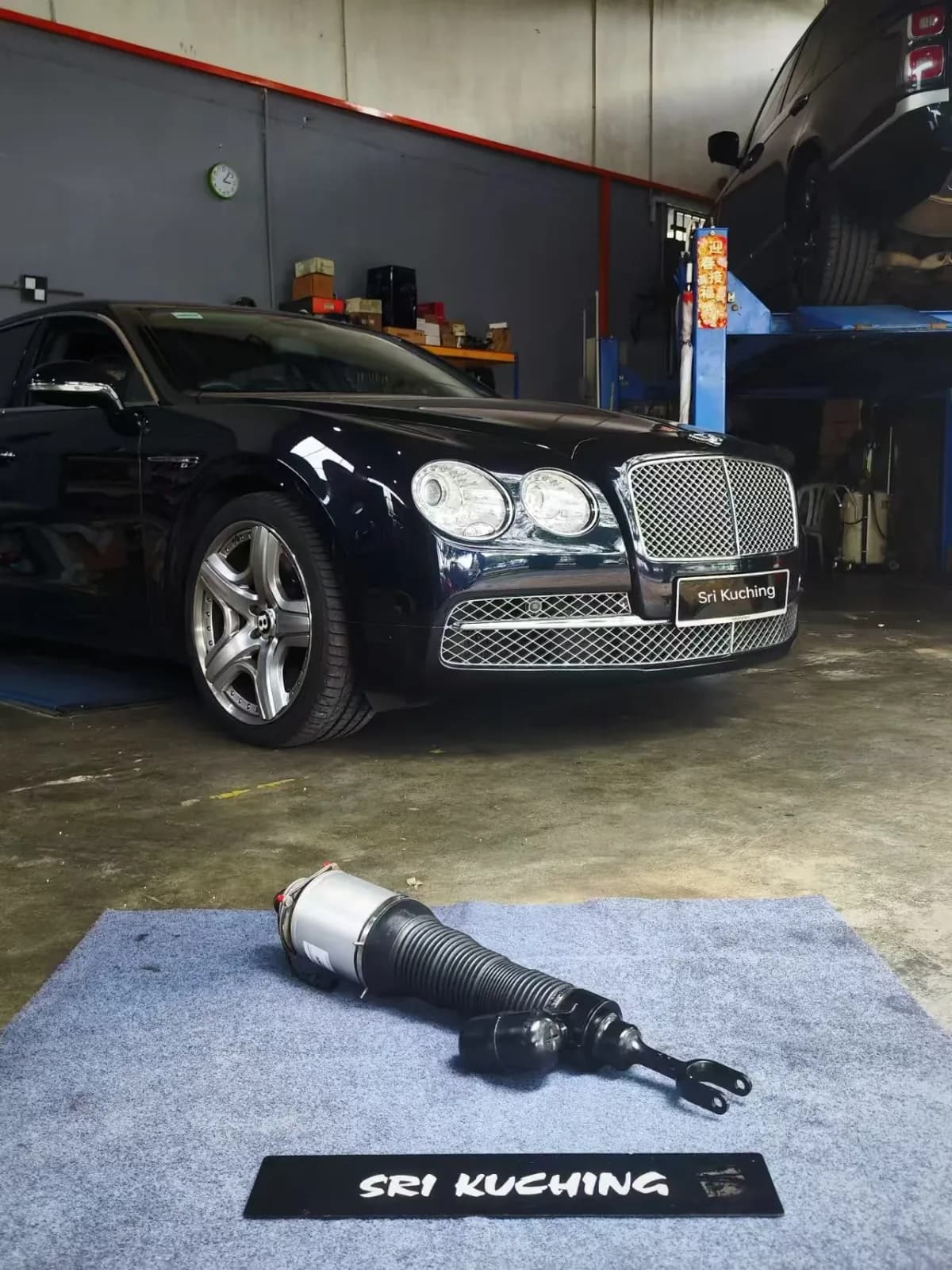
The Bentley presented with a single-corner sag and suspension warnings. Computer diagnostics confirmed absorber failure at the affected corner. The documented work includes supporting the vehicle on workshop lift equipment, removing the failed air strut and installing a replacement assembly.
Ride-height recalibration and system verification followed the repair. The outcome records even ride height, cleared faults and a road test confirming normal height control. This record focuses on the affected strut; it does not record a compressor replacement.
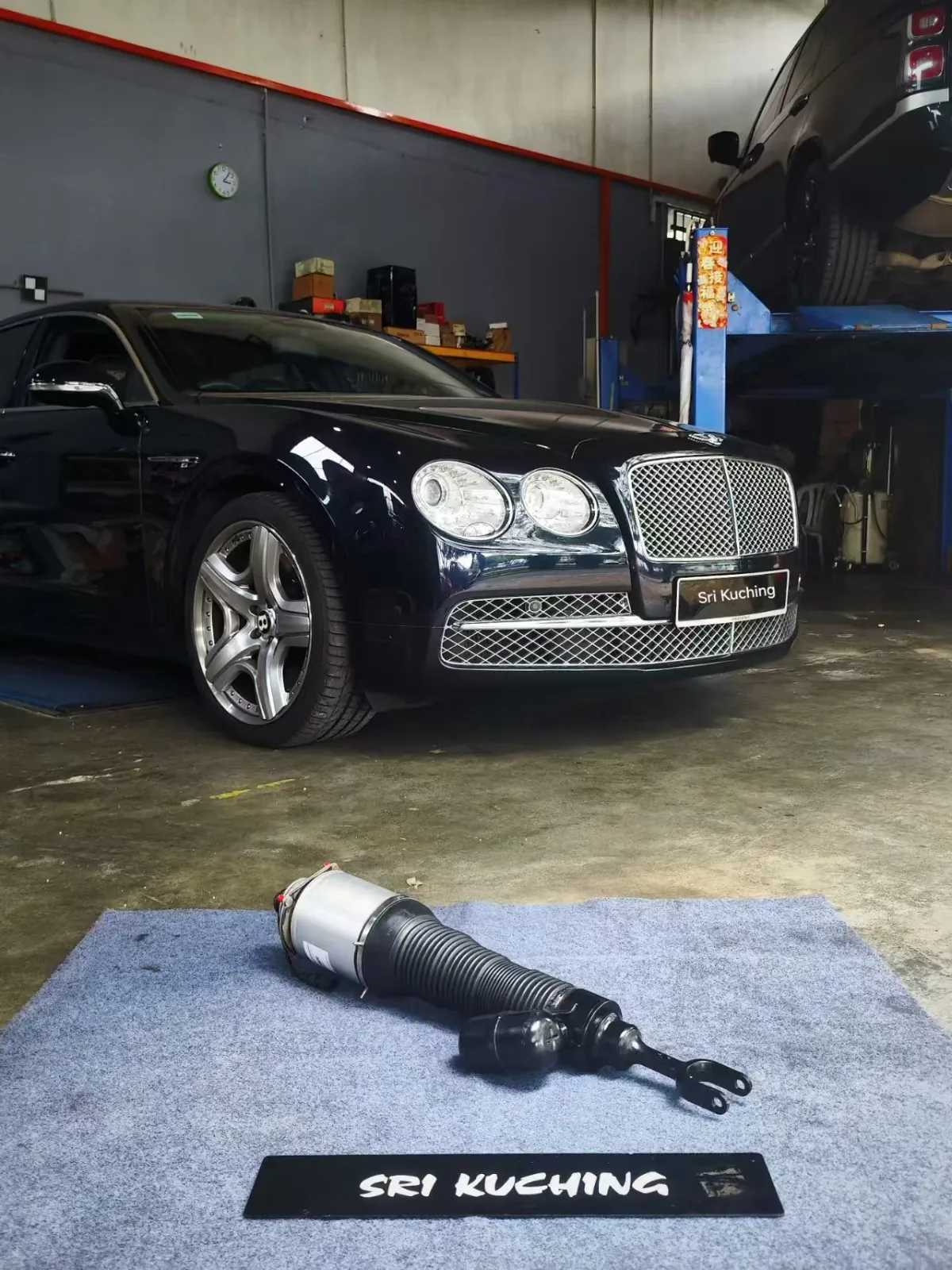
Bentley Continental Flying Spur from the documented single-corner air suspension absorber repair.
View original case record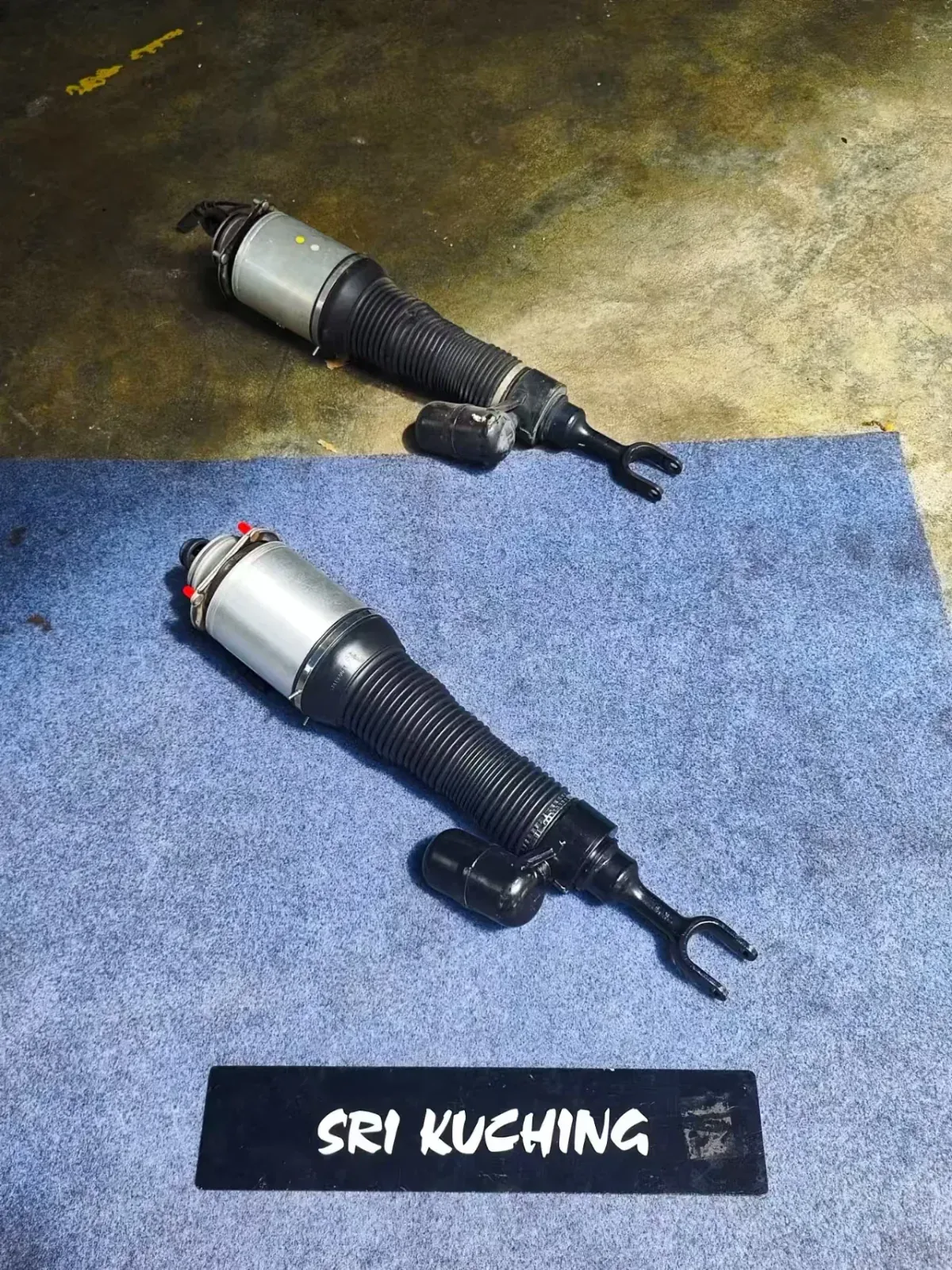
Air strut assemblies from the Bentley record. The documented repair addressed the failed strut at the affected corner.
View original case recordFrequently asked questions
Can a diagnostic computer identify every air suspension fault?
No. A compatible scan can retrieve fault codes and relevant live data, and some systems support component tests. Physical inspection and appropriate pressure testing are still needed to confirm many leaks and mechanical failures.
Does a low corner always mean the same air suspension repair?
No. A low corner may involve a leaking spring or strut, a connection, valve control or incorrect height information. Sri Kuching’s BMW, Audi and Bentley records document different repair findings, so the symptom alone is not a parts recommendation.
Where can I arrange air suspension diagnosis in Kuala Lumpur?
Sri Kuching Car Audio & Air Cond Service Centre is in Taman Mastiara, Kuala Lumpur. Its documented air suspension cases include BMW X5, Audi A8 and Bentley repairs. Share your exact model, year and symptoms with the workshop to discuss an inspection.
Read the original workshop cases
See the vehicle photos, recorded work and outcomes from Sri Kuching. These cases document individual repairs; your vehicle needs its own assessment.
Continue reading
Why does a car sag overnight or run its compressor too often? Understand air springs, struts, valve blocks, sensors and other possible suspension faults.
Compare air suspension terminology and model-specific checks for Mercedes-Benz, BMW, Audi and Bentley, with links to Sri Kuching’s documented repair cases.
Know what shapes an air suspension repair quotation, when calibration is needed, when to stop driving and what to share with Sri Kuching in Taman Mastiara.
Further technical reading
Technical information from vehicle manufacturers and specialist suppliers.