
Quick answer
Why does a car’s air suspension drop overnight?
Pressure loss is one possible reason a vehicle sits lower after parking. Air may escape through an air spring, strut, line, fitting or valve assembly. The affected corner and timing help guide inspection, but leak and pressure testing are needed to locate the fault. A low vehicle does not automatically need a new compressor.
What an air suspension system does
Air suspension uses pressurised air in flexible springs to support the vehicle and control ride height. Depending on its design, the system adjusts for passengers, luggage and selected driving settings. Air springs may be separate from the dampers or combined with them in air strut assemblies.
The wider system can include a compressor, valve block, air lines, height sensors and an electronic control module. Some arrangements also use a pressure reservoir and adjustable damping. These components work together, which is why the same visible symptom can have several causes.
1. Air suspension absorber or air strut failure
In an integrated air strut, the air spring supports the load while the shock absorber controls suspension movement. Ageing bellows, seals or air chambers may leak; the damper can also lose its ability to control movement.
These are different failure modes. An air leak can cause sagging, while a worn damper may produce excessive bouncing, poor ride control or fluid leakage without a loss of ride height. Inspection determines whether the strut assembly or another component needs attention.
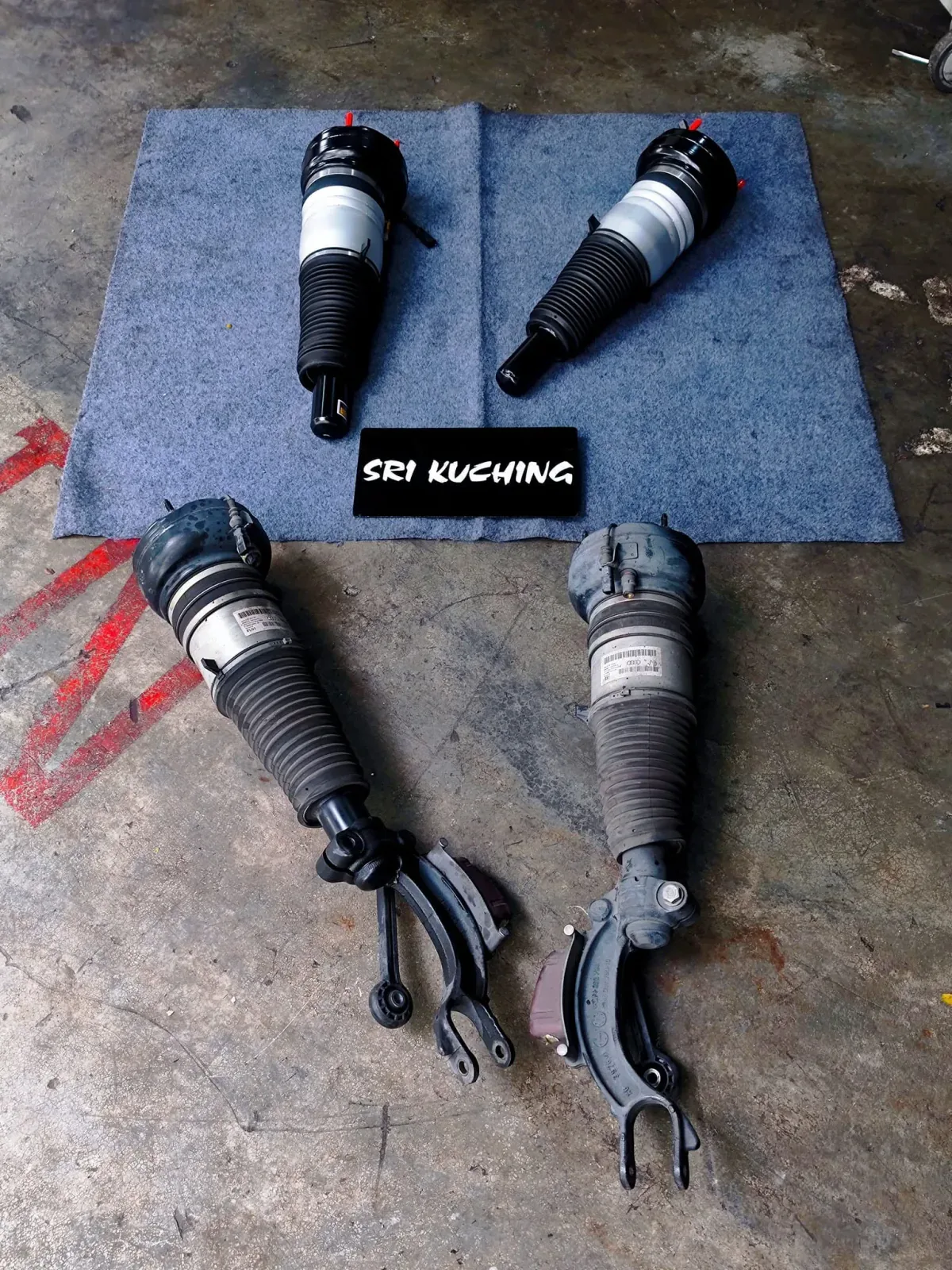
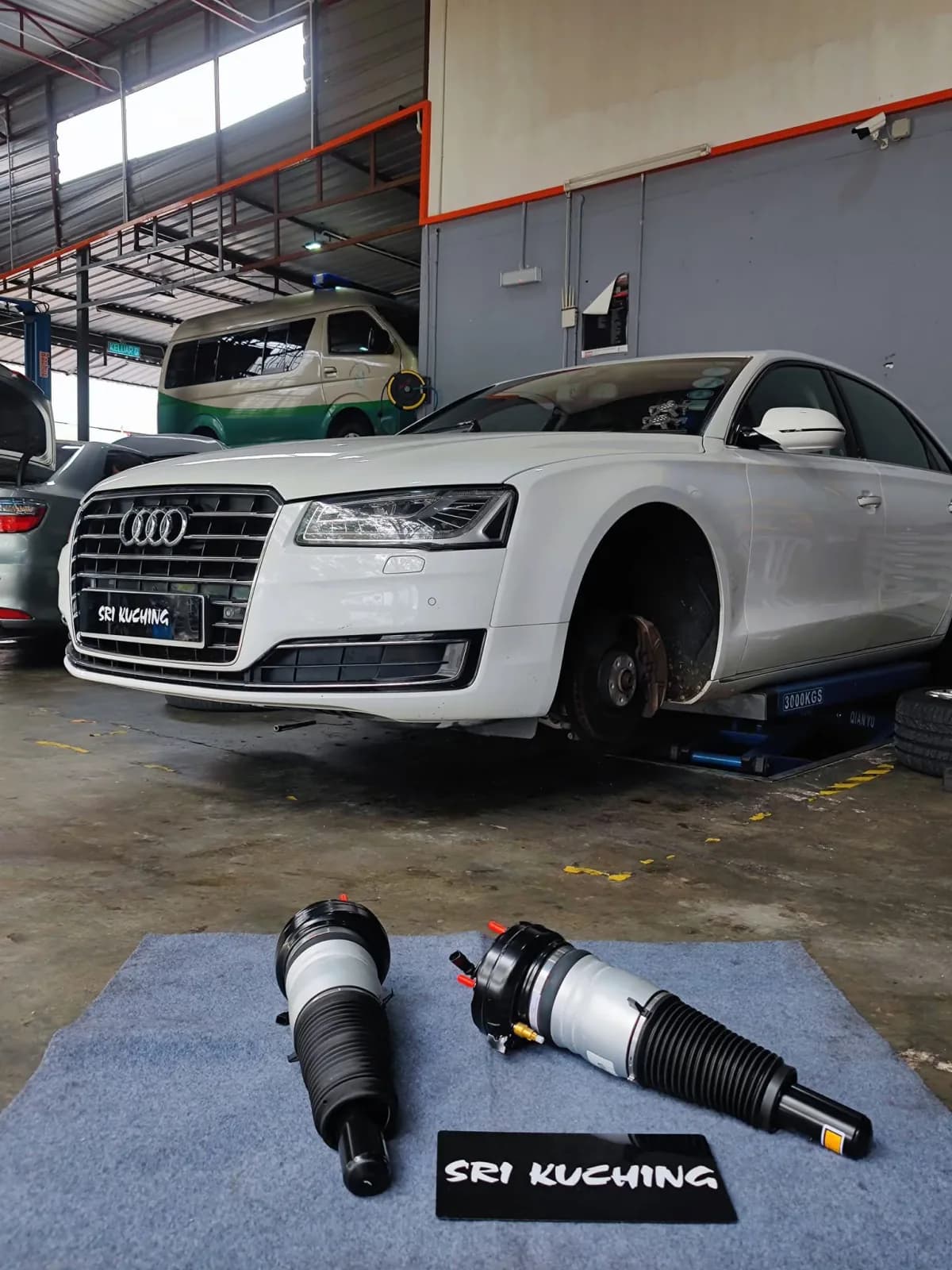
Front air strut assemblies from the Audi A8 case. The original record describes these as front Airmatic absorbers.
View original case record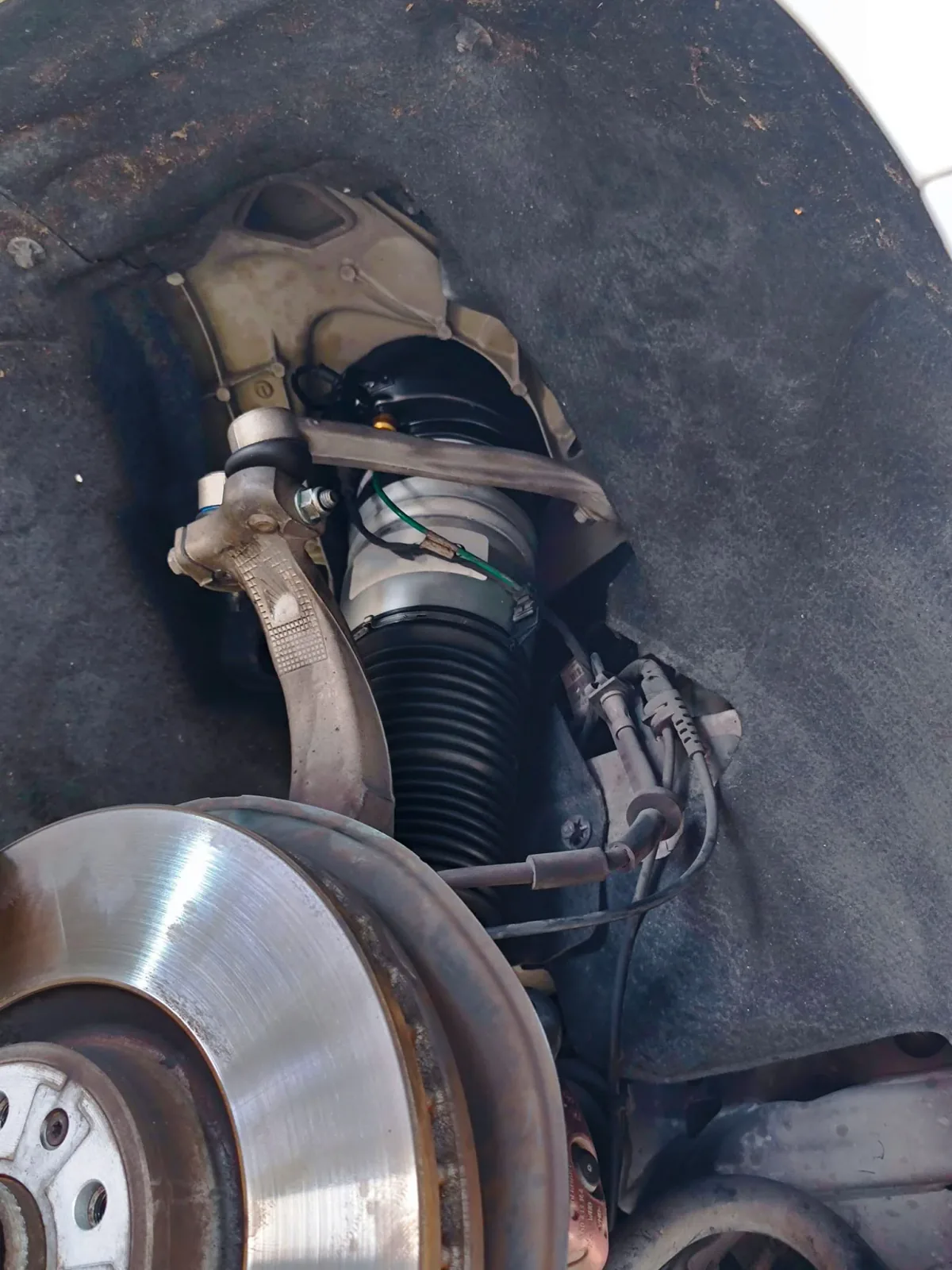
The Audi A8 front air strut in the wheel arch, photographed during the recorded replacement work.
View original case record2. Air spring or air bag leakage
Air springs repeatedly flex as the suspension moves. Over time the rubber may crack, become brittle or wear around its folds. Damaged seals and connections can also release air.
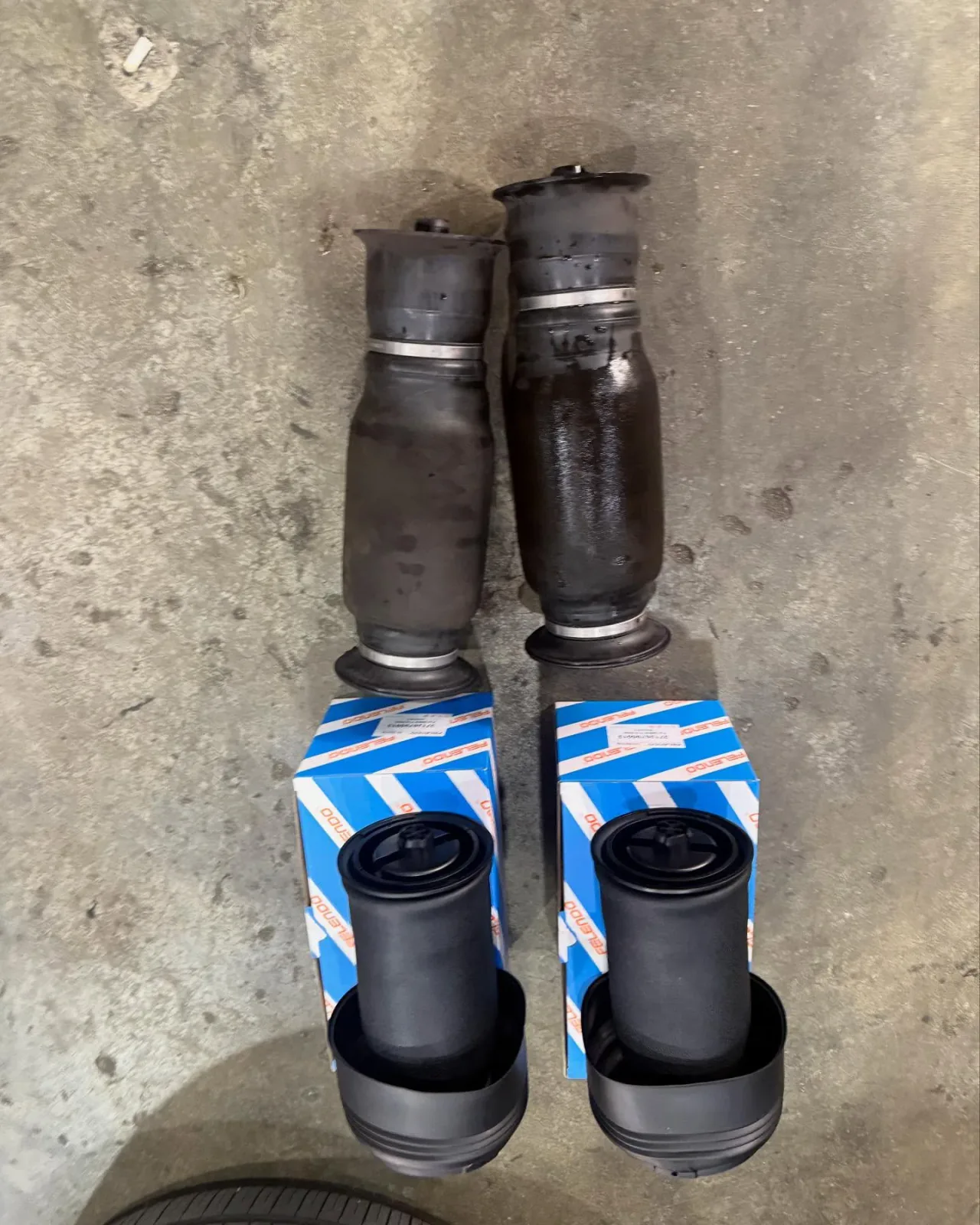
A vehicle that looks level during use but drops after several hours parked may have an air retention problem. On an air-equipped BMW with rear self-levelling suspension, the rear may sag at one side or across the axle. The actual leak still needs locating.
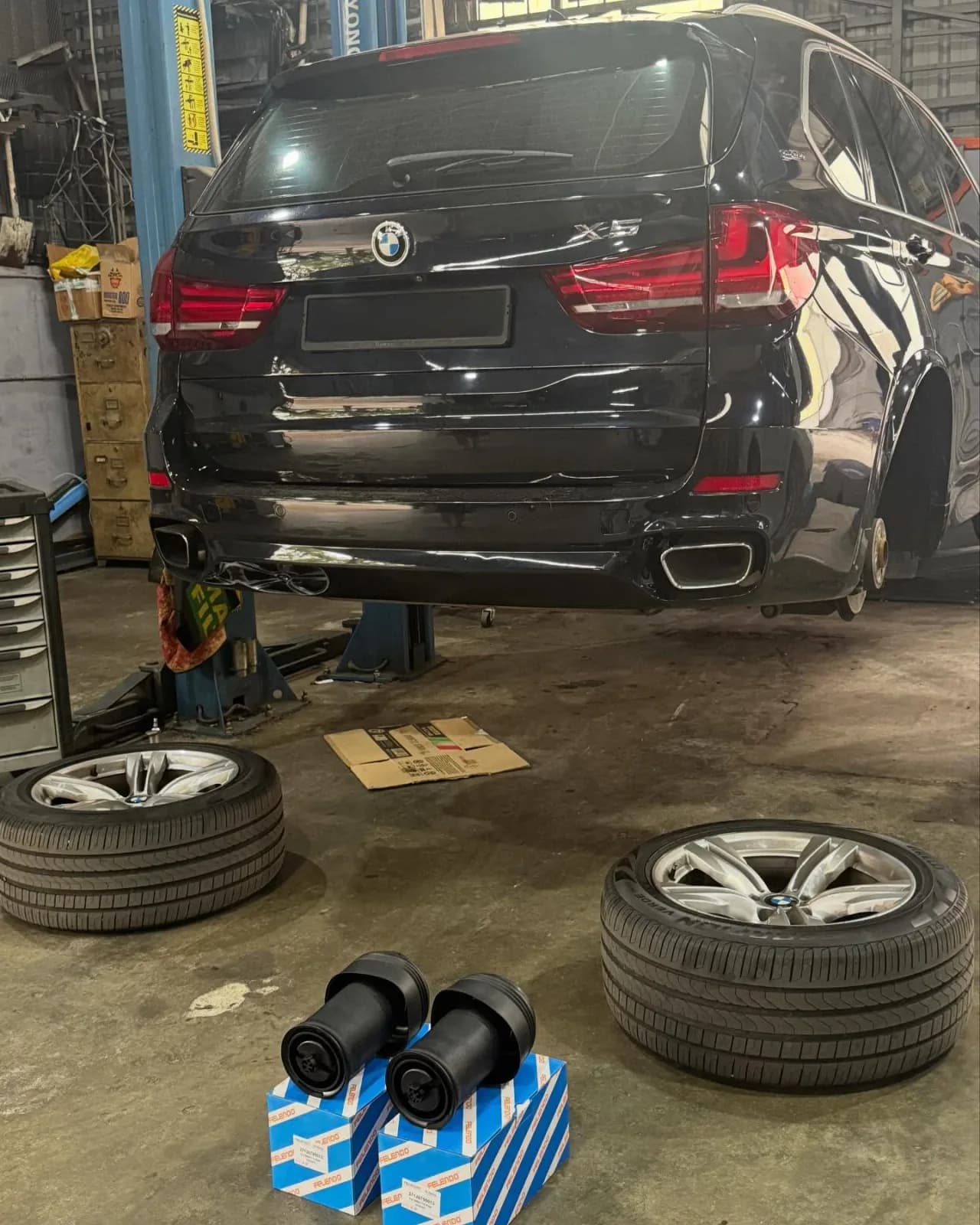
Persistent leakage can make the compressor replenish air more frequently and increase wear. Sri Kuching’s BMW X5 F15 case records both failed rear springs and a worn compressor, although this combination is not inevitable for every air spring leak.
3. Compressor pump and air supply problems
The compressor builds the pressure needed to raise and support the vehicle. Unusual noise, slow pressure build-up, overheating or failure to raise the suspension may call for compressor assessment. Some systems restrict operation to protect the equipment.
A compressor-related fault code is not proof of a defective pump. A major leak, valve fault, electrical supply problem or relay fault may prevent the system from reaching its target pressure. Replacing a pump without finding an external leak can expose the replacement to the same excessive workload.
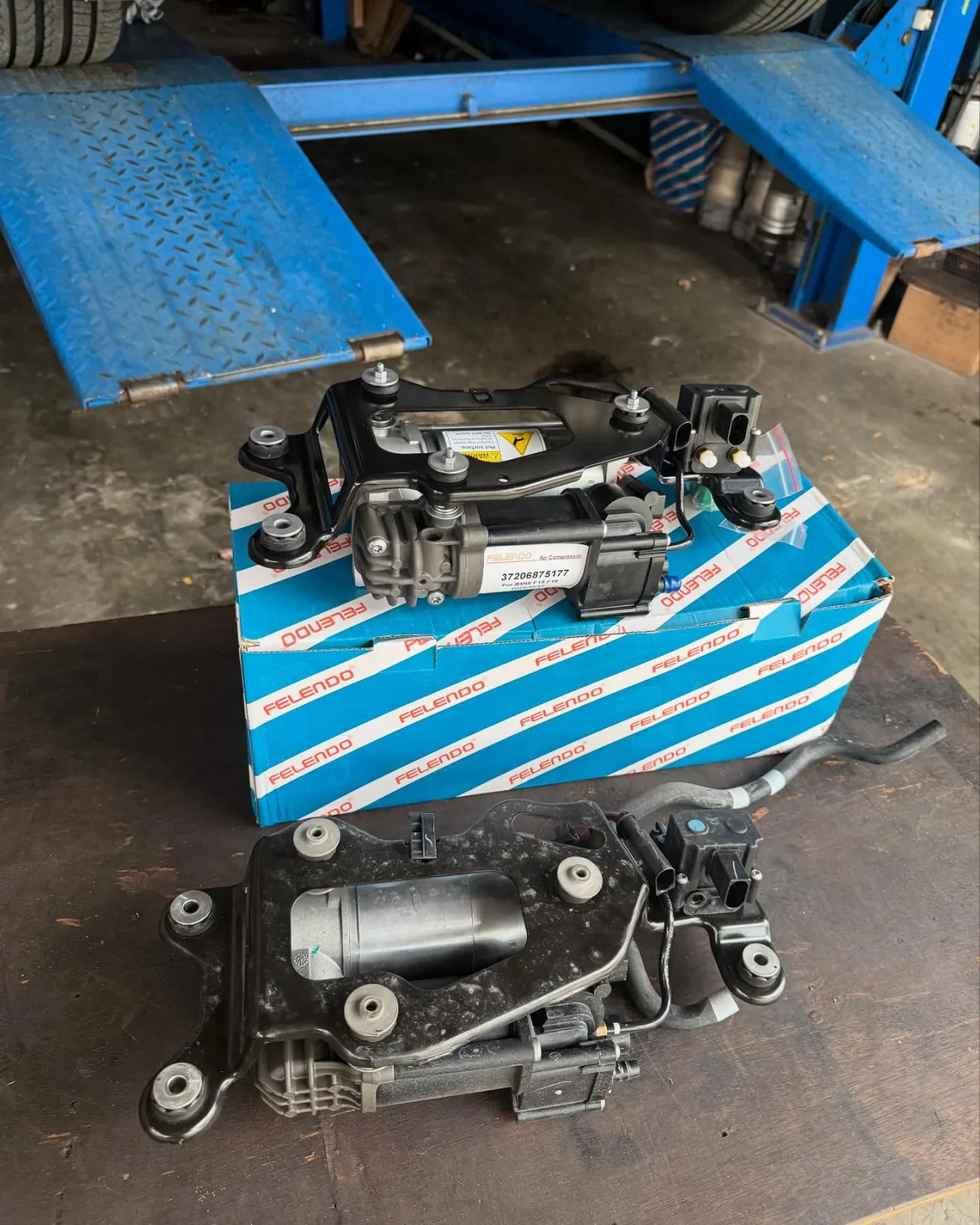
Compressor assemblies from the BMW case, which recorded both rear air spring and worn compressor replacement.
View original case record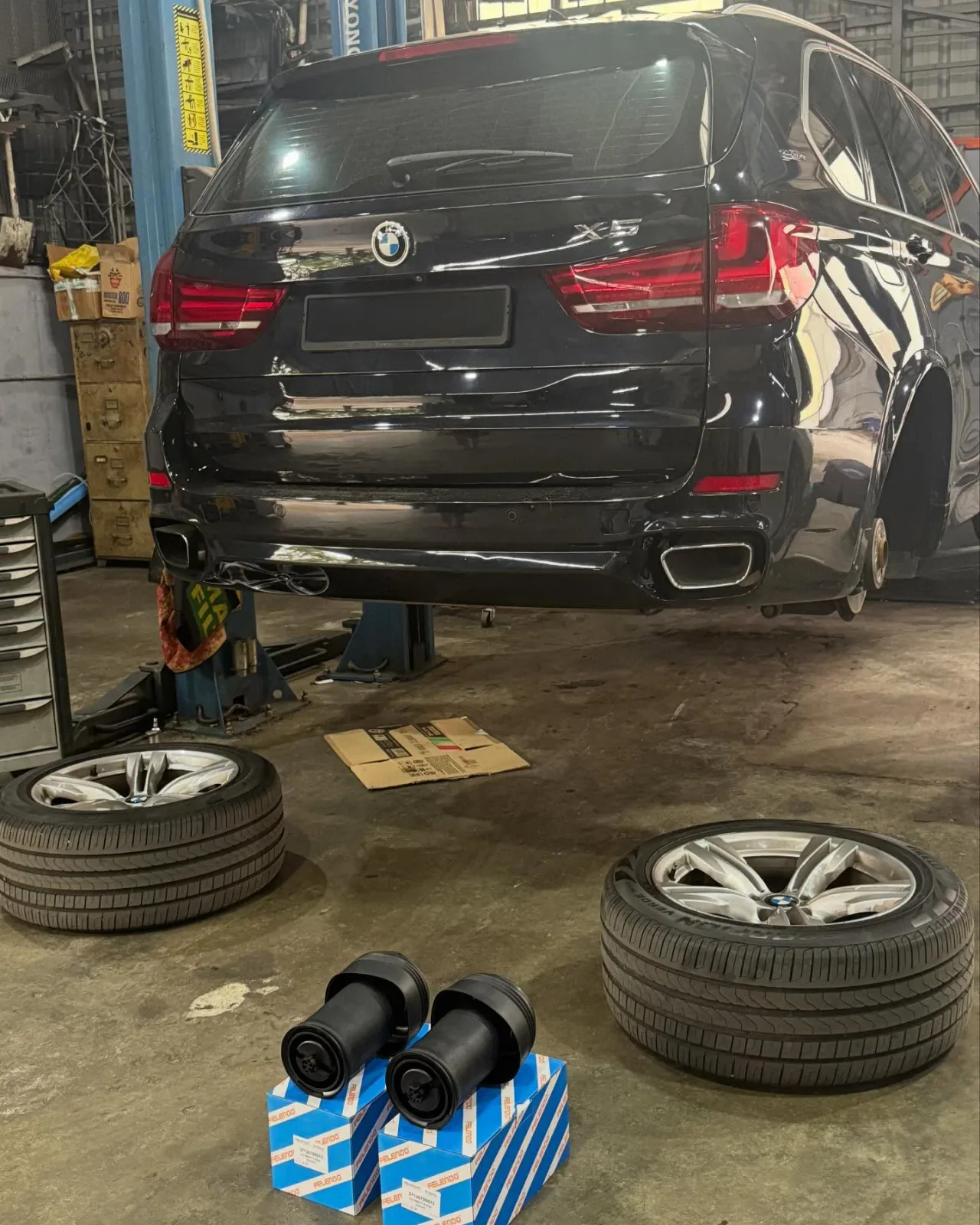
BMW X5 F15 in the workshop during the documented rear air spring and compressor repair.
View original case record4. Valve block or manifold faults
The valve block manages air distribution. Depending on the suspension arrangement, its valves supply air, release pressure or isolate individual circuits.
A stuck valve, internal leak or electrical failure can cause uneven height or prevent a corner from adjusting, even when the compressor can generate pressure. An internal valve leak can resemble a leaking spring. Diagnostic information, pressure checks and appropriate circuit testing help distinguish them.
5. Air line, pipe and connection leaks
Air passes through pipes, hoses and fittings between the supply system and suspension components. A damaged line, loose fitting or deteriorated connection seal can cause gradual pressure loss or prevent the vehicle from reaching normal height.
Pipework may be concealed behind underbody covers or beside other components. Suitable leak-detection methods and inspection help locate the source before major assemblies are selected for replacement.
6. Ride-height sensor or linkage problems
Height sensors report suspension position to the control module. Incorrect information from a damaged sensor, disconnected linkage, corroded connector or wiring fault can cause warnings or an incorrect commanded height.
This may resemble a pressure problem even when the springs and compressor remain capable of working. Comparing relevant live sensor readings with the vehicle’s actual height helps investigate the difference.
7. Electrical supply and control-system faults
Air suspension relies on control modules, wiring, relays, fuses and communication with other vehicle systems. An electrical fault can interrupt compressor operation, stop a valve responding or prevent useful sensor information reaching the controller.
Low battery voltage, wiring damage and poor connections may affect operation. Stored faults, relevant live data and supported activation tests help separate electrical faults from mechanical pressure loss.
8. Reservoir and moisture-related problems
Some systems store compressed air in a reservoir so height can be adjusted without running the compressor for every movement. Leakage from the reservoir or its connections can reduce the available stored pressure.
The air dryer helps reduce moisture in the supply system. Deterioration or contamination may contribute to valve or air supply problems. Reservoir and dryer arrangements vary, so these faults require inspection appropriate to the actual system.
Six symptoms worth recording for the workshop
Describe what the vehicle does before deciding which component is responsible. The following observations help an inspection at Sri Kuching in Taman Mastiara start with the actual concern.
- One corner sits lower: note which corner, when it happens and whether the car later returns to level. Air leakage, valve control and height information are possible areas to investigate.
- The rear drops overnight: record how long the car was parked and whether one or both sides dropped. Springs, lines, fittings and valves may need air-retention checks.
- The vehicle will not raise: pressure generation, major leaks, air distribution, electrical faults or protection functions may be involved.
- The compressor runs unusually long or frequently: report the noise and timing. The pump may be compensating for leakage or struggling to produce pressure.
- A suspension warning appears: photograph or copy its exact wording. Messages vary by model; clearing one does not repair its underlying cause.
- The ride becomes hard, bouncy or unstable: explain the driving conditions. Dampers, conventional suspension parts, tyres and wheels may also need inspection.
Why a failure can seem sudden
Deterioration may build up before the vehicle visibly loses height. Rubber ages through movement, temperature changes and loading; impacts, damaged mountings and worn connections can also contribute.
A small leak may initially go unnoticed while the compressor repeatedly restores pressure. If the supply system can no longer keep up, the visible fault can appear abrupt and more than one component may need attention. Diagnosis should consider the system as a whole.
Frequently asked questions
How do I know if an air suspension absorber is broken?
Uneven height, warnings, bouncing or abnormal ride behaviour can indicate a fault, but they do not confirm the absorber is responsible. A strut air leak and a damper failure are different problems. Inspection should establish whether the issue concerns pressure retention, damping or another component.
What happens when an air suspension valve block fails?
A valve block fault can prevent air reaching a suspension circuit or allow internal pressure loss. The vehicle may become uneven or fail to adjust its height. Diagnostic and pressure checks help distinguish this from a spring leak or compressor problem.
Can a leaking air spring damage the compressor?
A persistent leak may make the compressor operate more frequently, increasing wear and the risk of overheating or premature failure. A significant or prolonged leak is a reason to assess the compressor as well as the leaking component; it does not automatically prove the pump needs replacement.
Why is my air suspension compressor running continuously?
Unusually frequent or prolonged running may reflect an air leak, poor pressure output, a relay fault or a control problem. The compressor and related air supply system need inspection to establish the cause.
Read the original workshop cases
See the vehicle photos, recorded work and outcomes from Sri Kuching. These cases document individual repairs; your vehicle needs its own assessment.
Continue reading
Follow air suspension diagnosis from warning messages to verification, with BMW X5, Audi A8 and Bentley repair cases at Sri Kuching in Kuala Lumpur.
Know what shapes an air suspension repair quotation, when calibration is needed, when to stop driving and what to share with Sri Kuching in Taman Mastiara.
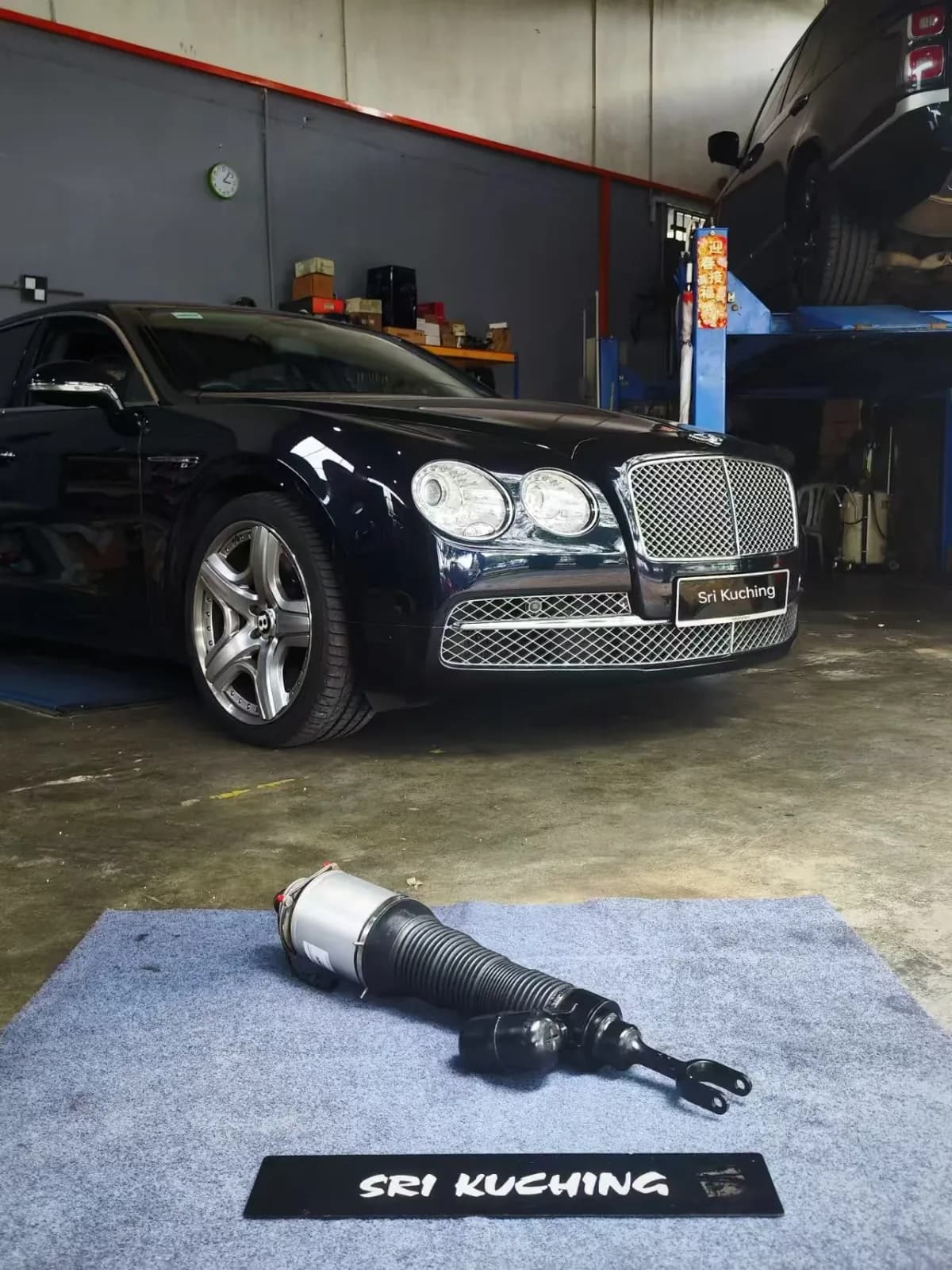
Compare air suspension terminology and model-specific checks for Mercedes-Benz, BMW, Audi and Bentley, with links to Sri Kuching’s documented repair cases.
Further technical reading
Technical information from vehicle manufacturers and specialist suppliers.