
Quick answer
Which Porsche models are listed in the published PVD bulletin?
Porsche’s October 2023 bulletin lists Cayenne E3-I model year 2023, Cayenne E3-II from model year 2024, and Panamera G2-II, 911 992-I and Taycan J1-I from model year 2023. This is the scope of that dated bulletin, not a complete current compatibility list. The vehicle, ECU and requested procedure must still be checked.
What Protection of Vehicle Diagnosis means
Porsche PVD controls access to selected diagnostic operations that can change a protected control unit. Depending on the ECU and procedure, this may concern coding, configuration, adaptations or other protected diagnostic functions. Reading information from a connected vehicle and obtaining permission to change it are different capabilities.
Authorised activation allows the relevant operation to proceed within the permitted session. It does not supply replacement software, make an incompatible module suitable or guarantee that a requested feature is supported. Programming, calibration and other security functions can involve additional requirements.
For owners enquiring in Kuala Lumpur, the useful starting point is the exact intended job. A service reset, a replacement control unit and a requested feature change may each involve different functions even on the same Porsche.
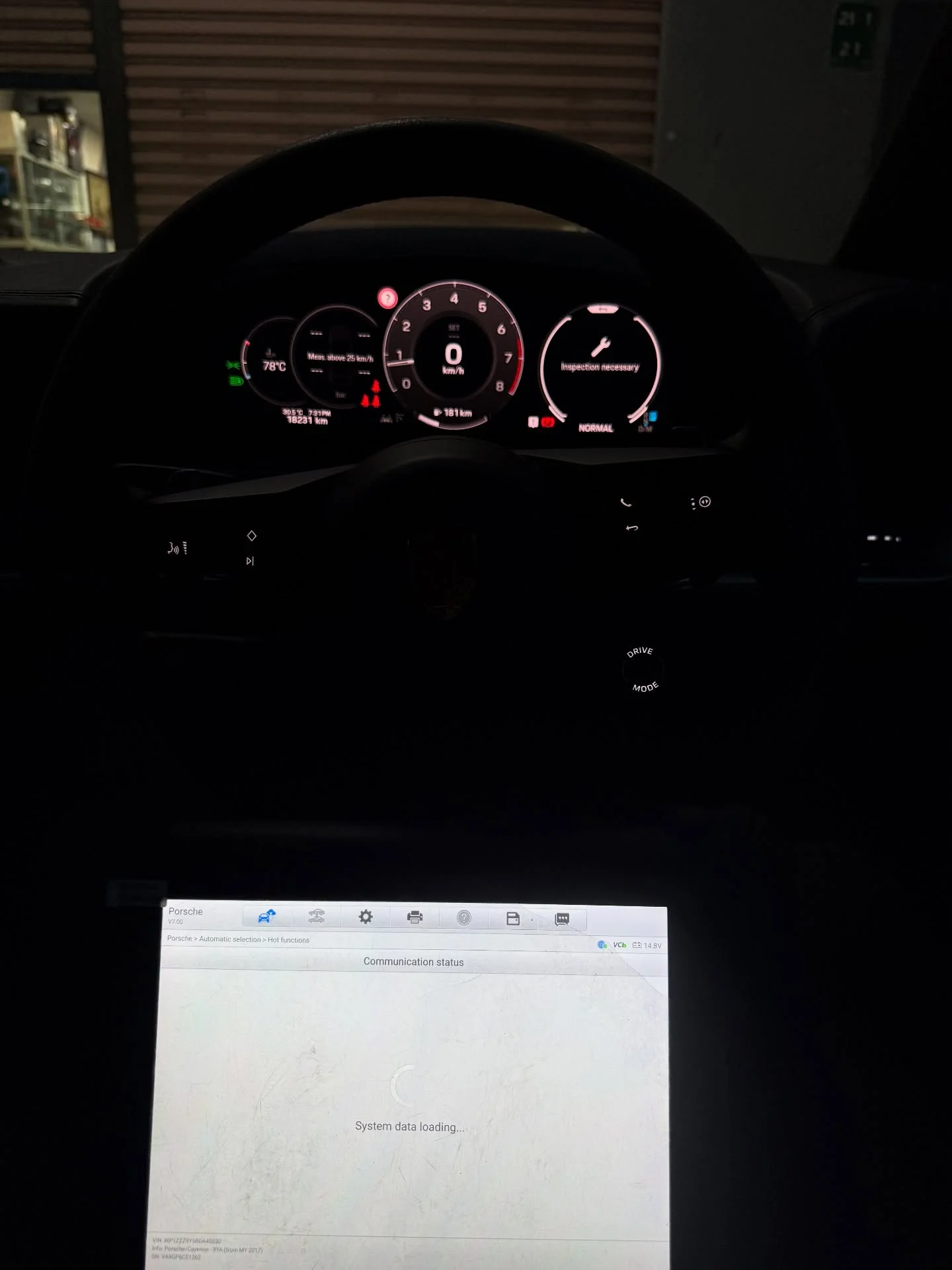
Diagnostic equipment loading system data in a Porsche cabin. This photo shows the diagnostic session; the completed reset and security unlock are described in the written workshop record.
View original case record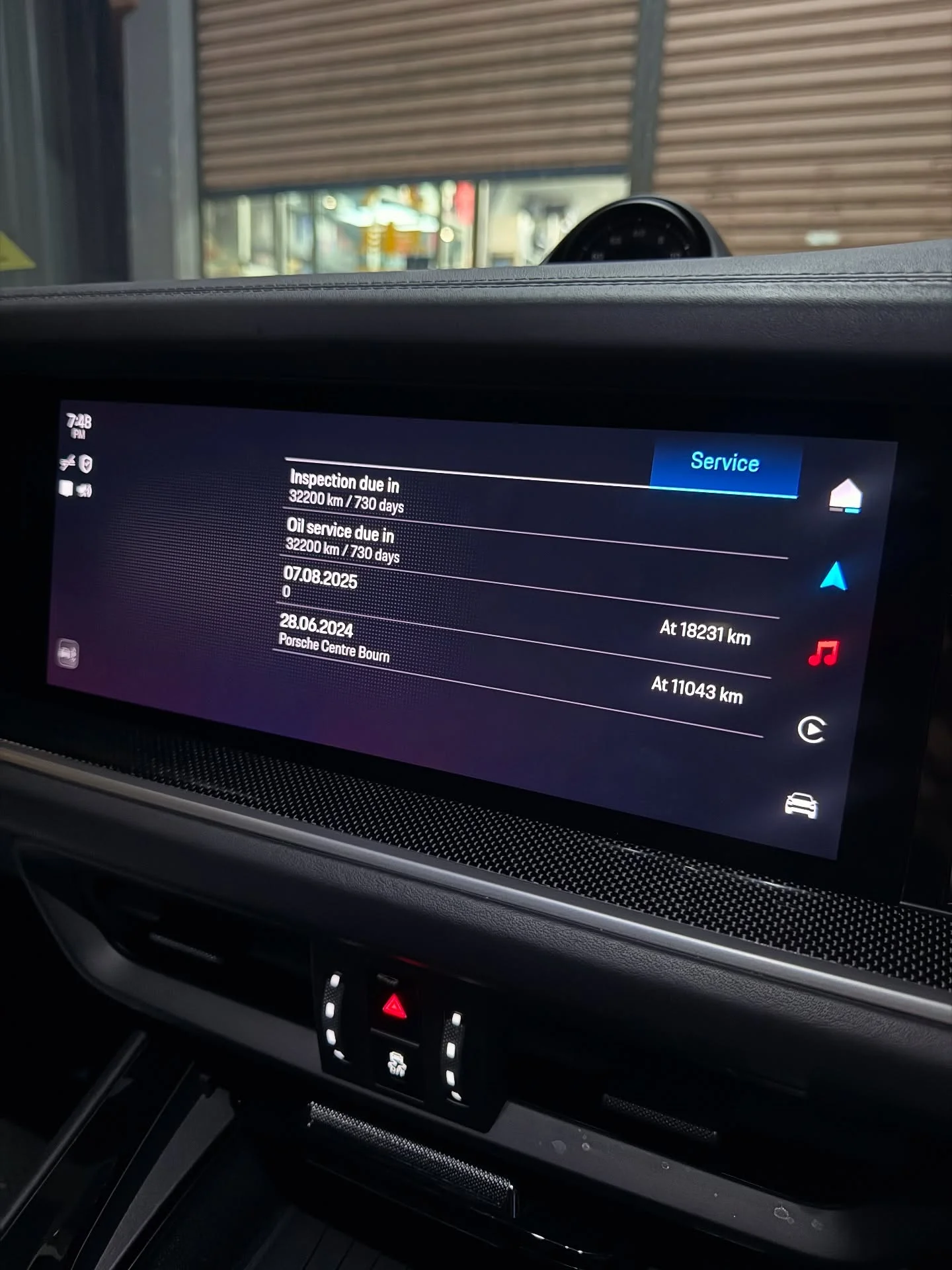
The service menu photographed in the Porsche case gallery. Its displayed time and distance values belong to that vehicle’s settings; the correct maintenance schedule must be checked for the individual car.
View original case recordPorsche model scope in the October 2023 bulletin
The table below follows Technical Information 2326 dated 16 October 2023. Its generation codes and model years matter: a model name by itself does not identify the applicable diagnostic architecture. Model year is also not necessarily the same as the year a car was first registered locally.
Use this as a guide to the published bulletin’s scope. It cannot determine support for every later generation, software update or imported specification. The workshop should check current vehicle-specific information before confirming an operation.
What about a Macan or another Porsche generation?
Absence from this dated table does not establish that a different Porsche has no diagnostic protection. Other generations can use different or updated systems. Check the vehicle identification, ECU and intended function instead of extending this bulletin to every model.
For a Taycan or another electrified model, diagnostic access also does not replace the applicable high-voltage procedures when the requested repair involves that system.
| Porsche model | Generation in the bulletin | Listed model year scope |
|---|---|---|
| Cayenne | E3-I | 2023 |
| Cayenne | E3-II | 2024 onward |
| Panamera | G2-II | 2023 onward |
| 911 | 992-I | 2023 onward |
| Taycan | J1-I | 2023 onward |
Seven stages of a professional PVD assessment and operation
Porsche’s published procedure describes a PIWIS additional-menu function for Protection of Vehicle Diagnosis and control-unit activation. This overview explains the workshop sequence; exact menu wording and requirements must come from the applicable authorised software and vehicle instructions. The local case does not name a particular tester product.
1. Confirm the vehicle and the requested function
Identify the model year, installed control unit and intended work. Establish whether the request concerns maintenance, a repair, replacement module configuration or another supported change.
2. Establish compatible diagnostic communication
Connect equipment that supports the vehicle and intended operation. Check ECU identification, relevant fault information and the power and communication conditions required by the procedure.
3. Determine whether protected activation is needed
Check the actual restriction. An unsupported function, communication failure or incorrect procedure should not be treated as proof of a PVD access requirement.
4. Obtain authorised control-unit activation
Where required, use the applicable PVD activation function, select the relevant protected control units and complete the supported authentication and backend authorisation. Confirm the reported activation state before continuing.
5. Complete the supported operation
Carry out the requested coding, adaptation or other permitted procedure. Software programming or calibration can need additional equipment, files and authorisation beyond diagnostic activation.
6. Verify the result
Check the completed operation through the appropriate diagnostic status, stored settings, service display or functional test. Investigate unresolved faults instead of equating an accepted unlock with a successful repair.
7. Confirm the final security state
Follow the tester’s instructions for ending or closing access and the applicable relocking behaviour. Protected access remains part of the vehicle’s normal electronic security architecture.
Confirm the operation before booking in Taman Mastiara
Share the vehicle identification details with the workshop, its model year, the requested function and any diagnostic error text. For a replacement module, include its part number and whether it is new or previously used. For a service reminder, identify the maintenance already completed.
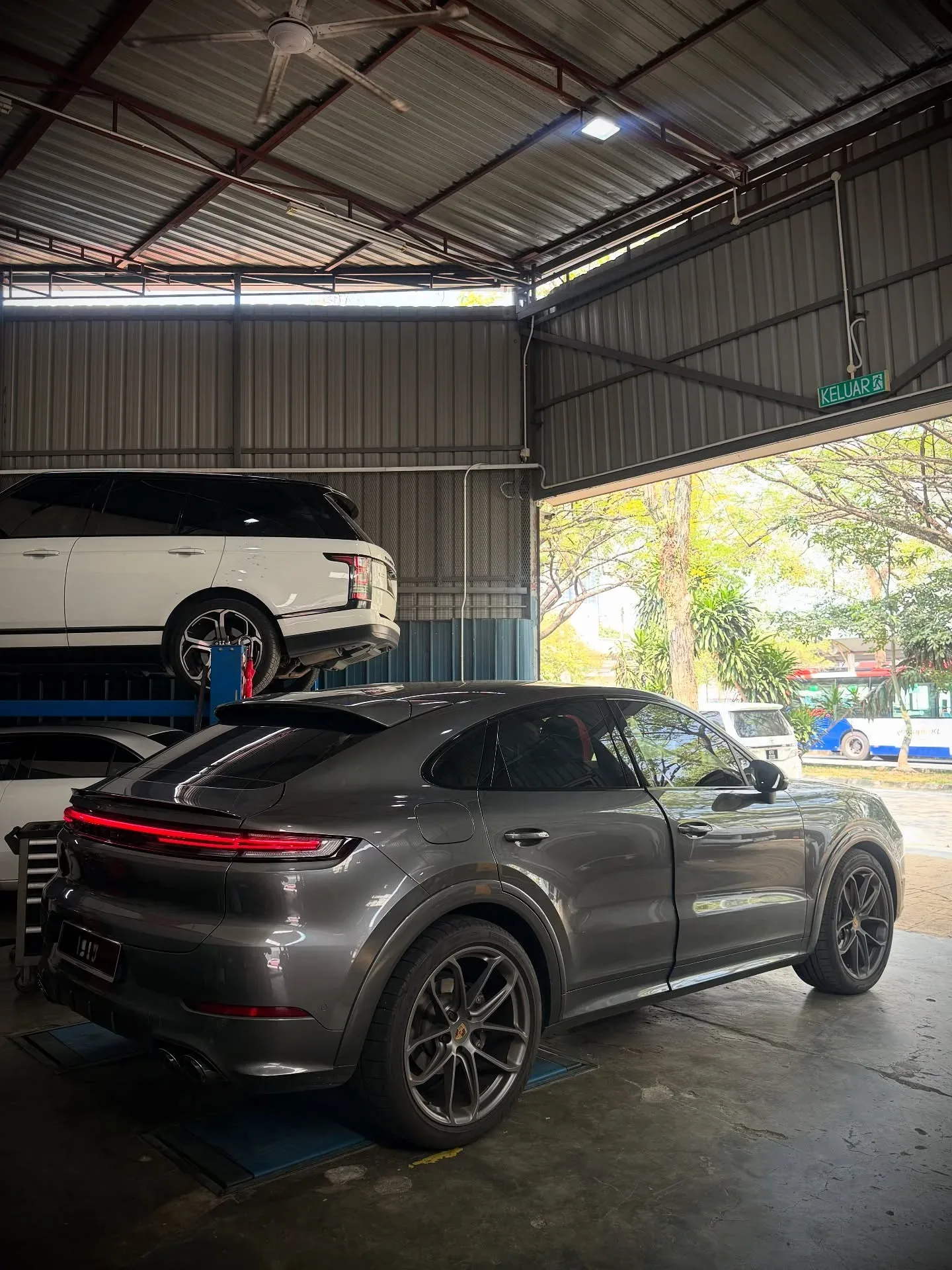
Sri Kuching’s published Porsche record demonstrates a completed service reset and access preparation. Support for another Porsche must be assessed separately, including the availability of the relevant authorisation and diagnostic procedure. The case is useful evidence of recorded work without being a compatibility promise for every protected function.
Frequently asked questions
Is Porsche PVD the same term as SFD?
Porsche uses Protection of Vehicle Diagnosis, or PVD, and its published bulletin also refers to the related SFD terminology. The appropriate procedure still depends on the Porsche platform, control unit and diagnostic function.
Does the 2023 PVD model table cover every Porsche sold today?
No. It records the scope of a bulletin dated 16 October 2023. Later models, other generations and software changes require current vehicle-specific checks; inclusion in or absence from that table is not a complete compatibility result.
How long does Porsche PVD activation last?
The cited 2023 Porsche procedure describes a 90-minute activation period for the affected system. Follow the applicable vehicle and diagnostic software instructions rather than assuming that period applies to every protected-access system.
Does an authorised PVD unlock enable any Porsche retrofit?
No. The retrofit must be supported by the vehicle hardware, software and configuration. Additional programming, component compatibility checks or manufacturer permissions may be required, and some requested functions may not be available.
Why can a tester read faults but fail when saving a setting?
Reading diagnostic information and changing a protected setting can have different access requirements. The workshop must also rule out an unsupported function, unsuitable tool, incorrect procedure or communication problem before attributing the rejection to PVD.
Read the original workshop cases
See the vehicle photos, recorded work and outcomes from Sri Kuching. These cases document individual repairs; your vehicle needs its own assessment.
Continue reading
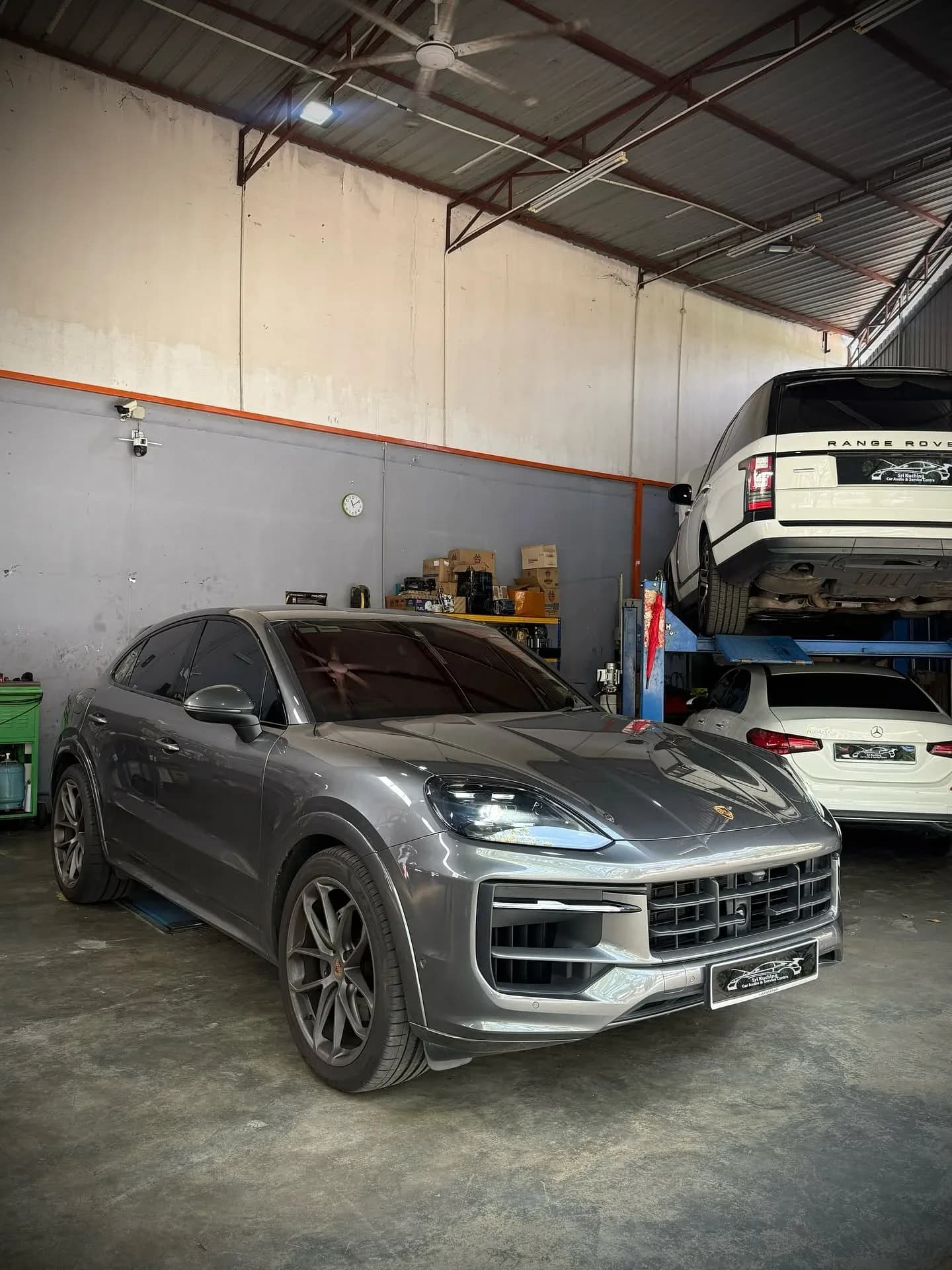
See Sri Kuching’s Porsche service reset and SFD unlock case in Kuala Lumpur, with workshop photos, the recorded outcome and what to prepare before booking.
Compare ECU unlocking, coding, programming, adaptation and calibration. See Porsche and Audi workshop examples and what to prepare for an electronic service in KL.
Learn how SFD, SFD2 and component protection differ on Audi and Volkswagen, with a real Audi A5 radio coding case and vehicle-specific enquiry advice in KL.
Further technical reading
Technical information from vehicle manufacturers and specialist suppliers.